


 About Urh Social
 Terms of Service
 Privacy Policy
 Contact
How to Choose the Right Cleanser for Acne-Prone Skin
Choosing the right cleanser is one of the most important steps in building a skincare routine for acne-prone skin. With so many products available, it can be difficult to know which ingredients and formulas are actually suitable for skin that is oily, sensitive, or prone to frequent breakouts.
The right cleanser should do more than simply remove dirt. It should help wash away excess oil, sweat, makeup, and impurities without leaving the skin feeling excessively dry or irritated. Using a cleanser that is too harsh can potentially disrupt the skin barrier, while a cleanser that is too heavy may not adequately remove excess oil and buildup.
An anti-acne cleanser can be a practical option for people who regularly experience pimples, clogged pores, or excess oil. However, choosing the right product depends on your skin type, the severity of your breakouts, and the ingredients in the formula.
In this guide, we will explain what to look for in an acne cleanser, which ingredients may be useful, common mistakes to avoid, and how to choose a cleanser that fits into a consistent skincare routine.
Why Choosing the Right Cleanser Matters for Acne-Prone Skin
Acne-prone skin often produces excess sebum, which can combine with dead skin cells and contribute to clogged pores. When pores become blocked, different types of blemishes, including blackheads, whiteheads, papules, and pustules, may develop.
Cleansing helps remove surface oil, sweat, dirt, and other impurities from the skin. However, more cleansing does not necessarily mean better results. Washing the face too frequently or using an overly aggressive cleanser may leave the skin dry and uncomfortable.
When the skin becomes excessively dry, it can feel tight, irritated, or sensitive. This is why people with acne-prone skin should look for a cleanser that provides effective cleansing while remaining appropriate for their individual skin type.
A good cleanser should ideally:
-
Remove excess oil and everyday impurities
-
Clean the skin without excessive dryness
-
Support a comfortable skin barrier
-
Be suitable for regular use
-
Complement the rest of your skincare routine
The goal is not to make the skin feel "squeaky clean." Instead, the goal is clean, comfortable skin that is ready for the next steps of your routine.
Know Your Skin Type Before Choosing an Acne Cleanser
Before buying an acne cleanser, consider your skin type. A product that works well for oily skin may not be the best option for someone with dry or sensitive skin.
Oily Skin
Oily skin tends to produce more sebum, which can leave the face looking shiny and may contribute to clogged pores.
If your skin becomes oily quickly, look for a lightweight cleanser designed to remove excess oil without aggressively stripping the skin.
Dry or Acne-Prone Skin
People with dry skin can still experience acne. In this situation, using a harsh cleanser may make dryness and irritation more noticeable.
A gentle formula may be a better choice because it can cleanse the skin without unnecessarily increasing dryness.
Combination Skin
Combination skin can be oily in some areas and dry in others. The forehead, nose, and chin may produce more oil, while the cheeks may feel relatively dry.
A balanced cleanser can be useful for this skin type because it should cleanse oily areas without making drier areas uncomfortable.
Sensitive Skin
Sensitive skin may react more easily to certain ingredients or highly fragranced products. If your skin is sensitive, consider choosing a gentle formula and introduce new products gradually.
If irritation, burning, or persistent redness develops, discontinue the product and consider speaking with a dermatologist.
Look for Ingredients That Suit Acne-Prone Skin
Ingredients are an important part of choosing an anti-acne cleanser. Different ingredients serve different purposes, so understanding what they do can help you make a more informed decision.
Salicylic Acid
Salicylic acid is a commonly used skincare ingredient for acne-prone skin. It belongs to a group of ingredients known as beta hydroxy acids (BHAs).
It can help exfoliate the skin and clear away dead skin cells. Because it is oil-soluble, salicylic acid can also work within pores, making it a popular ingredient in products designed for oily and blemish-prone skin.
However, stronger is not always better. If your skin is sensitive, start with products formulated for regular but gentle use.
Niacinamide
Niacinamide, a form of vitamin B3, is another popular skincare ingredient. It is often included in formulas designed for oily or blemish-prone skin.
It can support the skin barrier and may help improve the appearance of excess oil and uneven skin tone when used consistently.
Gentle Cleansing Agents
The cleansing agents in a formula determine how effectively it removes oil and impurities.
For acne-prone skin, a cleanser should provide adequate cleansing without leaving the face excessively tight or uncomfortable.
What to Avoid in a Cleanser for Acne-Prone Skin
Choosing the right cleanser is not only about finding beneficial ingredients. It is also about avoiding products that may be unsuitable for your skin.
Extremely Harsh Formulas
A cleanser that leaves your skin extremely dry or tight may be too aggressive for your routine.
Acne-prone skin still needs a healthy skin barrier. Excessive cleansing can contribute to irritation and discomfort.
Excessive Fragrance
Fragrance is not automatically harmful, but highly fragranced products may be irritating for some people, particularly those with sensitive skin.
If your skin frequently becomes irritated, consider simpler formulas with fewer potentially irritating ingredients.
Overly Abrasive Scrubs
Physical scrubs with rough particles can be unnecessarily irritating when used aggressively on active breakouts.
Instead of aggressively scrubbing pimples, focus on gentle cleansing and a consistent skincare routine.
How to Choose the Best Cleanser for Oily Skin and Pimples
If you have oily skin with frequent pimples, you may want a cleanser that can effectively remove excess sebum without making your skin feel stripped.
When looking for a face wash for oily skin and pimples, consider the following:
Choose a suitable texture:
Gel and lightweight foaming cleansers are often comfortable choices for oily skin.
Look for acne-friendly ingredients:
Ingredients such as salicylic acid or niacinamide may be useful depending on your skin's needs and the overall formula.
Avoid excessive cleansing:
A strong cleanser does not necessarily provide better acne care.
Pay attention to how your skin feels:
If your skin consistently feels dry, tight, burning, or irritated after cleansing, the product may not be suitable for you.
Consider the rest of your routine:
Your cleanser is only one part of skincare. A moisturizer and daytime sunscreen can also be important, especially if your routine includes active ingredients.
How Often Should You Use an Anti-Acne Cleanser?
For many people, cleansing once or twice daily can be sufficient, depending on their skin type and product instructions.
A common routine is cleansing in the morning and evening. However, people with dry or sensitive skin may prefer a gentler approach.
Always follow the instructions provided with the product. If a cleanser contains active ingredients, introducing it gradually can help you understand how your skin responds.
Avoid repeatedly washing your face throughout the day simply because your skin becomes oily. Over-cleansing can leave the skin feeling dry or irritated.
How to Use an Acne Cleanser Correctly
Even a well-formulated cleanser may not work as intended if it is used incorrectly.
Follow these basic steps:
-
Wet your face with lukewarm water.
-
Apply a small amount of cleanser to your fingertips.
-
Gently massage it over your face.
-
Avoid aggressively scrubbing active breakouts.
-
Rinse thoroughly.
-
Pat your face dry with a clean, soft towel.
-
Follow with a suitable moisturizer.
If you use an acne cleanser containing active ingredients, avoid combining several strong acne treatments at once unless you know that your skin can tolerate the combination.
Can a Cleanser Get Rid of Acne?
A cleanser can be an important part of an acne skincare routine, but it should not be expected to solve every type of acne on its own.
Acne can have several contributing factors, including excess oil production, clogged pores, hormonal changes, genetics, and inflammation.
A cleanser primarily works on the surface of the skin and is washed off relatively quickly. For this reason, persistent or moderate-to-severe acne may require additional treatment.
If you have painful cysts, deep nodules, widespread acne, or acne that is leaving scars, consulting a dermatologist can help you identify an appropriate treatment plan.
Introducing Acnehit Anti-Acne Cleanser Into Your Routine
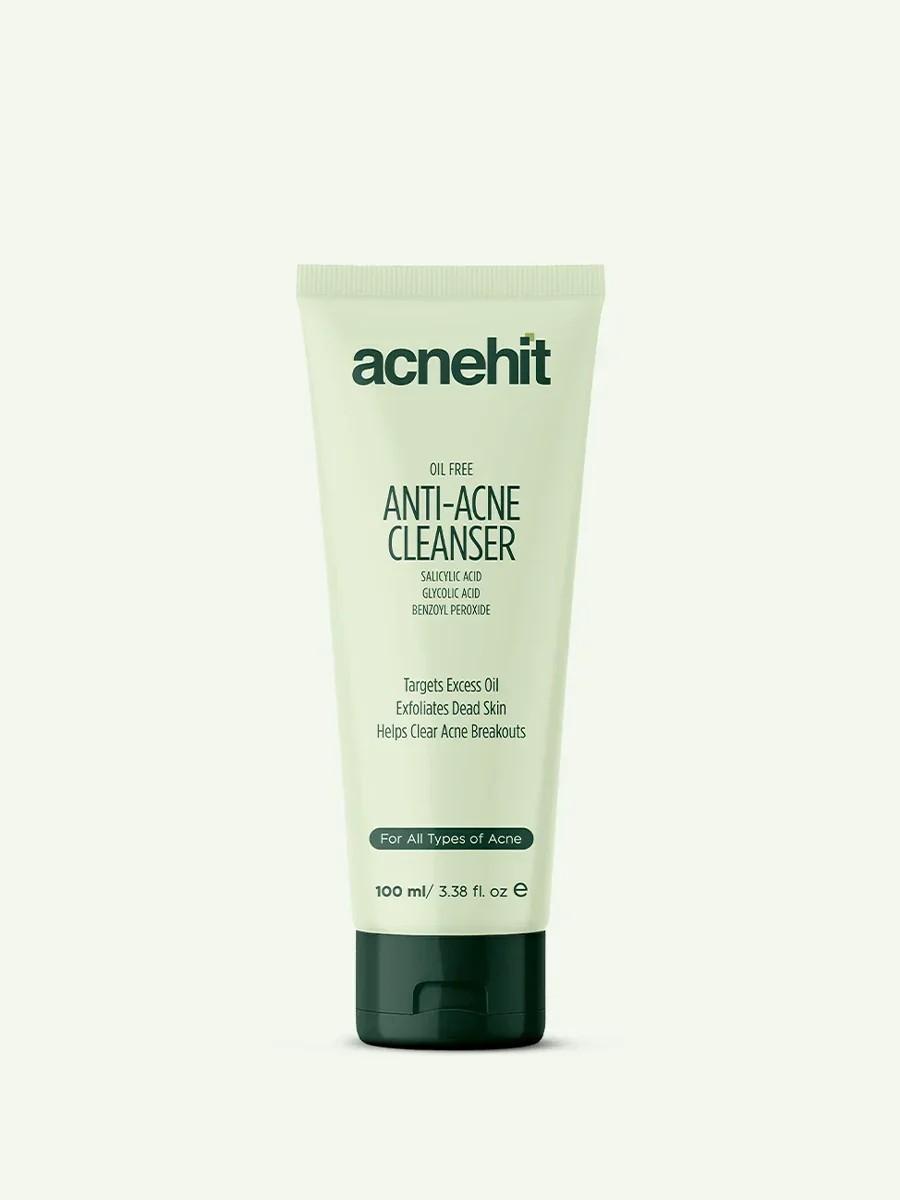
For people looking to make cleansing a consistent part of their acne skincare routine, Acnehit Anti-Acne Cleanser can be considered as part of a broader approach to managing acne-prone skin.
The focus should always be on regular, gentle cleansing rather than aggressively trying to remove every trace of oil from the skin.
When using an anti-acne cleanser, give your skin time to adjust and pay attention to how it responds. Skincare results rarely happen overnight, and consistency is generally more useful than constantly switching between products.
You can learn more about Acnehit's skincare products at the official Acnehit website.
Common Mistakes People Make When Choosing an Acne Cleanser
Choosing the Strongest Product
A stronger-feeling cleanser is not necessarily a more effective cleanser. Excessive dryness can make your skincare routine uncomfortable and may contribute to irritation.
Washing Too Frequently
Cleansing repeatedly throughout the day is usually unnecessary. Stick to a consistent routine that suits your skin.
Ignoring Skin Type
Oily, dry, combination, and sensitive skin can respond differently to the same formula.
Using Too Many Acne Products
Using several exfoliating or acne-focused products at the same time can increase the possibility of irritation.
Expecting Immediate Results
Acne does not usually disappear after a few washes. Consistent skincare and appropriate treatment are more important than expecting overnight changes.
What Else Should You Use With an Acne Cleanser?
A cleanser works best as part of a complete skincare routine.
A simple acne-prone skincare routine may include:
Morning:
-
Gentle or acne-focused cleanser
-
Lightweight moisturizer
-
Broad-spectrum sunscreen
Evening:
-
Cleanser
-
Appropriate acne treatment, if needed
-
Moisturizer
Keeping your routine simple can make it easier to determine which products work well for your skin.
If you introduce a new active ingredient, consider adding one product at a time rather than changing your entire routine simultaneously.
Final Thoughts
Choosing the right cleanser for acne-prone skin starts with understanding your skin type, identifying suitable ingredients, and avoiding overly harsh products. An effective anti-acne cleanser should help remove excess oil and impurities while keeping the skin comfortable.
Look for a formula that matches your skin's needs rather than simply choosing a product because it claims to be the strongest or fastest solution. Ingredients such as salicylic acid and niacinamide may be useful additions depending on the formulation and your individual skin concerns.
Most importantly, remember that a cleanser is only one part of acne care. A consistent skincare routine, appropriate treatment, healthy skin-barrier support, and professional advice when necessary can all contribute to better long-term skin management.
For those looking for an acne-focused cleansing option, Acnehit Anti-Acne Cleanser can be incorporated into a simple, consistent skincare routine designed for acne-prone skin.

 English
 Arabic
 French
 Portuguese
 Deutsch
 Turkish
 Dutch
Dutch
 Italiano
 Russian
 Romaian
 Portuguese (Brazil)
 Greek
Greek
