


 About Urh Social
 Terms of Service
 Privacy Policy
 Contact
From Design Idea to Finished Pair: How Footwear Moves Through Production
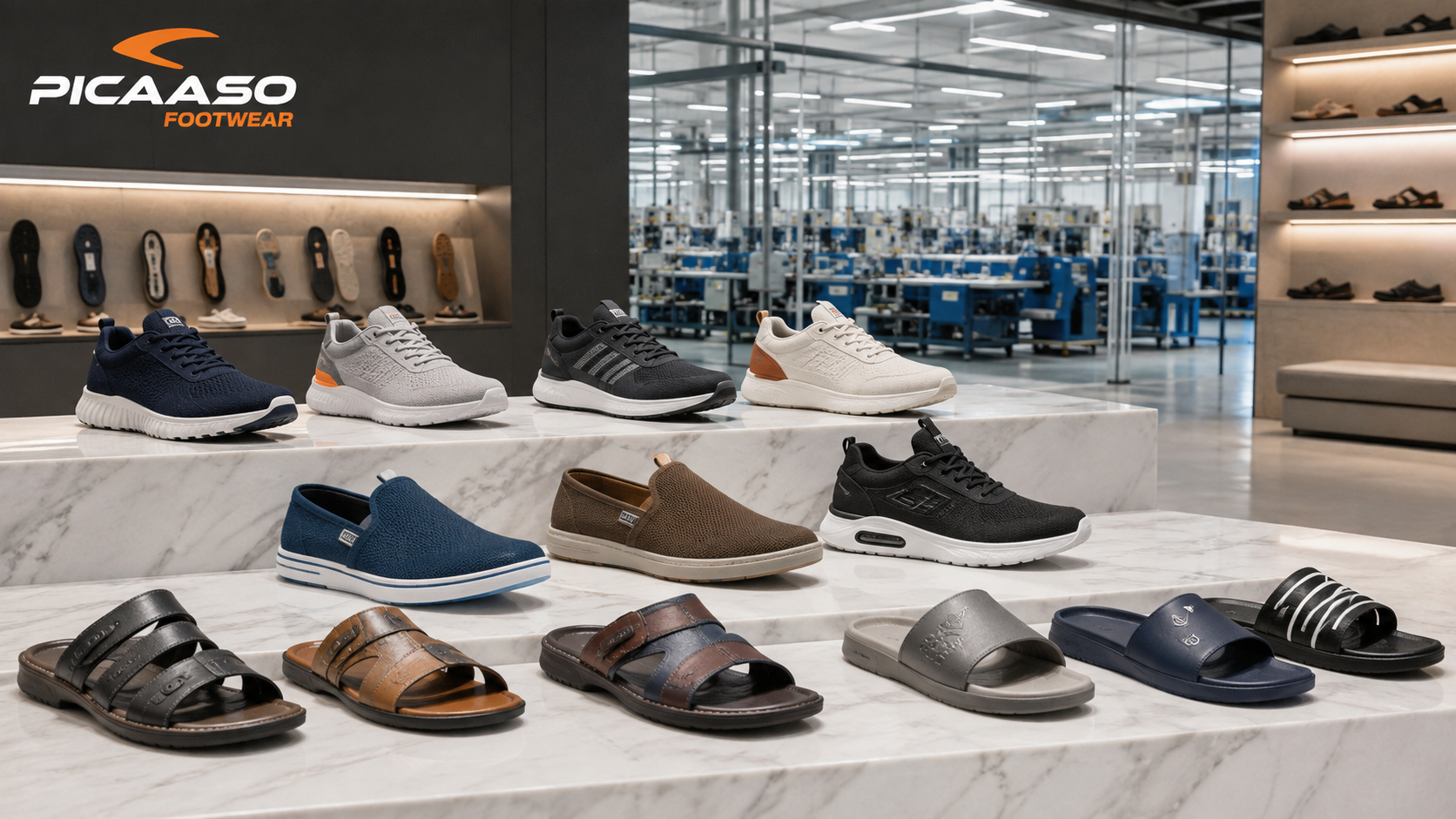
A finished pair of footwear may look simple, but its journey usually involves several coordinated stages. Design planning, material sourcing, mould development, component preparation, assembly, inspection and packaging all contribute to the final product.
Understanding this process gives a clearer picture of how the footwear industry operates and why manufacturing capabilities can differ from one producer to another.
Product Development Starts Before Manufacturing
Before bulk production begins, footwear generally goes through a product-development stage. This may involve preparing the design, deciding the size range, selecting materials and determining the type of sole and upper construction required.
Different footwear categories require different approaches. A lightweight slipper, for example, may follow a different development process compared with a casual sneaker or multi-component sports shoe.
Businesses operating in the footwear sector, including Picaaso Footwear, work within this broader ecosystem where product selection, manufacturing processes and market requirements are closely connected.
Materials Determine How a Shoe Is Produced
Material selection can influence both the appearance and manufacturing process of footwear. EVA, PU, PVC, rubber, textiles and synthetic materials may be used depending on the intended product.
Some materials are suitable for moulded footwear, while others are more commonly associated with stitched uppers, layered soles or casual footwear construction.
Manufacturers therefore need to consider how each material will behave during cutting, moulding, stitching, bonding and finishing.
Production Is Usually Divided Into Multiple Stages
Footwear manufacturing is rarely completed in a single step. Depending on the product, the process may involve:
- Pattern and component preparation
- Material cutting
- Upper stitching or moulding
- Sole production
- Component assembly
- Adhesive or bonding processes
- Finishing
- Inspection
- Packaging
When businesses research shoe manufacturers in India, understanding these production capabilities can be more useful than simply comparing the number of pairs a factory can produce.
A manufacturer specialising in moulded sandals may have very different equipment and expertise from one focused on stitched casual footwear.
Why Is Sampling Important?
Sampling allows a design to be evaluated before it enters large-scale production. It can help identify issues relating to size, fitting, material combination, construction or appearance.
Changes made during the sample stage may reduce the need for corrections once bulk manufacturing has started.
For this reason, sampling is often treated as an important bridge between product design and final production.
Quality Inspection Happens at Different Stages
Quality control does not always take place only at the end of the production line. Depending on the manufacturing setup, materials and components may be checked at several points.
Inspection may cover areas such as:
- Material consistency
- Stitch alignment
- Sole attachment
- Product dimensions
- Pair matching
- Surface finishing
- Packaging condition
Checking products during production can help identify inconsistencies before the entire batch is completed.
Packaging Is Also Part of the Manufacturing Process
Once footwear passes inspection, it may move to cleaning, labelling and packaging. Packaging requirements can differ depending on whether the products are intended for retail stores, wholesale distribution or other supply channels.
Size identification, pair matching and carton organisation can become particularly important when handling larger quantities.
A Connected Industry Rather Than a Single Factory Process
Footwear production depends on more than the main manufacturing unit. Component suppliers, material producers, mould developers, packaging providers and logistics businesses can all play a role in bringing a finished product to market.
This interconnected network explains why the footwear sector involves a combination of manufacturing expertise, supplier coordination and quality management.
Conclusion
The journey from a footwear design to a finished pair involves several specialised activities. Material selection, sampling, manufacturing, inspection and packaging all contribute to the final result.
Looking at the complete production journey provides a better understanding of how footwear manufacturing functions and why different production units may specialise in different products and processes.

 English
 Arabic
 French
 Spanish
 Portuguese
 Deutsch
 Dutch
Dutch
 Italiano
 Russian
 Romaian
 Portuguese (Brazil)
 Greek
Greek
