


 About Urh Social
 Terms of Service
 Privacy Policy
 Contact
MT Ferrule Connector: Design, Applications, Benefits, and Selection Guide
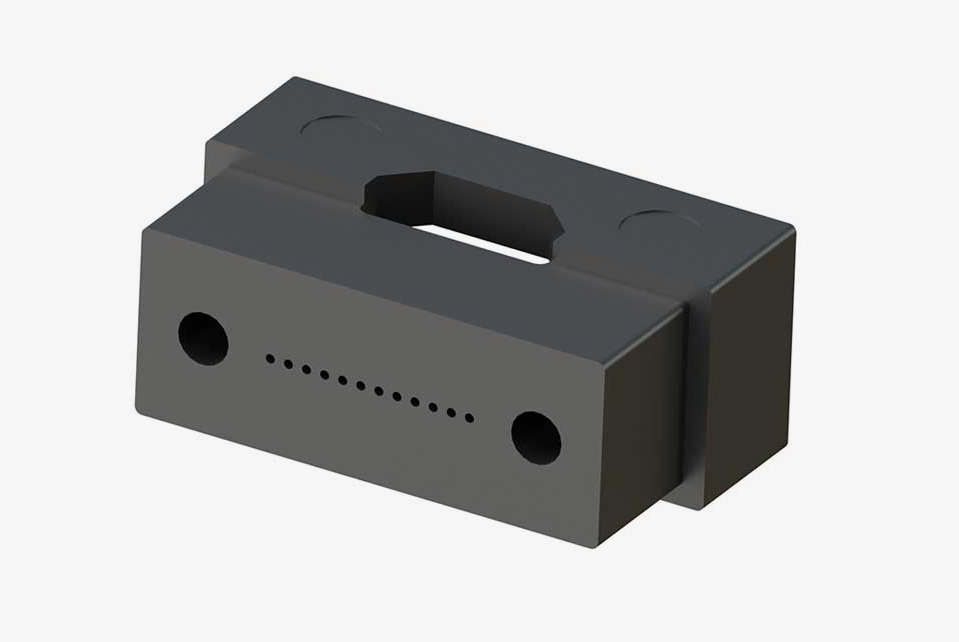
Modern fiber optic networks require highly precise components that can support reliable data transmission while maximizing the use of limited physical space. The MT ferrule connector is an important component in multi-fiber optical connectivity, providing accurate alignment for multiple optical fibers within a compact interface. MT ferrules are widely associated with high-density fiber systems because their multi-fiber design can simplify connections and support efficient network architectures. As data centers, telecommunications systems, and enterprise networks continue to demand greater bandwidth and higher port density, reliable multi-fiber connectivity has become increasingly important.
The development of higher-speed optical technologies has increased the need for connectors that can accommodate multiple fibers while maintaining precise alignment. An MT ferrule uses carefully engineered alignment features to position fiber cores accurately between mating components. This design can help reduce the space and connection complexity associated with individual fiber interfaces. However, connector performance depends heavily on manufacturing precision, polishing quality, fiber alignment, cleanliness, and compatibility with the surrounding system. Understanding these factors can help network designers, manufacturers, and purchasing teams select appropriate components for demanding optical applications.
Understanding the MT Ferrule Connector
An MT ferrule is a multi-fiber ferrule designed to hold and align multiple optical fibers in a controlled arrangement. Unlike a conventional single-fiber ferrule, the MT design accommodates several fibers within a single ferrule body, allowing multiple optical channels to be connected simultaneously. Precision alignment is achieved through carefully manufactured features, typically involving guide pins and corresponding guide-pin holes or alignment structures. The ferrule is commonly manufactured from materials engineered to provide dimensional stability and suitable mechanical performance. The precise positioning of the fiber holes is particularly important because even small alignment errors can influence optical performance. MT ferrules are therefore manufactured to tight dimensional tolerances, making production quality and inspection critical. Their multi-fiber architecture makes them especially useful in applications where high fiber counts and compact connectivity are priorities.
Importance of Multi-Fiber Connectivity
High-density optical networks require efficient ways to manage increasing numbers of fiber channels. Connecting every fiber individually can require more physical space, more connection points, and more complex cable management. Multi-fiber interfaces address this challenge by allowing several fibers to be connected through a single ferrule and connector assembly. This approach can help simplify network architecture while supporting dense equipment layouts. In data centers, for example, multi-fiber connectivity can be useful for connections between switches, patching systems, and high-density optical modules. Telecommunications infrastructure can also benefit from compact fiber interfaces where space and installation efficiency are important. The ability to manage multiple optical channels through a single connection makes MT technology an important part of many structured fiber systems.
Applications of the MT ferrule connector
MT ferrules are used in a variety of fiber optic assemblies and high-density connectivity applications. They are commonly associated with multi-fiber connectors and parallel optical systems, where several optical channels need to be aligned simultaneously. Data center environments can use MT-based connectivity in trunk cables, patching systems, and high-density network architectures. Telecommunications equipment can also incorporate multi-fiber interfaces where large numbers of optical channels must be managed efficiently. MT ferrules are additionally used in specialized optical assemblies, test equipment, and components designed for parallel fiber transmission. Their compact design can be particularly valuable in environments where equipment density continues to increase. The exact ferrule configuration depends on the number of fibers, fiber spacing, connector design, polishing requirements, and application-specific optical performance targets.
Choosing the Right MT Ferrule
Selecting an appropriate MT ferrule requires attention to several technical specifications. The number of fiber positions is one of the primary considerations because ferrules are available in different configurations designed for different applications. Fiber type, fiber pitch, alignment requirements, guide-pin configuration, ferrule dimensions, and polishing specifications should also be evaluated. Compatibility with the connector housing and associated optical components is essential because a ferrule cannot be evaluated independently from the complete assembly. Manufacturers should also consider dimensional tolerances and the expected operating environment. Applications exposed to temperature changes, vibration, moisture, or repeated mating cycles may require components manufactured to specific performance standards. Working with an experienced supplier can help ensure that ferrule specifications match the requirements of the intended connector and optical network.
Quality, Precision, and Manufacturing Standards
Manufacturing quality is critical to MT ferrule performance because multi-fiber alignment depends on extremely precise dimensions. Fiber holes must be positioned accurately, and the ferrule face must meet appropriate requirements for polishing and surface quality. Poor dimensional control can result in alignment errors that increase insertion loss or reduce connection consistency. Contamination on the ferrule end face can also affect optical performance, making cleanliness and inspection important throughout manufacturing and installation. Quality-control processes may include dimensional inspection, end-face inspection, optical testing, and verification against relevant industry specifications. Consistent production is especially important for high-volume network deployments because variations between components can make installation and troubleshooting more difficult. Suppliers that maintain rigorous manufacturing and inspection procedures can provide greater confidence in the consistency of their ferrules and completed connector assemblies.
Benefits of MT Ferrule Technology
MT ferrules offer several advantages for high-density fiber connectivity. Their ability to accommodate multiple fibers within a compact interface can reduce the physical footprint associated with connecting large numbers of optical channels. This can contribute to more organized cable management and more efficient use of rack or equipment space. Multi-fiber connectivity can also simplify certain installation processes because several optical channels can be connected at once rather than individually. For manufacturers of optical assemblies, standardized MT ferrules can provide a foundation for developing high-density products for different network architectures. Their compatibility with various multi-fiber connector systems further supports their use across data center and telecommunications environments. While the specific advantages depend on the connector design and application, the underlying concept remains valuable: precise multi-fiber alignment can help networks manage increasing optical density without requiring proportionally greater physical space.
Installation and Maintenance Considerations
Proper handling and maintenance are essential for achieving reliable performance from MT-based optical connections. Connector end faces should be kept clean because dust, oils, and other contaminants can interfere with fiber alignment and transmission. Technicians should use appropriate inspection and cleaning procedures before mating connectors, particularly in high-performance networks where small losses can affect overall system performance. Guide pins and alignment components should also be handled carefully to prevent mechanical damage. Excessive force, incorrect mating, or improper cable routing can compromise the connector assembly. During installation, technicians should follow manufacturer specifications for bend radius, connector engagement, cleaning, inspection, and testing. Maintaining accurate documentation of fiber connections and test results can further simplify future troubleshooting and network expansion. Good maintenance practices help preserve the optical and mechanical performance of the complete connectivity system.
Future Trends in High-Density Fiber Connectivity
The continued expansion of cloud computing, artificial intelligence infrastructure, high-performance computing, and data center networking is increasing demand for high-density optical connectivity. As optical transmission speeds increase, network designers are looking for connection technologies that can support more channels within smaller equipment footprints. Multi-fiber ferrule technology is well positioned for applications where parallel optical connectivity and efficient fiber management are important. Advances in manufacturing precision, connector design, optical modules, and automated inspection may further improve the consistency and performance of MT-based systems. The growing adoption of structured fiber architectures is also likely to encourage greater attention to standardized, scalable connectivity components. As network capacity requirements continue to rise, compact and precisely engineered multi-fiber interfaces will remain an important part of modern optical infrastructure.
Conclusion
The MT ferrule is an important component in high-density fiber optic connectivity, providing a compact method for accurately aligning multiple optical fibers within a single interface. Its precise multi-fiber design makes it valuable for data centers, telecommunications networks, optical assemblies, and other applications where space efficiency and reliable connectivity are important. When selecting an MT ferrule connector, organizations should consider fiber count, pitch, alignment requirements, materials, polishing specifications, dimensional tolerances, and compatibility with the complete connector assembly. Manufacturing quality, cleanliness, proper installation, and regular inspection are equally important for maintaining reliable optical performance. As network speeds and fiber densities continue to increase, precision multi-fiber technologies such as MT ferrules will remain an important foundation for scalable and efficient optical communication systems.

 English
 Arabic
 French
 Spanish
 Portuguese
 Deutsch
 Dutch
Dutch
 Italiano
 Russian
 Romaian
 Portuguese (Brazil)
 Greek
Greek
