


 About Urh Social
 Terms of Service
 Privacy Policy
 Contact
Real Results: How a SOC Service Provider Transformed Healthcare Security in India
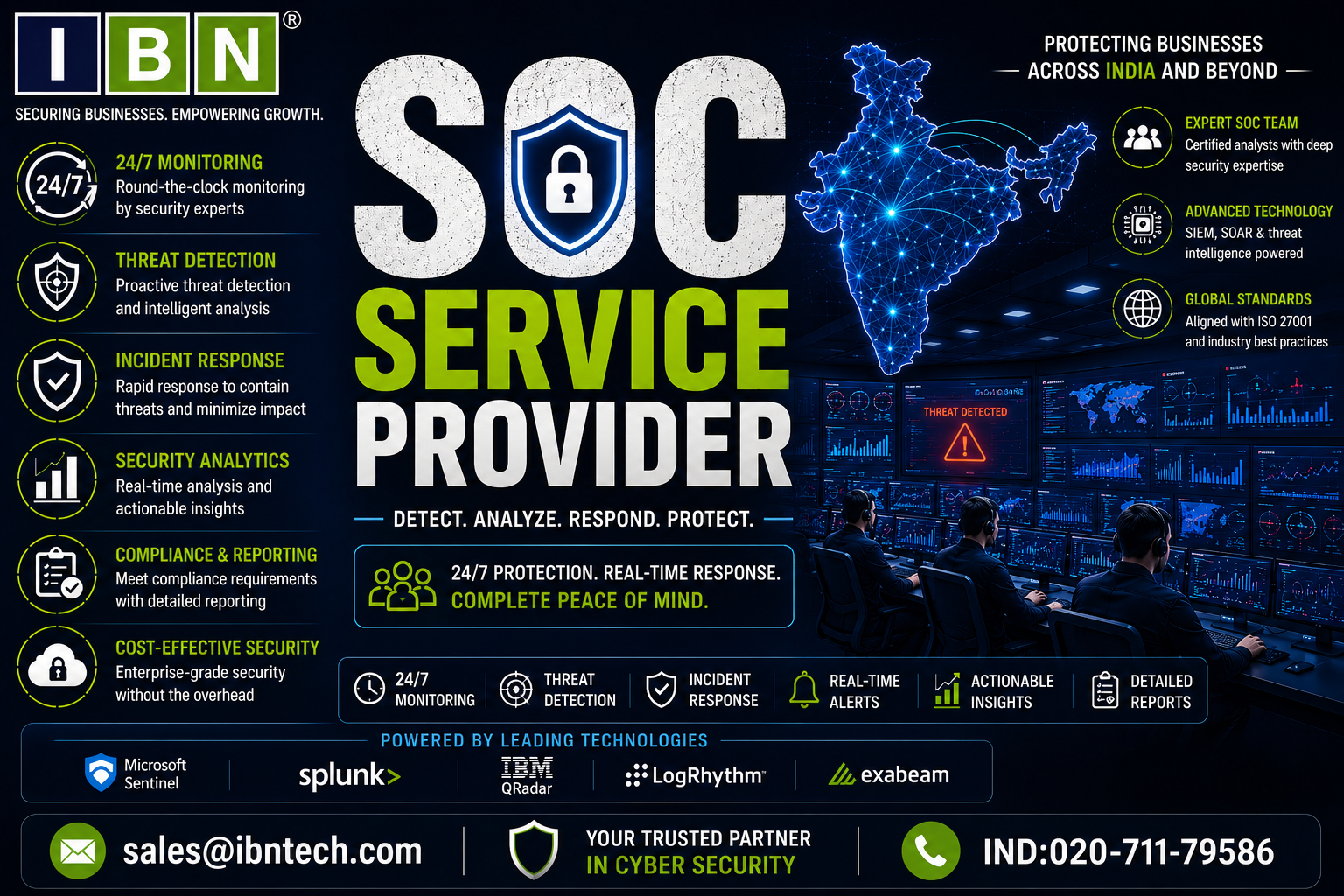
Inside the Shift: How Hospitals Benefit From a SOC Service Provider
A hospital network's IT director once described their security setup before working with a managed partner as "hoping nothing happens overnight." That single sentence captures why so many healthcare organizations in India are rethinking how they approach threat monitoring, and why the right SOC service provider can change that hope into an actual operational capability.
Patient Data: A Target That Never Goes Out of Season
Healthcare records combine identity, insurance, and treatment information in a single package, making them consistently valuable to attackers. Unlike retail data that loses value after a card is cancelled, medical records retain value for years. This makes healthcare providers a persistent target, not a seasonal one, which is exactly why continuous monitoring matters more than periodic checks.
The Operational Reality Inside Indian Hospitals
Hospital IT teams are typically small, focused primarily on keeping clinical systems, patient portals, and connected devices running smoothly. Security monitoring often becomes a secondary responsibility handled between other urgent tasks. This isn't a failure of effort, it's a resourcing reality that leaves gaps attackers are well aware of.
Why Ad Hoc Monitoring Doesn't Hold Up
Consider a scenario common across mid-sized hospital networks: a security alert triggers late on a Friday evening, but the IT team member who would normally investigate is off duty until Monday. In this window, a genuine threat has three full days to escalate unnoticed. This is not a hypothetical risk, it reflects the structural gap that informal, internally-managed monitoring almost always has.
What Engaging a SOC Service Provider Typically Changes
When a healthcare organization moves from ad hoc internal monitoring to a structured managed SOC, the shift is less about new tools and more about continuous attention. IBN Technologies' Managed SIEM & SOC service provides round-the-clock monitoring and expert-led incident response, closing exactly the after-hours and weekend gaps that informal setups cannot cover.
A Practical Walkthrough: What Changes Operationally
- Alerts are investigated the moment they occur, not during the next available shift
- Correlated events across hospital systems, including connected medical devices, are reviewed by trained analysts
- Documented response actions replace informal, undocumented troubleshooting
- Hospital IT staff receive clear escalation only for confirmed, severity-ranked threats, reducing alert fatigue
Before and After: Monitoring Approach Comparison
|
Aspect |
Informal Internal Monitoring |
Managed SOC Service Provider |
|
After-hours coverage |
Inconsistent or absent |
Continuous |
|
Alert investigation |
Delayed until staff availability |
Immediate, analyst-led |
|
Documentation |
Informal, inconsistent |
Structured incident records |
|
IT staff workload |
High, reactive |
Reduced, focused on escalations |
|
Visibility across facilities |
Fragmented |
Centralized |
Industry Use Case: Multi-Location Diagnostic Networks
A diagnostic and pathology network operating labs across several cities faces a layered challenge: patient data flows between locations, referring physicians, and insurance systems, multiplying the number of access points that need monitoring. A centralized SOC service provider gives this kind of distributed healthcare business a single, continuous view across all locations, something a fragmented internal setup at each site could not realistically achieve.
Benefits That Surface Beyond Threat Detection
Healthcare organizations that adopt a structured SOC relationship often find secondary benefits: clearer documentation to support data protection compliance, reduced burnout among IT staff no longer expected to be on-call indefinitely, and a stronger position when reassuring patients, insurers, and partners about data protection practices.
Best Practices for Healthcare Organizations Making the Shift
- Map your current after-hours and weekend coverage honestly before assuming it's adequate
- Prioritize providers with clear experience monitoring healthcare-specific systems, including connected devices
- Request example incident reports to understand documentation quality
- Involve both IT and compliance stakeholders when reviewing outcomes from a potential provider
Compliance Context for Healthcare Providers
Healthcare organizations in India are expected to protect patient data under increasingly detailed regulatory and data protection expectations. A SOC service provider that documents monitoring and response activity gives compliance teams concrete evidence to present, rather than relying on informal assurances that gaps were never actually tested.
The pattern across healthcare organizations that make this shift is consistent: moving from hoping nothing happens overnight to knowing it's being watched. That shift, more than any single feature, is what a capable SOC service provider actually delivers.

 English
 Arabic
 French
 Spanish
 Portuguese
 Deutsch
 Dutch
Dutch
 Italiano
 Russian
 Romaian
 Portuguese (Brazil)
 Greek
Greek
