


 About Urh Social
 Terms of Service
 Privacy Policy
 Contact
Managed SOC as a Service vs In-House SOC: Healthcare's Costly Mistake
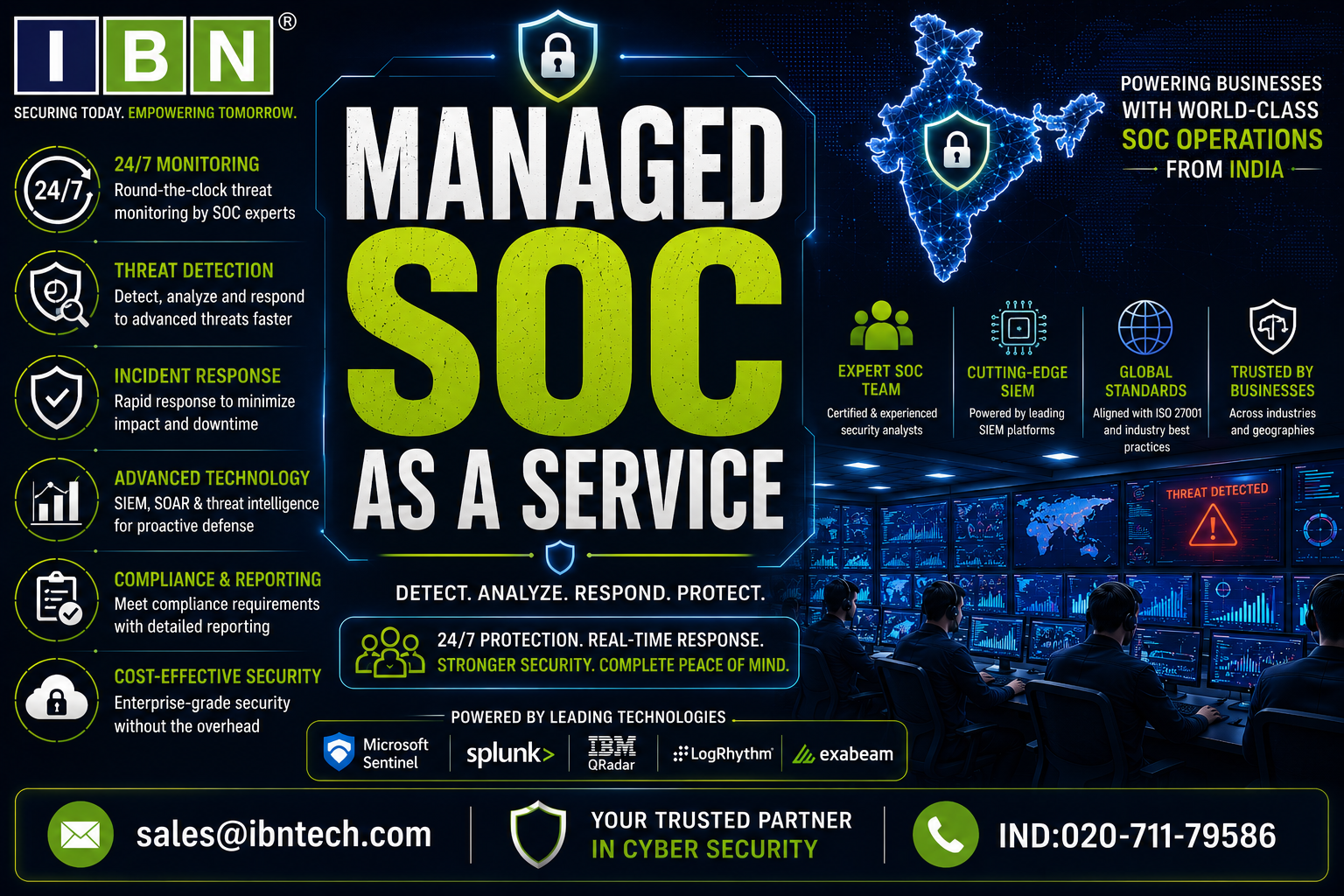
Managed SOC as a Service vs In-House SOC for Healthcare India
A hospital's IT team already juggles patient record systems, connected medical devices, insurance platforms, and staff access controls. Asking that same team to also run round-the-clock threat detection is where good intentions meet operational reality. The in-house SOC vs managed SOC decision is one that healthcare leaders in India increasingly need to confront before a breach forces the conversation.
Why Healthcare Has Become a Prime Target
Patient data is uniquely valuable to attackers. Medical records combine identity information, insurance details, and treatment history, making them attractive for fraud and extortion. At the same time, healthcare providers cannot afford downtime. A ransomware attack on hospital systems does not just cause financial loss, it can directly disrupt patient care. This combination of high-value data and low tolerance for disruption makes healthcare organizations frequent targets.
The Case for an In-House SOC, and Why It Often Falls Apart
Some larger hospital networks consider building an internal security operations team, reasoning that direct control means better protection. In theory, this offers full visibility and tailored processes. In practice, most healthcare organizations run into the same obstacles:
- Cybersecurity talent is scarce and expensive, and healthcare competes with every other industry for the same pool
- Round-the-clock coverage requires multiple analysts across shifts, which is difficult to sustain for a mid-sized hospital IT budget
- Medical staff and IT leadership are focused on patient systems uptime, not threat hunting
- Internal teams often lack exposure to the latest attack techniques used against healthcare specifically
The result is frequently a partial solution: a small team monitoring during business hours, with gaps overnight and on weekends, exactly when attackers are most active.
What a Managed SOC Changes
A managed SOC removes the burden of building and staffing a 24/7 security function internally. IBN Technologies' Managed SIEM & SOC service provides continuous monitoring, threat correlation, and expert-led response, giving healthcare IT teams the coverage of a full security operation without the recruitment and infrastructure investment required to build one from scratch.
In-House SOC vs Managed SOC: A Direct Comparison
|
Factor |
In-House SOC |
Managed SOC as a Service |
|
Setup time |
Months of hiring and configuration |
Faster deployment |
|
Coverage |
Often limited to business hours |
True 24/7 monitoring |
|
Specialized threat expertise |
Limited to internal team knowledge |
Broader exposure across industries |
|
Cost structure |
High fixed cost regardless of incident volume |
Structured, scalable service cost |
|
Focus for internal IT |
Diverted from core hospital systems |
Remains on patient-facing operations |
Why the Traditional Approach Falls Short in Practice
Even hospitals with a dedicated IT security person often find that one or two people cannot realistically monitor dozens of connected systems, medical devices, and third-party integrations continuously. Alert fatigue sets in quickly, and without deep specialization, distinguishing a genuine intrusion from noise becomes guesswork under pressure.
How Managed SOC Works for Healthcare Environments
Beyond general IT monitoring, healthcare environments require attention to connected medical devices, electronic health record systems, and third-party vendor access, all of which expand the attack surface. A managed SOC continuously watches for unusual access patterns across these systems, correlating events that a fragmented internal view might miss, and escalates confirmed threats for immediate action.
Industry Use Case: Multi-Facility Hospital Networks
A hospital network operating across multiple locations faces a layered challenge: each facility may have its own systems, staff, and access points, but a breach anywhere in the network can expose patient data across the entire organization. A centralized managed SOC provides unified visibility across all facilities, something a single in-house team spread across locations often struggles to achieve.
Benefits That Matter Most to Healthcare Leaders
- Continuous protection without pulling clinical or IT staff away from patient care systems
- Faster detection of ransomware and unauthorized access attempts
- Reduced pressure to recruit and retain scarce cybersecurity talent
- A security posture that scales as new facilities or systems are added
Compliance Context for Healthcare Organizations
Healthcare providers in India are expected to protect patient data under increasingly detailed regulatory and data protection expectations. Demonstrating continuous monitoring and a documented incident response process is becoming a baseline expectation, not a bonus. A managed SOC helps healthcare compliance officers show exactly how patient data is protected, with clear records rather than assumptions.
Best Practices When Making the Decision
- Map your current after-hours coverage honestly before assuming your team can handle it
- Weigh the true cost of an internal team, including recruitment, training, and turnover
- Prioritize providers with experience securing medical device networks and EHR systems
- Treat the decision as ongoing risk management, not a one-time IT purchase
The in-house SOC vs managed SOC decision ultimately comes down to where healthcare leaders want their limited resources focused. Choosing managed SOC as a service allows hospitals and healthcare networks to keep IT attention on patient systems while continuous threat monitoring runs in the background, exactly where it should be.

 English
 Arabic
 French
 Spanish
 Portuguese
 Deutsch
 Turkish
 Italiano
 Russian
 Romaian
 Portuguese (Brazil)
 Greek
Greek
