Artificial intelligence is changing the way organisations work. From automating routine tasks to assisting with software development and customer support, AI has become a valuable business tool. However, as adoption grows, so do concerns around data privacy, compliance, and system oversight. Businesses are now looking beyond performance alone and focusing on how to use AI responsibly while protecting sensitive information.
For organisations handling confidential data, securing AI environments is no longer optional. It is a key part of maintaining trust, meeting regulatory requirements, and reducing operational risk.
Why Does AI Security Matter More Than Ever?
Businesses rely on AI to process large amounts of information, generate insights, and support decision-making. While these capabilities improve efficiency, they also introduce new security challenges.
Sensitive business data can unintentionally be exposed if AI systems are not properly controlled. Confidential documents, intellectual property, customer records, and source code may all become vulnerable without appropriate safeguards.
This is why artificial intelligence security has become an essential consideration for organisations adopting AI technologies. Protecting information should remain a priority throughout every stage of deployment and daily use.
What Are the Biggest Security Risks?
Although every organisation has different requirements, several common risks appear across industries.
These include:
Accidental sharing of confidential information
Unauthorised access to AI platforms
Lack of visibility into AI activity
Compliance and regulatory concerns
Data leakage through external services
Inconsistent security policies across departments
Addressing these challenges requires more than traditional cybersecurity. Businesses also need clear governance, monitoring, and access controls designed specifically for AI environments.
How Can Organisations Maintain Better Oversight?
As AI tools become more integrated into everyday workflows, maintaining visibility becomes increasingly important.
Many organisations now establish clear policies covering:
Who can access AI systems
Which data can be processed
Approved AI applications
User permissions
Monitoring and reporting procedures
This structured approach supports ai agent governance, helping organisations manage AI responsibly while reducing unnecessary risks.
Rather than restricting innovation, governance creates a framework that encourages safe and consistent adoption across departments.
Is Keeping AI Inside Your Environment the Better Option?
Many organisations prefer greater control over where their information is stored and processed.
Instead of relying entirely on public cloud platforms, businesses are increasingly considering an on premise ai solution that keeps sensitive data within their own infrastructure.
This approach offers several advantages:
Greater control over confidential information
Easier compliance with internal policies
Reduced dependency on third-party platforms
Improved visibility into system activity
Stronger protection for intellectual property
For organisations operating in regulated industries, maintaining direct control over AI infrastructure can simplify both security management and compliance efforts.
What Should Businesses Look for in an AI Security Strategy?
A successful AI security strategy combines technology, governance, and employee awareness.
Important considerations include:
Access Management
Only authorised employees should have access to AI platforms based on their responsibilities.
Data Protection
Sensitive information should be identified and protected before it reaches AI systems.
Activity Monitoring
Monitoring user activity helps organisations understand how AI is being used while identifying unusual behaviour early.
Policy Enforcement
Security policies should remain consistent across different AI applications and departments.
Employee Awareness
Staff should understand how to use AI responsibly and recognise situations where confidential information should never be shared.
Together, these practices create a stronger security foundation while allowing teams to benefit from AI capabilities.
How Can Businesses Balance Innovation and Security?
Many organisations worry that stronger security controls will reduce productivity. In reality, well-designed security measures allow employees to work confidently without creating unnecessary obstacles.
The key is finding solutions that integrate naturally into existing workflows while protecting sensitive information in the background.
Businesses that establish clear governance, maintain visibility, and apply consistent security controls are often better positioned to expand AI adoption with confidence.
Rather than limiting innovation, security creates the trust needed for organisations to explore new opportunities responsibly.
Supporting Secure AI Adoption
As AI continues to evolve, organisations need practical solutions that protect sensitive information while supporting business growth.
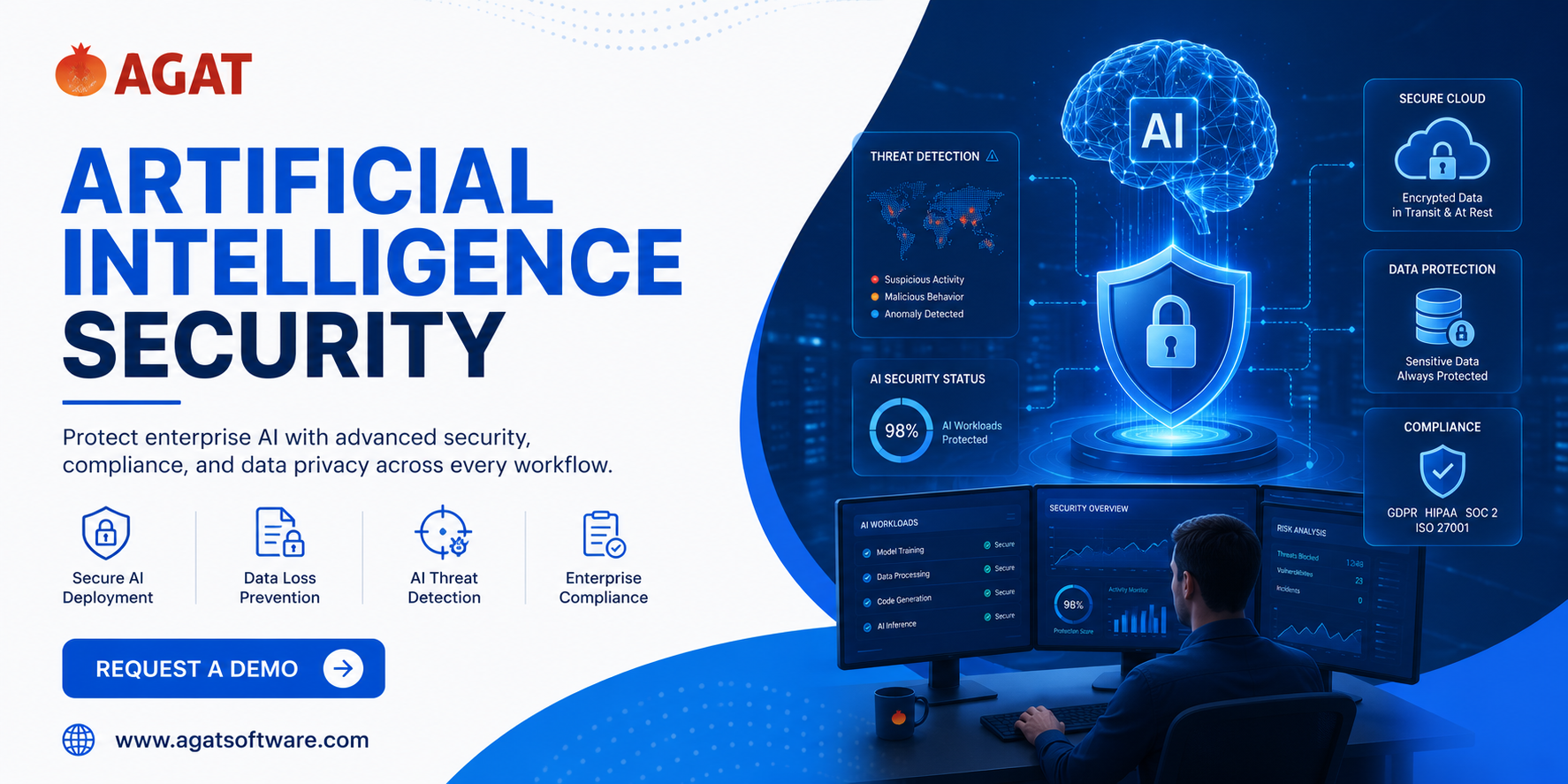
AGAT Software helps organisations strengthen AI security through solutions designed to improve visibility, enforce security policies, and protect confidential data across enterprise environments. By combining intelligent protection with practical governance, businesses can adopt AI technologies while maintaining greater control over their information.
Conclusion
Artificial intelligence is becoming an essential part of modern business, but its success depends on more than powerful capabilities alone. Protecting confidential information, maintaining visibility, and establishing clear governance are all critical for responsible AI adoption.
Organisations that invest in security from the beginning are better prepared to manage future challenges while building trust with customers, employees, and stakeholders. Whether deploying AI internally or expanding existing initiatives, creating a secure foundation today will help ensure long-term success tomorrow.
FAQs
What is artificial intelligence security?
It refers to the practices and technologies used to protect AI systems, sensitive data, and business operations from security threats, misuse, and unauthorised access.
Why is AI governance important?
AI governance helps organisations establish policies, monitor AI usage, manage risks, and ensure systems are used responsibly and consistently.
Who benefits from an on-premise AI deployment?
Businesses handling confidential information, regulated industries, government organisations, healthcare providers, and financial institutions often benefit from keeping AI infrastructure within their own environment.
Can AI improve productivity while remaining secure?
Yes. With appropriate security controls, governance policies, and monitoring, organisations can improve efficiency while protecting sensitive information.
How can businesses prepare for secure AI adoption?
Start by identifying sensitive data, defining access policies, training employees, monitoring AI usage, and implementing security solutions that provide visibility and control across the organisation.



 About Urh Social
 Terms of Service
 Politique de confidentialité
 Contact

 English
 Arabic
 Spanish
 Portuguese
 Deutsch
 Turkish
 Dutch
Dutch
 Italiano
 Russian
 Romaian
 Portuguese (Brazil)
 Greek
Greek
