


 About Urh Social
 Terms of Service
 Πολιτική Ιδιωτικότητας
 Contact
Why Is the UAE Foodservice Market Booming Toward US$ 68 Billion? Size, Growth Drivers, and Forecast (2026–2034)
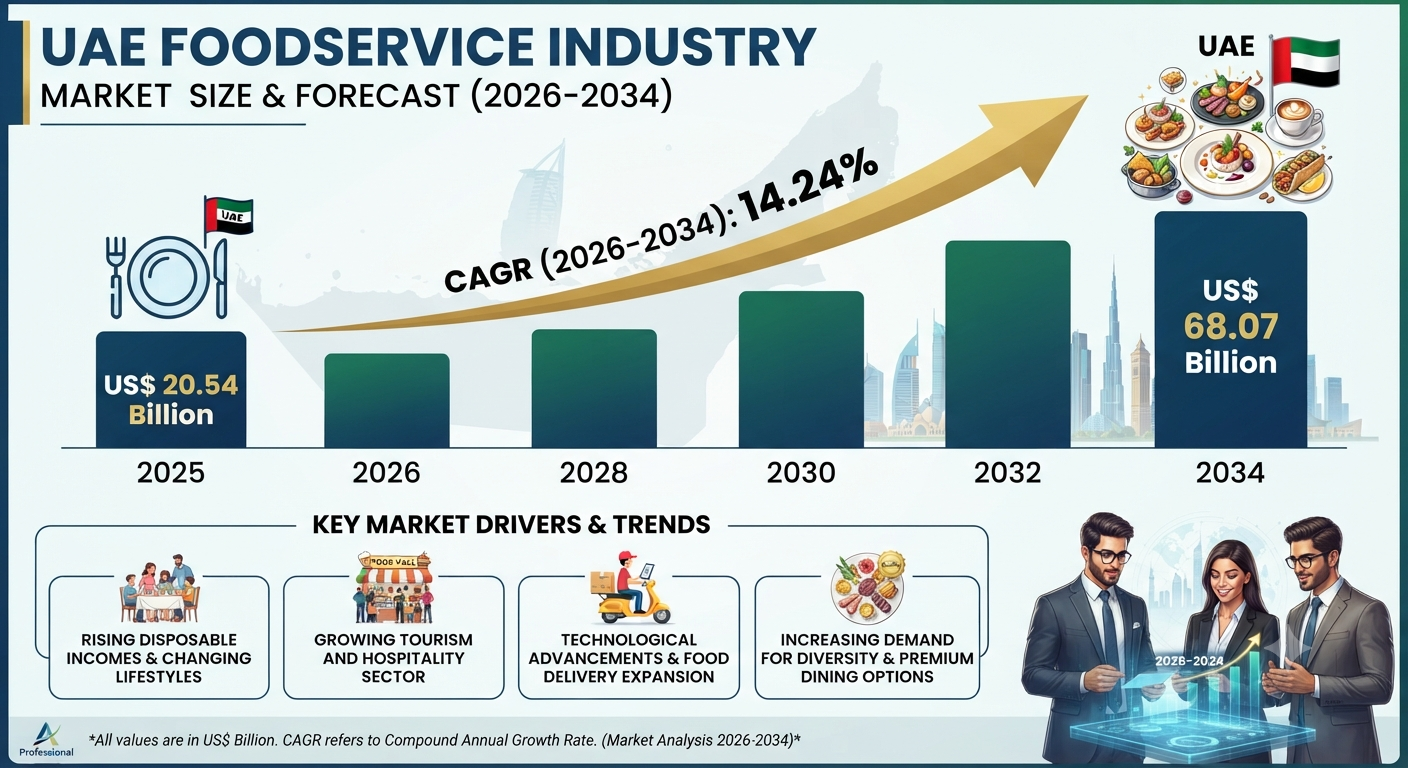
From world-class fine-dining destinations helmed by Michelin-starred chefs in Dubai to bustling neighborhood cloud kitchens servicing busy urban professionals, the UAE’s dining and hospitality sector has evolved into an economic powerhouse. Backed by a thriving tourism industry, massive multicultural demographics, and rapid digital integration, the culinary scene is scaling to new heights.
According to market research, the United Arab Emirates (UAE) foodservice market size is projected to surge from US$ 20.54 billion in 2025 to US$ 68.07 billion by 2034, expanding at a remarkable Compound Annual Growth Rate (CAGR) of 14.24% over the forecast period of 2026–2034.
Market Overview: The Anatomy of UAE Foodservice
Foodservice encompasses all business activities involved in preparing, supplying, and distributing food and beverages for immediate consumption away from home—spanning restaurants, cafes, hotels, catering businesses, Quick Service Restaurants (QSRs), cloud kitchens, and institutional dining facilities.
In the UAE, this sector has matured into a sophisticated ecosystem. Cities like Dubai and Abu Dhabi consistently rank among the premier global food tourism destinations, offering everything from authentic street food to ultra-luxurious dining concepts. This vibrant growth is sustained by a unique mix of high tourist inflows, a massive expatriate workforce, extensive luxury hotel networks, and forward-thinking government initiatives.
Core Growth Drivers
1. A Powerhouse Tourism Industry and Global Culinary Demand
Tourism serves as a primary engine for the UAE's culinary economy. For instance, Abu Dhabi alone welcomed 26.6 million tourists, generating Dh9.1 billion in hotel revenues. Millions of international visitors flock annually to Dubai and Abu Dhabi, sustaining high, year-round demand across the entire spectrum of dining establishments.
The UAE is also a premier global hub for international business events, conferences, and mega-exhibitions. Reinforcing this status, the region hosted 504 major international business events scheduled over a multi-year horizon. This continuous influx of global travelers guarantees a steady appetite for multicultural, high-end, and diverse dining experiences.
2. A Dominant Expatriate Population & Urban Lifestyles
Urbanization and demographics heavily shape the UAE’s food culture. In early 2025, approximately 88.1% of the UAE's total population resided in urban areas. Furthermore, foreign nationals make up a substantial majority: projections indicate that the expatriate population will reach 10.24 million in 2026, compared to 1.33 million UAE nationals.
This multicultural mosaic—bringing together people from South Asia, Europe, the wider Middle East, and the Americas—creates massive demand for authentic international cuisines, quick-service options, and convenient food delivery formats suited to hectic working schedules.
3. Expansion of Digital Food Delivery and Cloud Kitchens
Technology has fundamentally transformed how the UAE eats. Digital food delivery applications and online aggregator platforms have made dining exceptionally convenient and personalized. This digital shift has fueled the explosive growth of cloud kitchens—delivery-only kitchens with no dine-in footprint that offer drastically reduced operational costs and rapid scalability.
Demonstrating strong ecosystem support, delivery platforms like Talabat launched major relief programs in the UAE, providing 100 rent-free cloud kitchen spaces to help small and medium-sized restaurant brands expand their reach and navigate economic pressures.
Key Industry Challenges
Despite exceptional growth trajectories, industry players must navigate stiff operational hurdles:
-
High Operational Costs and Intense Competition: Urban centers like Dubai and Abu Dhabi feature steep real estate prices, high employee salaries, and costly licensing fees. Combined with a crowded field of independent operators, regional chains, and global franchises, price competition is fierce.
-
Regulatory Compliance and Workforce Dependency: The sector is governed by stringent food safety and sanitation regulations. Additionally, the industry relies heavily on an expatriate labor force for kitchens and front-of-house operations, making it susceptible to talent retention challenges, high turnover rates, and shifting immigration policies.
Segment Deep-Dive: Categories and Outlets
                UAE FOODSERVICE MARKET SEGMENTATION
 ┌───────────────────────────┬───────────────────────────┬───────────────────────────┐
 │       Core Segments       │       Popular Cuisines    │    Operating Models       │
 ├───────────────────────────┼───────────────────────────┼───────────────────────────┤
 │ • Cafes and Bars          │ • Asian                   │ • Chained Outlets         │
 │ • Cloud Kitchens          │ • European                │ • Independent Outlets     │
 │ • Full-Service Restaurants│ • Latin American          │ • Lodging / Retail /      │
 │ • Quick Service (QSR)     │ • Middle Eastern          │   Standalone / Travel     │
 │ • Foodservice Retail      │ • North American          │                           │
 └───────────────────────────┴───────────────────────────┴───────────────────────────┘
-
Cafes and Bars: Driven by a vibrant social and coffee culture, specialty coffee shops and luxury hotel lounges act as key business and social meeting points.
-
Burger & Pizza Segments: As the bedrock of QSR and fast-casual dining, burgers and pizzas lead online delivery volumes, blending convenience with gourmet upgrades (such as artisanal crusts, premium patties, and clean ingredients).
-
Chained vs. Independent Outlets: Global and regional chained outlets continue to expand rapidly into lifestyle malls and transit hubs, offering reliable standardization, strong brand loyalty, and streamlined franchising models.
-
Foodservice Retail: Ready-to-eat meals, prepackaged salads, and grab-and-go options found in supermarkets and convenience stores are surging in popularity among urban professionals.
Regional Spotlights Across the Emirates
-
Dubai: The crown jewel of the UAE foodservice market, characterized by ultra-luxurious fine dining, massive year-round tourist traffic, high-end hospitality, and cutting-edge digital dining solutions.
-
Abu Dhabi: Anchored by government leadership, luxury business tourism, cultural landmarks, and a booming upscale hotel and restaurant scene.
-
Sharjah: Features a steady, family-oriented growth rate with a strong focus on cultural traditions, accessible cafes, casual dining, and localized food courts.
-
Fujairah: A fast-developing regional market relying on coastal resort tourism, weekend getaways, and a less saturated landscape that favors budget-friendly and hospitality-oriented concepts.
Competitive Landscape & Key Players
The UAE market features a blend of powerhouse regional franchise operators and international conglomerates. Key players covered across strategic viewpoints (Overviews, Key Personnel, Recent Developments, SWOT Analysis, and Revenue Analysis) include:
-
Americana Restaurants International PLC
-
Alamar Foods Company
-
Al Khaja Group Of Companies
-
Alghanim Industries & Yusuf A. Alghanim & Sons WLL
-
Apparel Group
-
BinHendi Enterprises
-
CKE Restaurants Holdings Inc.
-
D.ream International
-
Emirates Fast Food Company
-
JF Street Food
Final Thoughts
The projection of the UAE foodservice market reaching US$ 68.07 billion by 2034 underscores a powerful reality: dining out and ordering in are deeply embedded in the modern Emirati lifestyle. As tourism flourishes, digital delivery innovations mature, and culinary diversity expands, the UAE remains an unmatched frontier for global foodservice investment and culinary creativity.

 English
 Arabic
 French
 Spanish
 Portuguese
 Deutsch
 Turkish
 Dutch
Dutch
 Italiano
 Russian
 Romaian
 Portuguese (Brazil)
