


 About Urh Social
 Terms of Service
 Privacy Policy
 Contact
Before You Buy an Industrial Solar System, Don't Miss These Tips
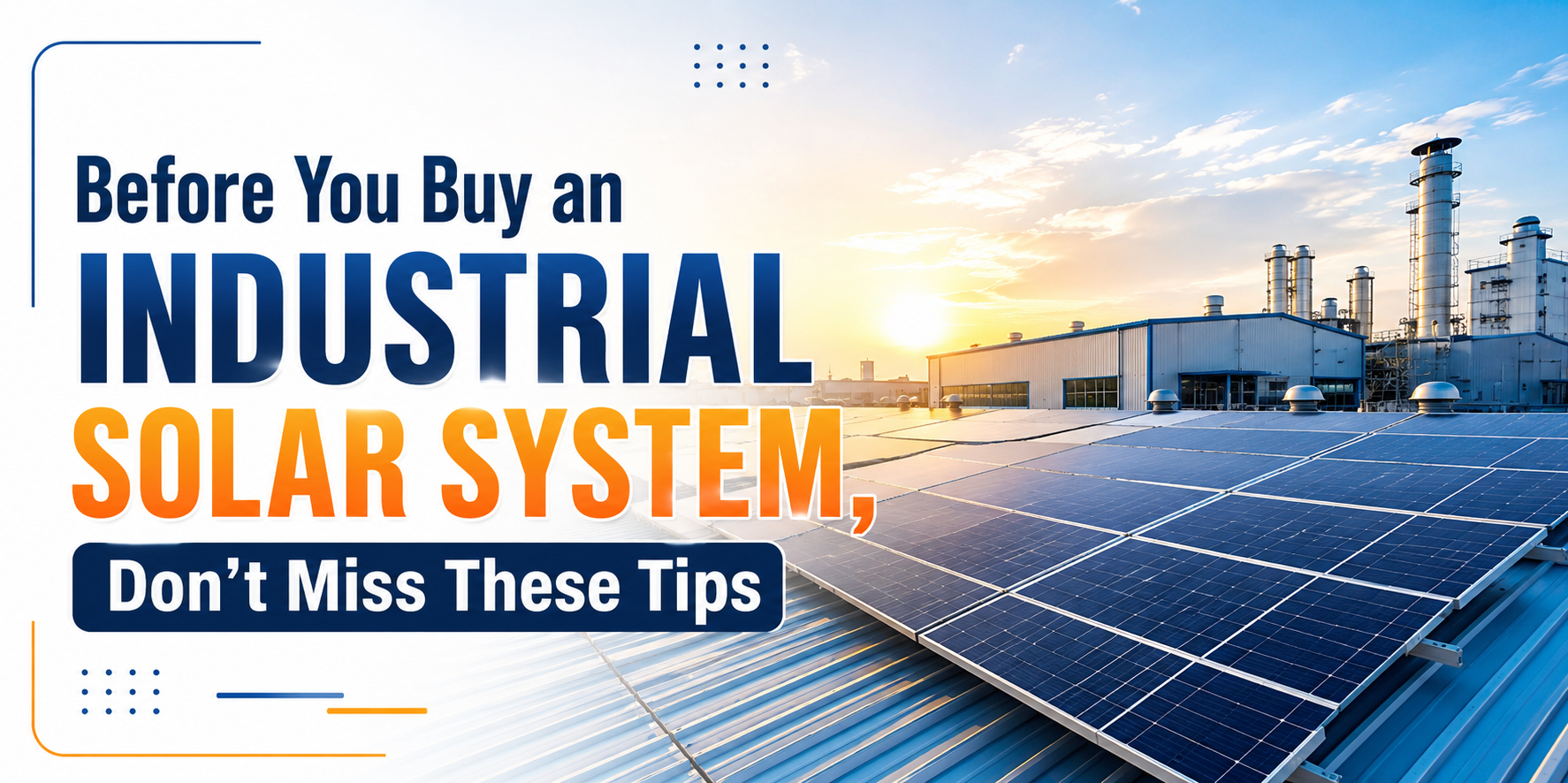
Imagine opening your monthly power bill and seeing a number that keeps growing every month. For many factory owners and business leaders, high energy costs are a heavy burden. Switching to solar energy is one of the smartest ways to take control of these expenses. However, buying an Industrial Solar setup is a big step. It is not just about putting panels on a roof; it is a long-term investment that should work for 25 years or more.
Before you sign any contracts, you need to know exactly what to look for. Many businesses rush into the process and end up with systems that do not meet their needs or fail too early. This guide will walk you through the most important things to check so you can make a choice that saves you money and helps the planet without any headaches.
What Is an Industrial Solar System?
An Industrial Solar System is a large-scale power setup designed to meet the heavy electricity needs of businesses like factories, warehouses, and large offices. Unlike the small systems people put on their homes, these systems are much bigger and tougher. They use a large number of solar panels to turn sunlight into electricity that can run heavy machinery, lighting, and cooling systems.
These systems are usually connected to the main power grid. This allows the business to use solar power during the day and pull from the grid at night or during cloudy weather. Because they are so large, they require careful planning and professional installation to make sure they are safe and efficient.
Why Businesses Are Choosing Industrial Solar Systems
There are several reasons why more companies are making the switch today. Here are the main benefits:
- Reduce Electricity Bills: By making your own power from the sun, you do not have to buy as much from the power company.
- Protection from Rising Power Tariffs: Energy prices go up almost every year. Solar lets you lock in your energy costs for decades.
- Long-Term Return on Investment: While the setup costs money upfront, the system eventually pays for itself through energy savings.
- Sustainable and Green Business Image: Customers like buying from companies that care about the environment.
- Lower Operating Costs: Reducing fixed costs like electricity makes your business more competitive in the market.
Tip 1: Analyze Your Current Electricity Consumption
Before you talk to a seller, look at your past electricity bills. You should check at least 12 months of data. This helps you see how much power you use during different seasons. Do you use more power in the summer for cooling? Or do your machines run 24/7?
Knowing your usage patterns is vital. An Industrial Solar System should be sized to match your actual needs. If you build a system that is too small, you won't save as much money as you hoped. If it is too big, you might spend more money on equipment than you really need to.
Tip 2: Check Whether Your Roof Is Suitable
Your roof is the foundation of your solar project. Not every roof is ready for panels right away. You need to have an expert look at the area where the panels will go to avoid future problems.
Available Roof Space
Solar panels take up a lot of room. You need enough clear space to fit the number of panels required to power your facility. You also need to leave paths between the rows of panels so workers can walk through for cleaning and maintenance.
Roof Strength and Structural Condition
Solar panels and the metal racks that hold them are heavy. Your roof must be strong enough to carry this extra weight for 25 years. If your roof is old or damaged, it is much cheaper to fix it before the panels are installed rather than taking everything down later.
Shadow-Free Area Requirement
Shadows are the enemy of solar power. Even a small shadow from a chimney, a nearby tree, or a taller building can significantly drop the power output of your entire system. Make sure the area stays clear of shadows for most of the day.
Roof Orientation and Sunlight Availability
The direction your roof faces changes how much sun the panels get. In many places, south-facing roofs get the most light. If your roof faces another way, you might need a different mounting setup to tilt the panels toward the sun.
Tip 3: Choose the Right Capacity for Your Industrial Solar System
Capacity refers to how much power the system can produce. It is measured in kilowatts (kW) or megawatts (MW). You don't want to just guess this number. A professional engineer should calculate the capacity based on your roof space and your energy goals.
Think about the future too. If you plan to add more machines or expand your factory in the next two years, it might be smart to design the system so it can grow with you. Getting the capacity right from the start ensures you get the best value for every dollar spent.
Tip 4: Understand the Total Cost, Not Just the Initial Price
It is tempting to pick the lowest bid, but that can be a mistake. The total cost includes the equipment, the installation, and the maintenance over time. Cheap panels might save you money today, but if they break in five years, they will end up costing you much more.
You should also think about "soft costs" like permits and taxes. Ask for an itemized quote so you can see exactly where your money is going. A transparent company will show you the cost of the panels, the inverters, and the labor separately.
Tip 5: Calculate ROI and Payback Period Before Investing
A good solar system should pay for itself. The "payback period" is the time it takes for the electricity savings to equal the cost of the system. For many industrial projects, this is between 3 to 5 years.
After the payback period, the electricity generated is essentially free. Since these systems last for 25 years, you could enjoy 20 years of massive savings. Always ask your solar provider for a detailed financial report that shows the expected ROI based on your local electricity rates.
Tip 6: Select High-Quality Components
Not all solar parts are made the same. You want "Tier 1" solar panels, which are made by reliable companies with good track records. The inverter is also a key part—it turns the solar energy into power your machines can use. If the inverter fails, the whole system stops.
Make sure the mounting structures are made of high-quality materials like galvanized steel or aluminum so they don't rust. High-quality parts perform better in heat and rain, ensuring you get the most power possible every single day.
Tip 7: Check Warranty and After-Sales Support
A warranty is a promise. Most solar panels like shree hari solar come with a 25-year performance warranty, but you should also check the "product warranty" which covers physical defects. This is usually 10 to 12 years.
Equally important is after-sales support. If a storm happens or a wire comes loose, you need a team that will come out and fix it quickly. Ask the provider how they handle repairs and if they offer monitoring services to track your system's health online.
Tip 8: Choose an Experienced Solar EPC Company
EPC stands for Engineering, Procurement, and Construction. A Solar EPC company handles the whole project from start to finish. You want a team that has successfully installed an Industrial Solar System for other big businesses.
An experienced company knows how to handle the paperwork, deal with the utility company, and keep the worksite safe. Check their reviews and ask to see photos of their previous industrial projects. A company that only does small home systems might struggle with the complexity of a large factory setup.
Tip 9: Understand Government Policies and Net Metering
Many governments offer tax breaks or subsidies to help businesses go solar. These can cut your costs significantly. You also need to learn about "Net Metering." This is a system where you can send extra power back to the grid and get credit on your bill.
Rules for solar can change depending on where you live. Your solar partner should be an expert in these local rules and help you fill out all the necessary forms to get your credits and permits on time.
Conclusion
Investing in an Industrial Solar System is a powerful way to protect your business from high energy costs and help the environment. By checking your roof, picking high-quality parts, and working with an experienced partner, you can ensure your project is a huge success. Don't just look at the price tag—look at the long-term value. With the right planning, your solar panels will be one of the best investments your company ever makes. Ready to take the next step? Start by gathering your utility bills and calling a trusted professional today.
Frequently Asked Questions
How long does it take to install an industrial solar system?
The physical installation usually takes a few weeks to a few months, depending on the size. However, the whole process including permits and planning can take 3 to 6 months.
Does solar power work on cloudy days?
Yes, solar panels still produce electricity on cloudy days, but they produce less than they do in direct sunlight. They use diffused light to keep working.
What happens to the solar system at night?
At night, the solar panels do not produce power. Most industrial systems stay connected to the utility grid, so your business automatically draws power from the grid when the sun goes down.
How much maintenance does the system need?
Solar systems are very low maintenance. The most important task is regular cleaning to remove dust and checking the electrical connections once or twice a year.
Can I install solar if I don't own the building?
Yes, but you will need permission from the landlord. Some companies use a Power Purchase Agreement (PPA) to get solar benefits without owning the equipment.

 English
 Arabic
 French
 Spanish
 Portuguese
 Deutsch
 Dutch
Dutch
 Italiano
 Russian
 Romaian
 Portuguese (Brazil)
 Greek
Greek
