


 About Urh Social
 Terms of Service
 سياسة الخصوصية
 Contact
Septate Uterus and IVF: Is Surgery Necessary?
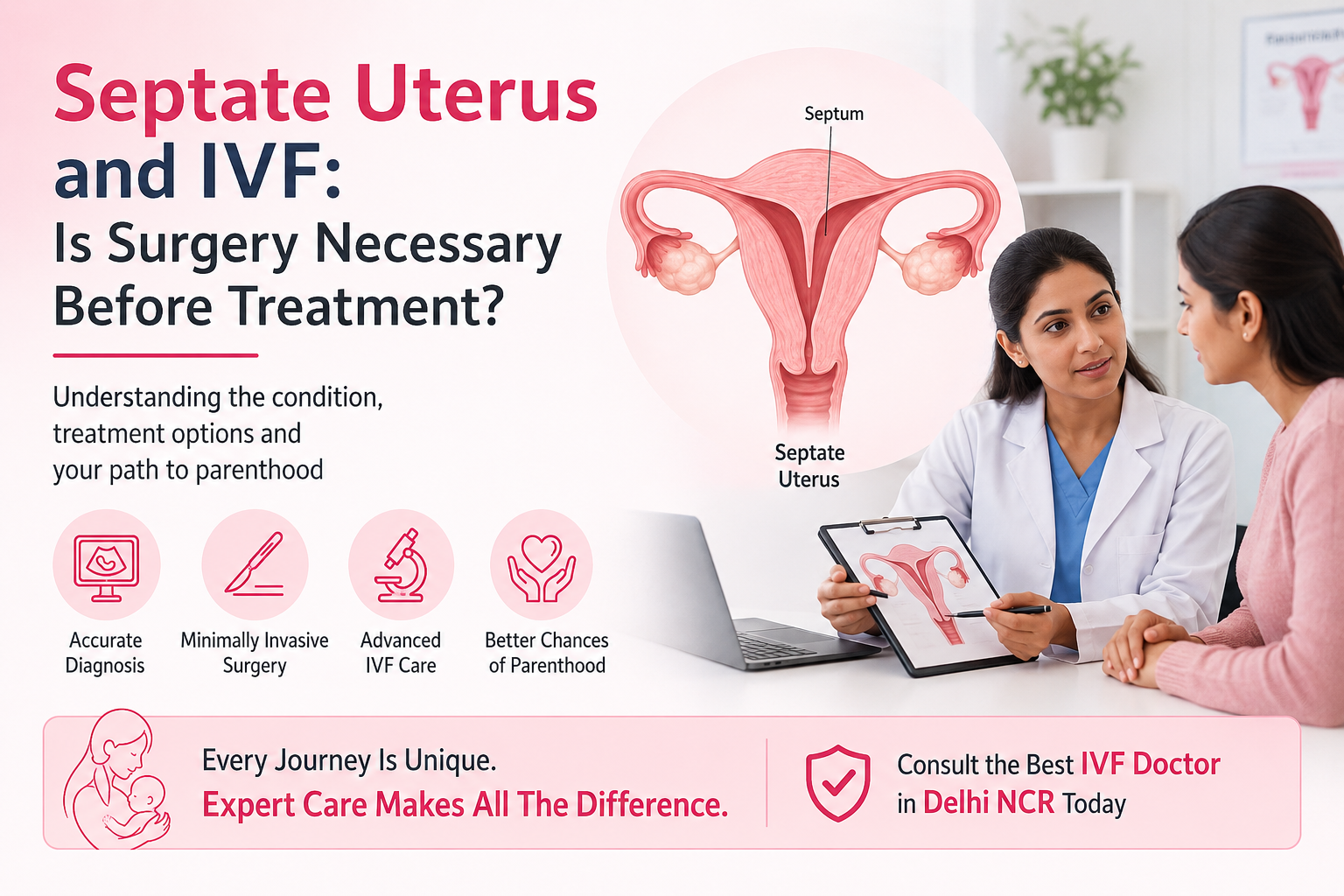
Planning for IVF can feel like preparing for an important journey. Every step matters, and even a small obstacle can affect the outcome. One condition that often raises concerns among couples is a septate uterus. If you've recently been diagnosed with this condition, you may wonder, "Do I need surgery before starting IVF?"
The answer isn't always straightforward. While some women with a septate uterus conceive naturally and deliver healthy babies, others experience repeated miscarriages, implantation failure, or infertility. In such cases, surgery may improve the chances of a successful pregnancy.
If you're consulting the best IVF Doctor in Delhi NCR, one of the first steps will be understanding your uterine anatomy and determining whether correcting the septum is beneficial before beginning fertility treatment.
This guide explains everything you need to know about a septate uterus, its impact on fertility, IVF success rates, surgical options, recovery, and when surgery is recommended.
1. What Is a Septate Uterus?
A septate uterus is a congenital condition, which means it develops before birth. In this condition, a wall of tissue called a septum divides the uterus instead of allowing it to form one open cavity.
Imagine your uterus as a room where a baby grows. Now imagine a wall running through the middle of that room. This wall reduces the available space and may interfere with a healthy pregnancy.
Another concern is that the septum has a poor blood supply. If an embryo implants on this wall instead of healthy uterine tissue, it may not receive enough oxygen and nutrients to develop properly.
2. How Common Is a Septate Uterus?
A septate uterus is the most common congenital uterine abnormality.
Studies estimate that it affects about 2–3% of women. However, many women are unaware they have this condition because it often causes no symptoms.
It is usually discovered during fertility investigations after experiencing:
-
Difficulty conceiving
-
Recurrent miscarriages
-
Repeated IVF failures
-
Preterm delivery
For many women, the diagnosis comes only after undergoing fertility testing.
3. What Causes a Septate Uterus?
During fetal development, two structures called the Müllerian ducts join together to form the uterus.
Normally, after they fuse, the dividing wall disappears completely.
In women with a septate uterus:
-
The Müllerian ducts fuse normally.
-
The dividing wall does not dissolve completely.
-
The remaining tissue forms a septum, which may be fibrous or muscular.
It is important to remember that this condition does not develop later in life. It is present from birth.
4. Symptoms and Warning Signs
Many women with a septate uterus have no symptoms and may never know they have the condition until they try to conceive.
When symptoms occur, they may include:
Recurrent Miscarriages
Repeated pregnancy loss is one of the most common signs of a septate uterus.
Difficulty Getting Pregnant
Some women experience infertility because implantation becomes more difficult.
Repeated IVF Failure
Even healthy embryos may fail to implant if they attach to the septum.
Painful Periods
Some women experience menstrual cramps that are more severe than usual.
Preterm Birth
Limited space inside the uterus can increase the risk of early labor.
Abnormal Baby Position
The baby may remain in a breech position because there is less room to move.
5. Can You Get Pregnant Naturally?
Yes.
Many women with a septate uterus conceive naturally and go on to have healthy pregnancies.
However, pregnancy outcomes depend on several factors, including:
-
The size of the septum
-
Its location within the uterus
-
The quality of blood supply
-
Previous pregnancy history
While some women never experience complications, others may face recurrent miscarriages or infertility.
If you have experienced two or more pregnancy losses, your fertility specialist may recommend further evaluation.
6. How Does a Septate Uterus Affect IVF?
A septate uterus usually does not interfere with egg retrieval or fertilization during IVF.
The main challenge begins after embryo transfer.
An embryo may implant on the septum instead of healthy uterine tissue. Because the septum has poor blood circulation, this can lead to:
-
Failed implantation
-
Increased risk of miscarriage
-
Pregnancy complications
Think of planting a healthy seed.
Even the strongest seed cannot grow well if it is planted in poor soil.
Likewise, even a high-quality embryo needs a healthy uterine lining for successful implantation.
That is why the Best IVF Doctor in Delhi NCR carefully evaluates the uterus before beginning IVF treatment.
7. How Is a Septate Uterus Diagnosed?
Several imaging tests help doctors accurately diagnose a septate uterus.
3D Ultrasound
Provides detailed images of the uterus and is often the first test performed.
MRI Scan
Offers additional information in more complex cases.
Hysteroscopy
A thin camera is inserted through the cervix to directly examine the inside of the uterus.
Sonohysterography
A saline solution is placed inside the uterus during an ultrasound to provide a clearer view of the uterine cavity.
8. Why Is Accurate Diagnosis Important?
An accurate diagnosis is essential because a septate uterus can look similar to other uterine abnormalities, such as a bicornuate uterus.
Choosing the correct treatment depends on identifying the exact condition.
9. When Is Surgery Recommended?
Not every woman with a septate uterus requires surgery.
Surgery may be recommended if you have:
-
A large septum
-
Recurrent miscarriages
-
Repeated IVF failures
-
Infertility linked to the uterine abnormality
-
A poor pregnancy history
Women who have no symptoms and no history of pregnancy loss may not need surgery.
Your fertility specialist will recommend treatment based on your individual situation.
10. What Is Hysteroscopic Septum Resection?
The standard treatment for a septate uterus is hysteroscopic septum resection.
This is a minimally invasive procedure that removes the septum using a small telescope inserted through the cervix.
No abdominal cuts are required.
How the Procedure Is Performed
-
Short or general anesthesia is given.
-
A hysteroscope is inserted through the cervix.
-
The septum is carefully removed.
-
The uterus is restored to a normal cavity.
The procedure usually takes 20–40 minutes, and most women return home the same day.
11. Is Septum Surgery Safe?
Yes.
When performed by an experienced reproductive surgeon, hysteroscopic septum surgery is considered very safe.
Complications are uncommon but may include:
-
Bleeding
-
Infection
-
Uterine perforation
-
Scar tissue formation (rare)
Modern hysteroscopic techniques have made this procedure highly successful and minimally invasive.
12. What Is Recovery Like After Septum Surgery?
Recovery is generally quick and uncomplicated.
Most women experience:
-
Mild cramping
-
Light vaginal bleeding
-
Fatigue for one or two days
Your doctor may advise you to:
-
Avoid sexual intercourse for about two weeks.
-
Avoid swimming for a short period.
-
Take all prescribed medications.
-
Attend follow-up appointments and scans.
Most women return to normal daily activities within a few days.
13. IVF After Septate Uterus Surgery
Most fertility specialists recommend waiting 1–3 months before starting IVF to allow the uterus to heal completely.
Research suggests that removing the septum may:
-
Reduce miscarriage rates
-
Improve embryo implantation
-
Increase live birth rates
-
Improve overall pregnancy outcomes
However, IVF success also depends on several other factors, including:
-
Age
-
Egg quality
-
Embryo quality
-
Male fertility
-
Hormonal balance
While surgery can improve the uterine environment, it cannot guarantee pregnancy.
If left untreated, a significant septate uterus may increase the risk of:
-
Recurrent miscarriage
-
Failed implantation
-
Preterm birth
-
Placental complications
-
Breech baby
-
Emergency Caesarean section
-
Other pregnancy complications
Women planning IVF should discuss these risks with their fertility specialist.
14. Choosing the Best IVF Doctor in Delhi NCR
Selecting the right fertility specialist is just as important as choosing the right treatment.
Look for a doctor who provides:
-
Comprehensive fertility evaluation
-
Advanced ultrasound and hysteroscopy facilities
-
Personalized IVF treatment plans
-
Evidence-based treatment recommendations
-
Experienced embryologists
-
Transparent success rates
-
Compassionate patient care
The Best IVF Doctor in Delhi NCR will not recommend surgery simply because a septum is present. Instead, they will evaluate your medical history, imaging results, previous pregnancies, and fertility goals before deciding whether surgery is likely to improve your IVF success.
15. Tips to Improve IVF Success
Whether or not surgery is needed, these healthy lifestyle habits can improve your chances of a successful IVF cycle.
Maintain a Healthy Weight
A balanced diet and regular exercise help regulate hormones and improve fertility.
Quit Smoking and Limit Alcohol
Both smoking and excessive alcohol can reduce egg quality and lower pregnancy success rates.
Manage Stress
Yoga, meditation, counseling, or relaxation exercises can help reduce stress during fertility treatment.
Take Your Fertility Medications Correctly
Always follow your doctor's instructions regarding fertility medications.
Attend Every Follow-Up Appointment
Regular monitoring allows your fertility specialist to make adjustments that can improve treatment outcomes.
Follow a Fertility-Friendly Diet
Eat plenty of fruits, vegetables, whole grains, lean proteins, healthy fats, and stay well hydrated to support reproductive health.
Conclusion
Learning that you have a septate uterus during a fertility evaluation can feel overwhelming. The good news is that this condition does not mean you cannot become a parent. Many women with a septate uterus achieve healthy pregnancies naturally or through IVF.
The key is determining whether the septum is affecting your fertility. For women with recurrent miscarriages, repeated IVF failures, or a large septum, hysteroscopic septum resection may significantly improve pregnancy outcomes. However, surgery is not necessary for everyone.
A personalized treatment plan is essential. The Best IVF Doctor in Delhi NCR will carefully assess your uterine anatomy, embryo quality, medical history, and overall reproductive health before recommending the most appropriate treatment. With the right diagnosis, expert guidance, and timely care, your journey toward parenthood can move forward with confidence.
Frequently Asked Questions (FAQs)
1. Can IVF be successful without removing a septate uterus?
Yes. Some women achieve successful IVF pregnancies without surgery. However, if the septum is large or associated with recurrent miscarriages or repeated failed embryo transfers, removing it may improve pregnancy outcomes.
2. Is septum surgery painful?
No. The procedure is performed under anesthesia, and most women experience only mild cramping and light bleeding afterward. Recovery is usually quick.
3. How long should I wait before starting IVF after septum surgery?
Most fertility specialists recommend waiting 1–3 months to allow the uterus to heal completely before beginning IVF treatment.
4. Does septum surgery guarantee pregnancy?
No. Surgery can improve the uterine environment and reduce miscarriage risk, but IVF success also depends on factors such as age, egg quality, sperm quality, embryo quality, and overall reproductive health.
5. How is a septate uterus diagnosed?
A septate uterus is usually diagnosed using 3D ultrasound, MRI, hysteroscopy, or sonohysterography during a fertility evaluation or after recurrent pregnancy loss. An experienced fertility specialist can recommend the most appropriate diagnostic test.

 English
 French
 Spanish
 Portuguese
 Deutsch
 Turkish
 Dutch
Dutch
 Italiano
 Russian
 Romaian
 Portuguese (Brazil)
 Greek
Greek
