


 About Urh Social
 Terms of Service
 Política de Privacidade
 Contact
Why Does the Cost of CRM Development Vary Between Projects?
Introduction
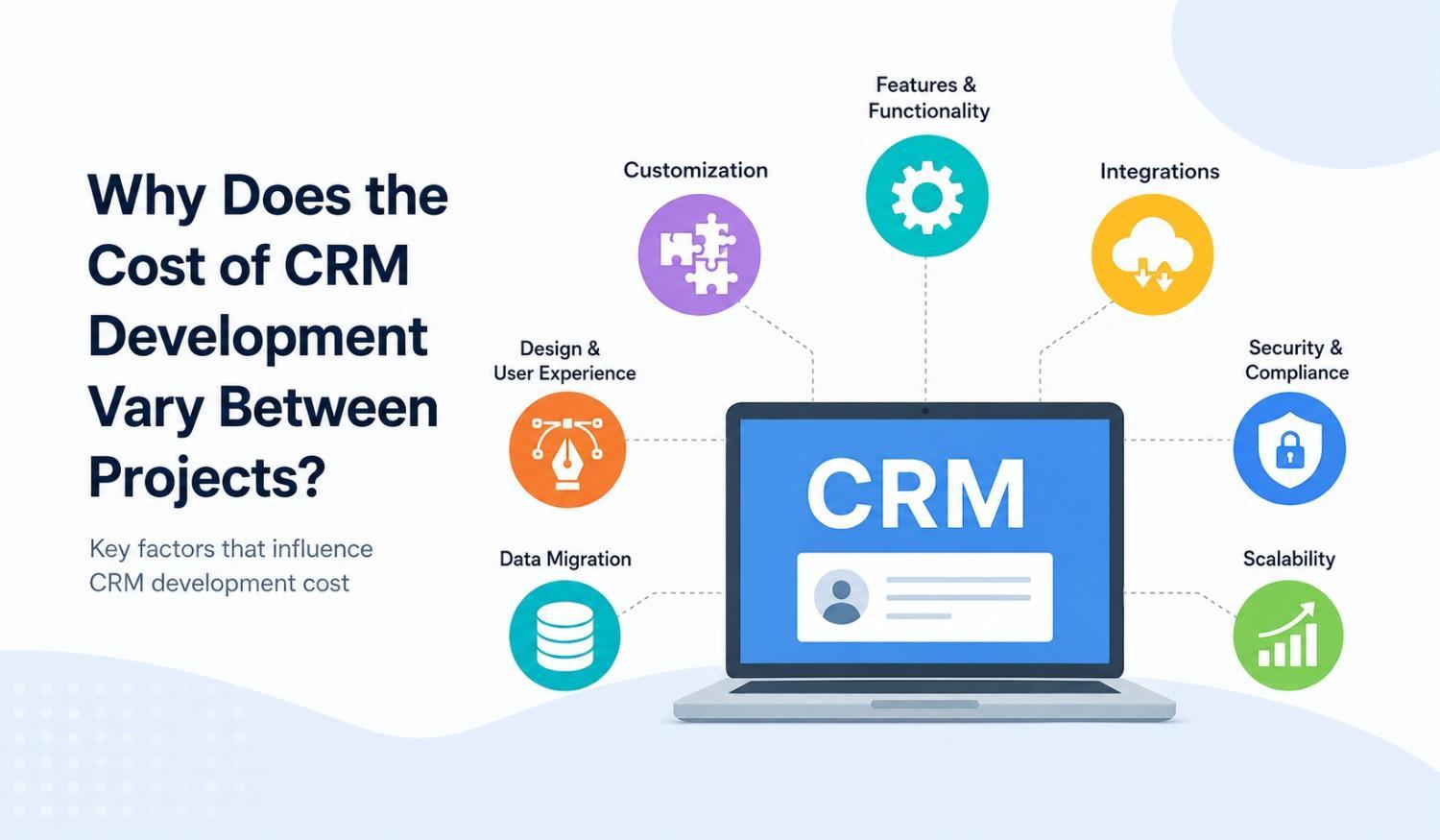
Ask ten business owners about CRM pricing and chances are you'll hear ten different numbers. That can be frustrating—especially when everyone seems to be talking about the same type of software. The reality is much simpler. Every company has unique processes, customer interactions, reporting needs, and growth plans. A custom CRM is designed around those requirements, which means costs naturally vary from project to project. Similar to building a house, the final price depends on the blueprint, materials, and long-term goals. Understanding the factors behind CRM Development Cost helps businesses plan smarter investments.
Every Business Starts with Different Requirements
No two organizations manage customers in exactly the same way. A manufacturing company follows a very different workflow than a healthcare provider or a real estate agency. Some businesses need simple lead management, while others require complex sales pipelines, customer portals, and approval systems. These differences influence development effort from the very beginning. We have often seen projects that appeared identical on the surface reveal completely different operational needs during discovery sessions. Since customization is based on business requirements, varying levels of complexity create varying project costs.
Features Make the Biggest Difference
Features are often the largest contributor to development expenses. A CRM that stores customer information and tracks interactions requires significantly less work than one equipped with workflow automation, AI recommendations, advanced analytics, and customer self-service portals. Every additional feature requires planning, development, testing, and maintenance. Businesses sometimes create lengthy wish lists filled with functionality they may never use. The challenge is distinguishing between essential tools and nice-to-have additions. When features become more sophisticated, development effort grows accordingly, which directly impacts the overall project budget.
Basic CRM vs Enterprise CRM
A basic CRM typically focuses on contact management, lead tracking, task scheduling, and communication records. Enterprise-grade solutions go much further by supporting multiple departments, complex workflows, advanced permissions, and large volumes of data. The difference between the two is similar to comparing a neighborhood grocery store with a large distribution center. Both serve customers, but their operational demands are worlds apart. Enterprise systems require deeper architecture planning, stronger security measures, and greater scalability. Naturally, these additional requirements increase development time and project costs.
Automation and Smart Workflows
Automation can save countless hours, but creating it requires careful planning and technical expertise. Automated lead assignments, follow-up reminders, approval processes, and workflow triggers must function reliably across various business scenarios. One overlooked condition can create a chain reaction of issues. We once observed a workflow that accidentally assigned every incoming lead to a single salesperson for several days (an efficient way to create confusion, though not productivity). Building reliable automation takes time, testing, and refinement, which contributes significantly to project pricing.
Reporting and Dashboards
Business leaders rely on reports to make informed decisions. While simple reports are relatively easy to create, customized dashboards often require extensive development. Different departments need different metrics, visualizations, and data filters. Sales managers may track conversion rates, while executives focus on revenue forecasting and customer retention. Gathering information from multiple sources and presenting it in meaningful ways requires both technical and business expertise. As reporting requirements become more detailed and dynamic, the amount of development work increases, which affects overall project costs.
AI and Predictive Capabilities
Artificial intelligence has become one of the most requested CRM enhancements. Predictive lead scoring, customer behavior analysis, intelligent recommendations, and automated insights can improve efficiency across departments. However, AI features involve much more than adding a button labeled "smart." Data preparation, model integration, training, testing, and ongoing optimization all require specialized expertise. These advanced capabilities introduce additional layers of complexity that significantly influence development budgets. Businesses interested in AI should view it as a strategic investment rather than a simple feature addition.
The Number of Integrations Changes Everything
Modern businesses rarely operate with a single software platform. CRM systems often need connections with accounting software, ERP solutions, marketing platforms, communication tools, payment gateways, and customer support applications. Every integration introduces technical considerations related to APIs, authentication, security, and data synchronization. A reliable CRM software development company spends significant time ensuring these systems communicate accurately. Some integrations take days, while others require weeks of custom development. The more systems involved, the more resources are needed to ensure smooth and reliable operation.
Custom Design Takes More Time Than Standard Templates
Design is about more than visual appearance. A custom CRM interface must support employee productivity, simplify workflows, and reduce learning curves. Standard templates can lower costs, but many organizations require unique layouts and user experiences tailored to their operations. Customized dashboards, branded interfaces, and specialized navigation structures require additional design and development effort. Businesses often underestimate how much thought goes into making software intuitive. Creating a system that employees enjoy using can require considerable investment, but the long-term benefits often justify the expense.
User Roles and Security Requirements Affect Development
Security requirements vary dramatically between industries. Some organizations need basic access controls, while others require advanced authentication, role-based permissions, audit logs, and compliance measures. Every user role must have carefully defined access rights to protect sensitive information. Businesses operating in regulated sectors often face additional requirements related to privacy and data protection. These safeguards cannot be treated as optional add-ons. Developing secure systems demands careful planning, rigorous testing, and ongoing monitoring, all of which contribute to differences in CRM development costs.
Permission Levels
Role-based access sounds straightforward until dozens of departments become involved. Sales representatives, managers, executives, support teams, and administrators often require different levels of access. Creating these permissions requires detailed planning to ensure employees can access what they need without exposing sensitive information unnecessarily. Small mistakes can lead to security vulnerabilities or operational inefficiencies. As organizations grow, permission structures become increasingly complex. Building and testing these frameworks requires substantial effort, making them an important factor in overall development pricing.
Data Encryption
Customer information is one of a company's most valuable assets. Protecting that data requires encryption both during transmission and while stored within databases. Implementing robust encryption standards demands specialized expertise and careful system architecture. Businesses handling financial records, healthcare data, or sensitive customer information often require additional safeguards. Encryption solutions must balance security with system performance. The stronger the protection requirements, the greater the development effort involved. These security investments contribute directly to project costs but help reduce significant risks over the long term.
Compliance Requirements
Regulatory compliance adds another layer of complexity to CRM development. Industries governed by privacy regulations must implement specific controls related to data collection, storage, access, and deletion. Compliance often requires extensive documentation, auditing capabilities, and specialized security features. Meeting these standards involves both technical implementation and thorough validation. Businesses sometimes underestimate the effort required until development begins. Compliance requirements can significantly affect timelines and budgets, but failing to address them properly may create far greater costs in the future.
Data Migration Is Often More Complex Than Expected
Many businesses already possess years of customer information stored across spreadsheets, legacy databases, and disconnected software systems. Migrating that data into a new CRM sounds simple in theory but often becomes one of the most challenging project phases. Duplicate records, inconsistent formats, missing information, and outdated entries create obstacles that must be addressed carefully. Successful migration requires cleaning, mapping, validating, and testing data before launch. The larger and messier the existing data environment, the more time and resources are needed to ensure a smooth transition.
Scalability Influences Long-Term Investment
A CRM built for twenty users differs greatly from one designed for thousands. Scalability planning ensures the system can support future growth without requiring complete redevelopment. Businesses expecting expansion often need stronger infrastructure, flexible architecture, and optimized database structures. Building for future demand may increase initial development costs, but it reduces the likelihood of expensive redesigns later. We frequently encourage organizations to think beyond current requirements because growth tends to arrive faster than expected. Investing in scalability often provides substantial long-term value.
Development Team Experience Plays an Important Role
The experience level of the development team can influence both project quality and overall cost. An experienced CRM developer often identifies potential issues before they become expensive problems. Strong technical expertise improves architecture decisions, streamlines implementation, and reduces long-term maintenance requirements. Less experienced teams may offer lower initial pricing, but mistakes can lead to delays and additional expenses later. Businesses should evaluate development partners based on expertise, communication, and proven results rather than focusing exclusively on the lowest proposal.
Testing Is More Than Finding Bugs
Testing is frequently misunderstood as a final project step, but it plays a crucial role throughout development. Every feature, integration, workflow, and security control must be validated to ensure reliable performance. Effective testing helps identify issues before they impact users and business operations. While thorough quality assurance requires additional resources, it often prevents much larger expenses after deployment. Businesses that prioritize testing typically experience smoother launches and fewer disruptions. The depth of testing requirements directly influences project timelines and development costs.
Functional Testing
Functional testing verifies that every feature behaves as expected. Lead management, reporting tools, workflows, notifications, and integrations must all operate correctly under various conditions. Even small configuration errors can create significant operational challenges. Comprehensive testing involves reviewing multiple use cases and business scenarios to ensure consistent performance. The greater the number of features and workflows, the more extensive testing becomes. Functional validation requires time and attention to detail, making it an important contributor to overall project effort.
Security Testing
Security testing focuses on identifying vulnerabilities before malicious actors can exploit them. Access controls, authentication systems, encryption mechanisms, and data storage practices must all be carefully reviewed. Businesses managing sensitive customer information cannot afford security gaps. Effective testing includes penetration assessments, vulnerability reviews, and permission validation exercises. Although these activities increase development effort, they help protect organizations from far more costly security incidents. Strong security testing is an essential component of any modern CRM implementation.
Performance Testing
Performance testing ensures a CRM remains responsive under realistic usage conditions. A system may function perfectly with ten users but struggle when hundreds access it simultaneously. Testing evaluates database performance, application responsiveness, and infrastructure capacity under various workloads. Identifying bottlenecks before launch allows developers to optimize performance and improve scalability. As user counts and transaction volumes increase, testing requirements become more extensive. Performance validation helps create reliable systems capable of supporting business growth effectively.
User Acceptance Testing
User acceptance testing allows employees to evaluate the CRM before deployment. Real-world users often identify workflow improvements and usability concerns that technical teams may overlook. Their feedback helps refine the system and improve adoption rates after launch. Successful user acceptance testing requires planning, training, documentation, and support. While this process adds effort to the project timeline, it helps ensure the final solution aligns with actual business needs. Better user adoption ultimately increases the return on development investments.
Ongoing Support Should Never Be Ignored
Launching a CRM is only the beginning of its lifecycle. Businesses require ongoing support to address updates, performance improvements, security enhancements, and evolving operational requirements. Technology changes constantly, and customer expectations evolve just as quickly. Regular maintenance helps ensure systems remain secure, stable, and effective. Some organizations overlook support costs during planning and later encounter unexpected challenges. Factoring long-term maintenance into project budgets provides a more accurate understanding of total ownership costs and helps maximize software value.
Hidden Factors That Can Increase CRM Development Costs
Certain cost drivers often emerge after development begins. Scope changes, third-party licensing fees, custom API requirements, infrastructure upgrades, employee training, and documentation needs can all affect project budgets. These factors are not necessarily problems; they simply reflect evolving business priorities. The key is recognizing them early and planning accordingly. Transparent communication between stakeholders and developers helps reduce surprises. Projects with clear objectives and realistic expectations generally experience fewer budget fluctuations throughout the development process.
How Businesses Can Control CRM Development Costs
Cost control begins with clear planning. Businesses should define objectives, prioritize essential features, identify integration requirements, and establish realistic timelines. Attempting to build everything at once often increases complexity and delays delivery. A phased approach frequently provides better results by allowing organizations to focus on immediate priorities while planning future enhancements strategically. Strong collaboration between business stakeholders and technical teams helps maintain alignment throughout development. Careful planning does not eliminate costs—it helps ensure resources are invested where they create the greatest value.
Why Choosing the Right Development Partner Matters
The right development partner brings more than technical expertise. They contribute industry knowledge, strategic guidance, transparent communication, and long-term support. Successful CRM projects depend on understanding business processes as much as writing code. Development teams that ask thoughtful questions often uncover opportunities for efficiency and improvement. Strong partnerships help organizations avoid unnecessary complexity while building solutions aligned with long-term goals. The value of a project often depends as much on collaboration quality as on technical implementation itself.
Conclusion
CRM pricing varies because businesses vary. Requirements, features, integrations, security needs, scalability goals, and long-term strategies all influence development effort. Looking only at the initial price can create a misleading picture of overall value. The most effective CRM solutions are those designed to support real business objectives rather than generic assumptions. When organizations understand the factors driving cost, they can make more informed decisions and invest with confidence. In the end, the question is not simply what a CRM costs—it is what the right CRM helps a business achieve.
FAQs
1. Why is CRM development cost different for every business?
Every business has unique workflows, feature requirements, integrations, security needs, and scalability goals. These differences directly affect development effort and project pricing.
2. Which features increase CRM development costs the most?
Advanced automation, AI capabilities, custom dashboards, reporting tools, customer portals, and complex workflow management features typically increase costs the most.
3. Does custom CRM software cost more than off-the-shelf solutions?
Custom CRM systems often require higher upfront investment, but they provide tailored functionality that can improve efficiency and deliver greater long-term value.
4. How do integrations affect CRM pricing?
Integrations require development, testing, security validation, and data synchronization. The more systems involved, the greater the development effort and cost.
5. Can businesses reduce CRM development costs without sacrificing quality?
Yes. Prioritizing essential features, planning carefully, avoiding unnecessary customization, and using phased development approaches can help control costs.
6. How long does a custom CRM development project usually take?
Project timelines vary based on complexity, but custom CRM development can range from several weeks to several months depending on requirements.
7. Why should businesses think about scalability before development begins?
Scalable systems support future growth without requiring major redesigns, helping businesses avoid higher redevelopment costs later.
8. How does choosing an experienced development team affect project costs?
Experienced teams may charge higher rates initially, but they often deliver better architecture, fewer issues, faster development, and lower long-term maintenance expenses.

 English
 Arabic
 French
 Spanish
 Deutsch
 Turkish
 Dutch
Dutch
 Italiano
 Russian
 Romaian
 Portuguese (Brazil)
 Greek
Greek
