


 About Urh Social
 Terms of Service
 Política de privacidade
 Contact
Micro OLED Display Not Bright Enough? Common Causes and Practical Solutions
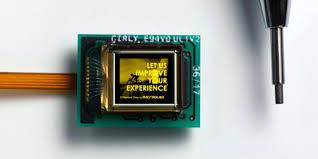
A micro OLED display can produce deep blacks, excellent contrast, and sharp images in a very small size. That is why many AR headsets, EVFs, thermal imaging devices, and premium wearable products rely on this technology. However, brightness remains one of the biggest challenges during product design. A display may look impressive indoors but struggle under sunlight or in demanding optical systems.
If a micro OLED display could talk, it would probably say, "I can produce perfect black, but please stop taking me into direct sunlight." While that sounds funny, it reflects a real engineering challenge. Brightness depends on far more than the display panel itself.
This article explains why brightness problems happen, how they affect performance, and what practical solutions manufacturers use without sacrificing image quality.
Why Brightness Matters in a Micro OLED Display
Brightness directly affects how easily users can see digital content. A display with excellent contrast still becomes difficult to view if it cannot produce enough visible light for the environment.
This challenge becomes even more important in products such as:
- AR and mixed reality headsets
- Electronic viewfinders (EVFs)
- Medical imaging equipment
- Industrial inspection devices
- Military and defense optics
These applications often operate under changing lighting conditions. Engineers must balance brightness, power consumption, heat generation, and display lifespan.
What Causes Brightness Limitations?
Several factors influence the maximum brightness of a micro OLED display. Most of them come from engineering trade-offs rather than design mistakes.
1. Organic Materials Have Physical Limits
OLED technology creates light through organic materials. Higher brightness requires more electrical current, which increases heat and speeds up material aging.
Manufacturers therefore balance brightness with long-term reliability instead of simply pushing the panel to its maximum output.
According to the Society for Information Display (SID), OLED performance always involves trade-offs between luminance, efficiency, lifetime, and power consumption.
2. Optical Systems Reduce Available Light
Many people blame the display panel when the real problem sits in front of it.
AR headsets often use:
- Bird Bath optics
- Pancake optics
- Waveguides
Each optical element absorbs or reflects part of the generated light. Even a high-quality micro OLED display may lose a noticeable percentage of brightness before the image reaches the user's eyes.
The more complex the optical path becomes, the greater the light loss.
3. Thermal Management Limits Performance
Heat is the enemy of every high-performance display.
When temperatures rise, manufacturers often reduce display brightness to protect internal components. This process helps maintain stable operation and extends product life.
A strong cooling solution allows the display to maintain higher brightness for longer periods.
How Manufacturers Improve Brightness
Increasing brightness is not as simple as turning up a digital slider. Modern display manufacturers improve multiple parts of the system together.
Better OLED Materials
Researchers continue developing more efficient organic emitters.
Improved materials generate more light while using less electrical power. This approach increases efficiency without dramatically reducing panel lifetime.
Display manufacturers regularly invest in new emitter technologies to improve both brightness and durability.
High-Efficiency Optical Design
Optical engineers work just as hard as display engineers.
Modern lens coatings, improved reflectors, and better light management reduce unnecessary optical losses. Even small improvements in transmission can noticeably increase perceived brightness.
Instead of producing more light, engineers often focus on wasting less of it.
Smarter Display Drivers
Advanced driver ICs help control current more efficiently.
These controllers optimize brightness across different scenes while protecting sensitive OLED materials. Dynamic brightness adjustment also improves power efficiency during normal use.
Brightness Is Only One Part of Image Quality
Many buyers compare displays using brightness numbers alone. That approach misses the bigger picture.
A quality micro OLED display combines:
- High contrast ratio
- Accurate colors
- Fast response time
- High pixel density
- Uniform brightness
- Low power consumption
For example, a display with lower peak brightness but excellent contrast often appears clearer than a brighter display with washed-out blacks.
This explains why OLED technology remains popular despite brightness challenges.
Common Mistakes When Evaluating Brightness
Many product designers focus on specifications instead of real-world performance.
Some common mistakes include:
Ignoring Ambient Light
Indoor testing rarely represents outdoor conditions.
A display that looks excellent inside an office may struggle under sunlight.
Overlooking Optical Efficiency
A brighter panel cannot fully compensate for poor optical design.
Improving lenses and coatings often delivers better results than simply increasing display brightness.
Forgetting Battery Life
Higher brightness usually increases power consumption.
Portable devices must balance visual performance with operating time. Nobody wants an AR headset that shines like a flashlight but runs out of battery before lunch.
Future Improvements Look Promising
The display industry continues improving micro OLED technology.
Current research focuses on:
- More efficient OLED emitters
- Better thermal management
- Advanced display driver circuits
- Improved optical coatings
- Hybrid display architectures
Researchers also continue exploring ways to increase optical efficiency in AR systems without significantly increasing size or weight.
As these technologies mature, future micro OLED display products should deliver brighter images while maintaining excellent contrast and energy efficiency.
Conclusion
Brightness remains one of the most discussed challenges for every micro OLED display, but the issue goes far beyond the display panel itself. Organic materials, thermal limits, optical systems, and power management all influence the final viewing experience.
Rather than chasing the highest brightness specification, manufacturers focus on balancing efficiency, image quality, reliability, and product lifespan. That balanced approach explains why micro OLED displays continue powering advanced AR headsets, electronic viewfinders, medical devices, and industrial optics despite demanding performance requirements.
For engineers and buyers alike, understanding these engineering trade-offs leads to better design decisions and more realistic performance expectations.

 English
 Arabic
 French
 Spanish
 Portuguese
 Deutsch
 Turkish
 Dutch
Dutch
 Italiano
 Russian
 Romaian
 Greek
Greek
