Industrial pasta manufacturing has become increasingly technology-driven as food processing companies attempt to balance higher production demand with tighter quality expectations. The expansion of organized retail, export-oriented food businesses, and large-scale packaged food distribution has created growing pressure on manufacturers to improve production consistency, operational reliability, and plant efficiency.
Within this environment, pasta machines are no longer viewed as standalone food processing equipment. They are now considered integrated industrial systems that influence workflow stability, product standardization, energy consumption, labor efficiency, and long-term manufacturing scalability.
Modern pasta production facilities operate under conditions where even minor inconsistencies in extrusion, drying, or packaging can affect overall plant performance. Because of this, industrial processors increasingly focus on engineering reliability and process synchronization while selecting machinery for new production units or plant expansion projects.
Manufacturers also face additional operational challenges linked to fluctuating raw material quality, increasing energy costs, labor dependency, and the need for faster production turnaround. These factors have accelerated the adoption of advanced automation systems within industrial pasta manufacturing plants.
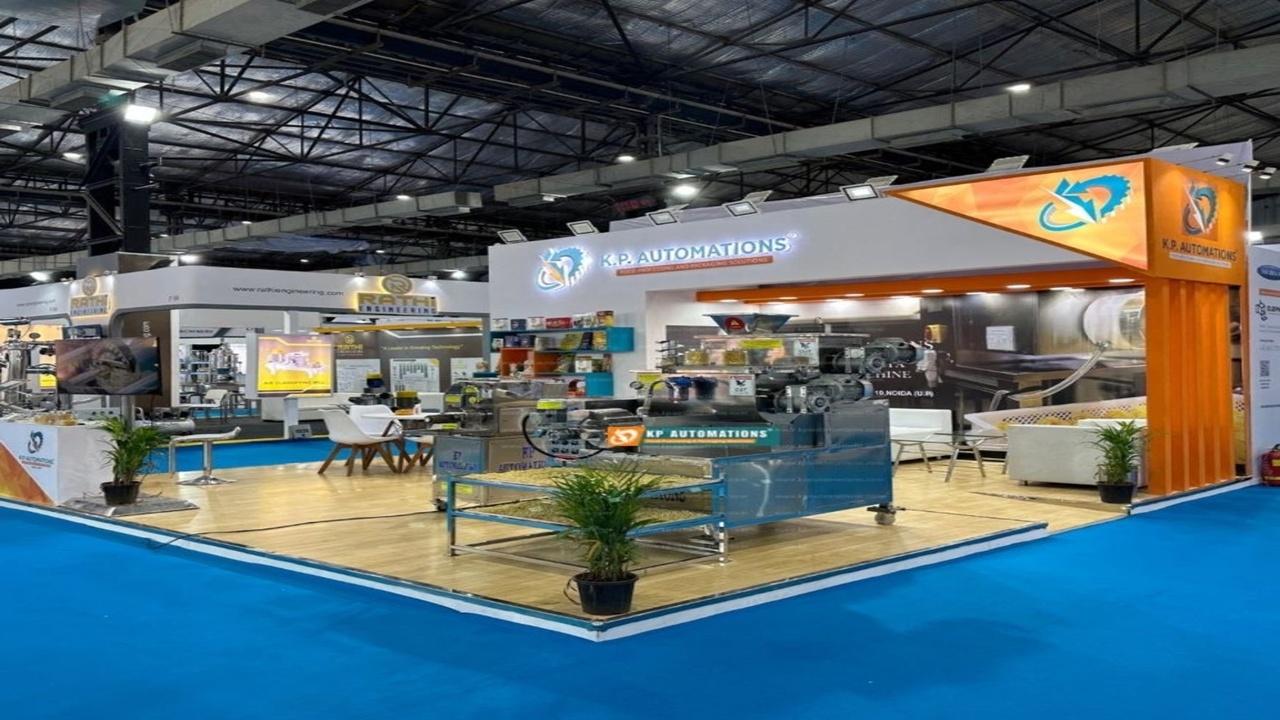
KP Automations, located at G.B D-372, D Block, Sector 10, Noida, Uttar Pradesh 201301, India, operates within this industrial processing sector where manufacturers prioritize technically stable and scalable pasta production systems for commercial manufacturing operations.
Evolution of Industrial Pasta Production Systems
The operational structure of pasta manufacturing has changed significantly over the last two decades. Earlier production setups often depended on semi-manual processing stages with substantial operator involvement between mixing, extrusion, drying, and packaging operations.
While these systems supported moderate production capacities, they frequently struggled with large-scale consistency requirements and long-duration production stability.
Modern food factories now prefer integrated pasta production line systems capable of maintaining continuous manufacturing conditions with minimal operational interruption.
Continuous production systems improve manufacturing efficiency because all operational stages remain synchronized according to controlled throughput capacity. This synchronization reduces bottlenecks, stabilizes workflow movement, and minimizes product handling inconsistencies.
Industrial processors also increasingly evaluate machinery based on operational uptime because production interruptions create substantial downstream disruption in high-capacity food manufacturing environments.
The growing complexity of food safety regulations and quality control standards has further increased the need for technically reliable pasta machine systems capable of maintaining repeatable production conditions over extended manufacturing cycles.
Mechanical Workflow Inside an Industrial Pasta Machine
A modern pasta machine functions through a sequence of carefully controlled mechanical and thermal processes designed to transform raw ingredients into shelf-stable packaged food products.
The process begins with raw material preparation where semolina or flour is combined with water under controlled mixing conditions. Dough hydration consistency is essential because uneven moisture distribution directly affects extrusion performance and product texture.
After mixing, the dough enters the pasta extrusion machine where pressure-based shaping systems create the final pasta geometry.
Extrusion technology represents one of the most technically critical sections of industrial pasta manufacturing because product density, structural integrity, and dimensional accuracy are all influenced during this stage.
Industrial extrusion systems maintain stable internal pressure throughout the production cycle to ensure consistent product formation. Variations in pressure can create surface defects, air pockets, or inconsistent product dimensions that later affect drying behavior and cooking performance.
Different die configurations allow the same pasta machine to produce multiple product categories including tubular pasta, short-cut pasta, long-cut pasta, and specialty formats.
Following extrusion, products move into the pasta drying system where controlled thermal conditions gradually reduce internal moisture content.
Drying remains one of the most sensitive stages in industrial pasta production because rapid or uneven moisture removal can damage structural integrity and reduce shelf stability.
A modern industrial pasta dryer uses controlled airflow circulation, staged temperature balancing, and humidity management systems to optimize drying performance while preserving product structure.
Once drying and cooling are completed, products enter the pasta packing machine where automated weighing, filling, sealing, and coding operations prepare the final product for commercial distribution.
Industrial Pasta Machine Variants and Production Applications
Industrial food processors select different pasta machine configurations depending on production scale, product range, and operational objectives.
Small commercial production units often begin with semi-automatic pasta making machine systems designed for medium-volume manufacturing environments. These systems provide production flexibility while maintaining lower operational complexity.
Large industrial food processing facilities generally require industrial pasta making machine systems capable of continuous operation across multiple production shifts.
These high-capacity systems are engineered for long operational cycles, automated synchronization, and stable throughput consistency.
An automatic pasta making machine becomes especially valuable in facilities where labor optimization and production repeatability are critical operational goals.
Automation significantly reduces production variability by maintaining stable operating conditions throughout extrusion, drying, and packaging processes.
Production facilities supplying organized retail sectors or export markets typically prioritize fully automated systems because these channels demand higher consistency standards and stronger packaging precision.
Different production applications also influence machine configuration. Long-cut pasta production often requires suspended transport and hanging drying systems, while short-cut pasta production relies more heavily on vibration transport systems and high-speed packaging integration.
Production Coordination and Throughput Stability
Efficient industrial manufacturing depends heavily on process coordination across all production stages.
In disconnected manufacturing environments, throughput imbalance frequently creates operational inefficiencies. Extrusion may operate faster than drying capacity, packaging speed may lag behind cooling throughput, or storage handling may become congested during dispatch cycles.
A synchronized pasta production line reduces these operational disruptions by aligning throughput capacity across the complete manufacturing process.
Integrated systems improve operational predictability because plant managers can monitor process flow, moisture consistency, packaging performance, and production efficiency from centralized operational controls.
This coordinated structure becomes increasingly important in high-capacity food manufacturing facilities where production interruptions create significant financial and logistical impact.
Another operational advantage of synchronized production systems is reduced handling stress on products during movement between processing stages. Controlled product flow minimizes breakage and improves packaging consistency.
Integrated production coordination also supports better maintenance scheduling because operators can identify performance variations before major equipment failure occurs.
Automation and Process Optimization in Pasta Manufacturing
Automation has become central to industrial food processing because manufacturers increasingly require stable production environments with lower dependency on manual adjustments.
A modern automatic pasta making machine uses sensor-driven controls and automated process management systems to stabilize production conditions during long manufacturing cycles.
In traditional manufacturing environments, operators frequently adjust extrusion pressure, drying temperature, or packaging settings manually. These adjustments often create variability between shifts and increase dependency on operator skill levels.
Automated systems reduce this variability by maintaining repeatable operational parameters throughout the production process.
Automation also improves process visibility because operators can monitor system performance in real time.
Another important benefit is improved labor utilization. Food manufacturers globally are experiencing increasing challenges related to skilled labor availability and workforce stability.
Automated production systems reduce repetitive manual intervention requirements, allowing operators to focus more on process supervision and quality management.
Energy efficiency has also become a major consideration within industrial pasta manufacturing.
Modern industrial pasta dryer systems increasingly incorporate thermal optimization technologies designed to improve airflow management and reduce unnecessary energy consumption.
These technologies are particularly valuable in high-capacity facilities where drying operations represent a significant portion of total energy usage.
Practical Considerations for Industrial Buyers
Industrial buyers evaluating pasta machine systems typically focus on long-term operational reliability rather than only production speed.
Scalability is one of the most important evaluation criteria because many food processing businesses plan future production expansion after initial market development.
A scalable system allows manufacturers to increase capacity without replacing the entire production infrastructure.
Process flexibility is equally important for businesses intending to diversify product categories. Adjustable production parameters and rapid die replacement capabilities improve manufacturing adaptability.
Maintenance accessibility strongly affects operational continuity. Industrial food production environments require equipment designed for efficient cleaning, component inspection, and preventive maintenance access.
Packaging integration also plays a major role in overall plant efficiency because downstream bottlenecks frequently reduce total production throughput.
Manufacturers researching pasta making machine price increasingly evaluate machinery based on lifecycle operational cost, downtime reduction, energy performance, and maintenance stability rather than initial purchase investment alone.
Technical discussions regarding industrial pasta processing systems can be conducted with KP Automations through +91 9310738142 or [email protected].
Future Direction of Industrial Pasta Manufacturing
The industrial pasta processing industry is moving toward increasingly data-driven production systems.
Modern facilities are adopting advanced monitoring technologies capable of tracking extrusion stability, drying consistency, maintenance schedules, and production efficiency in real time.
Manufacturers are also investing in modular processing systems that simplify future upgrades and product diversification.
Sensor-based quality control technologies are improving process precision while reducing product rejection during large-scale manufacturing.
Automation integration is expected to expand further as food processors continue prioritizing operational stability, production efficiency, and workforce optimization.
Energy-efficient drying technologies and predictive maintenance systems are also becoming increasingly important within high-capacity production environments.
As industrial food processing standards continue evolving globally, technically optimized pasta production systems will remain essential for maintaining large-scale manufacturing competitiveness.
Conclusion
Industrial pasta manufacturing now depends on coordinated processing systems where mixing, extrusion, drying, cooling, and packaging operate together within synchronized production environments.
Modern pasta machines are designed not only for product formation but also for operational stability, process repeatability, automation compatibility, and long-term scalability.
From extrusion precision and drying management to packaging coordination and energy optimization, every stage of the manufacturing cycle directly affects production efficiency and product quality.
As demand for large-scale processed food manufacturing continues increasing, industrial processors investing in technically stable and integrated pasta production systems will remain better positioned to manage evolving production requirements and long-term operational growth.



 About Urh Social
 Terms of Service
 Política de privacidade
 Contact

 English
 Arabic
 French
 Spanish
 Portuguese
 Deutsch
 Turkish
 Dutch
Dutch
 Italiano
 Russian
 Romaian
 Greek
Greek
