


 About Urh Social
 Terms of Service
 Privacy Policy
 Contact
When to Use Black Box Testing in Agile Development?
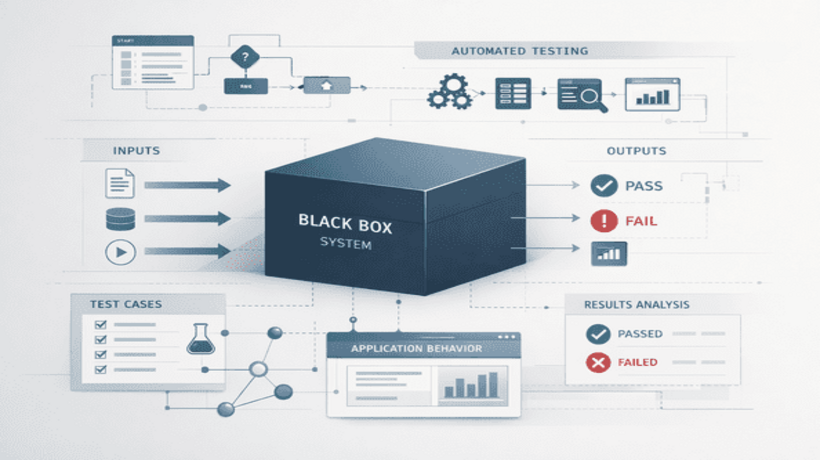
Agile development emphasizes speed, flexibility, and continuous delivery. With frequent iterations and rapid changes, maintaining software quality becomes a shared responsibility across teams. This is where black box testing plays a crucial role. By focusing on validating functionality from a user’s perspective, it helps ensure that features work as expected without diving into internal code structures.
Understanding when to use black box testing within Agile workflows can significantly improve both efficiency and product quality.
What Is Black Box Testing?
Black box testing is a testing approach where the tester evaluates the functionality of an application without knowledge of its internal implementation. The focus is on inputs and outputs rather than how the system processes those inputs.
For Agile teams, this approach aligns well with user-centric development, where delivering value to end users is the primary goal.
Why Black Box Testing Fits Agile Development
Agile prioritizes working software and quick feedback cycles. Black box testing complements this by:
- Validating features from a user perspective
- Supporting iterative development
- Enabling faster test design without needing code-level knowledge
- Allowing collaboration between testers, developers, and product managers
It ensures that each increment delivers functional value.
Key Scenarios to Use Black Box Testing in Agile
1. During User Story Validation
Each sprint revolves around user stories. Black box testing is ideal for validating whether these stories meet acceptance criteria.
Example:
- A user story for login functionality can be tested by verifying valid and invalid login scenarios without analyzing backend logic
This ensures that features behave as expected from a user’s perspective.
2. For Functional Testing
Black box testing is widely used for functional validation of features.
Use it to:
- Verify business logic
- Validate workflows
- Ensure correct system behavior
This helps maintain consistency across iterations.
3. In Regression Testing
As new features are added, existing functionality must remain stable.
Black box testing helps:
- Revalidate key user flows
- Ensure no unintended changes affect existing features
- Maintain overall system stability
It is especially effective when combined with automated regression tests.
4. During API Testing
Even though APIs operate behind the scenes, they can still be tested using black box techniques by validating request and response behavior.
Example:
- Sending a request to an API endpoint and verifying the response without inspecting internal processing
This ensures that APIs meet expected behavior.
5. For Acceptance Testing
Before delivering features to stakeholders, black box testing ensures that the application meets business requirements.
Benefits:
- Validates end-to-end functionality
- Confirms readiness for release
- Builds stakeholder confidence
6. In Exploratory Testing
Agile encourages flexibility, and exploratory testing allows testers to investigate the application without predefined scripts.
Black box testing supports this by:
- Encouraging real user scenarios
- Identifying unexpected issues
- Improving overall user experience
How It Works with Other Testing Approaches
While black box testing is valuable, it is often used alongside other methods like black box and white box testing to achieve comprehensive coverage.
- Black box testing focuses on functionality and user experience
- White box testing focuses on internal logic and code structure
Combining both ensures deeper validation across the application.
Best Practices for Using Black Box Testing in Agile
Focus on User-Centric Scenarios
Design test cases based on real user behavior rather than technical implementation.
Keep Tests Lightweight and Iterative
Avoid overly complex test cases. Agile requires quick and frequent validation.
Automate Repetitive Tests
Automating black box test cases for regression scenarios improves efficiency and consistency.
Align with Acceptance Criteria
Ensure that test cases directly map to user story requirements.
Collaborate Across Teams
Encourage collaboration between developers, testers, and product managers to improve test coverage and accuracy.
Common Mistakes to Avoid
- Relying only on black box testing without deeper validation
- Ignoring edge cases and unexpected inputs
- Delaying testing until the end of the sprint
- Not updating test cases as requirements evolve
Avoiding these mistakes helps maintain quality in fast-paced Agile environments.
Conclusion
Black box testing is a powerful approach for validating functionality in Agile development. By focusing on user behavior and expected outcomes, it ensures that each sprint delivers meaningful and reliable features.
When used at the right stages—such as user story validation, functional testing, regression testing, and acceptance testing—it helps teams maintain quality without slowing down development. Combined with other testing approaches, black box testing becomes an essential part of a well-rounded Agile testing strategy.

 English
 Arabic
 French
 Spanish
 Portuguese
 Deutsch
 Turkish
 Dutch
Dutch
 Russian
 Romaian
 Portuguese (Brazil)
 Greek
Greek
