


 About Urh Social
 Terms of Service
 Politique de confidentialité
 Contact
Sterilization Equipment Market Outlook: Future Industry Growth, Opportunities and Forecast to 2034
Market Overview
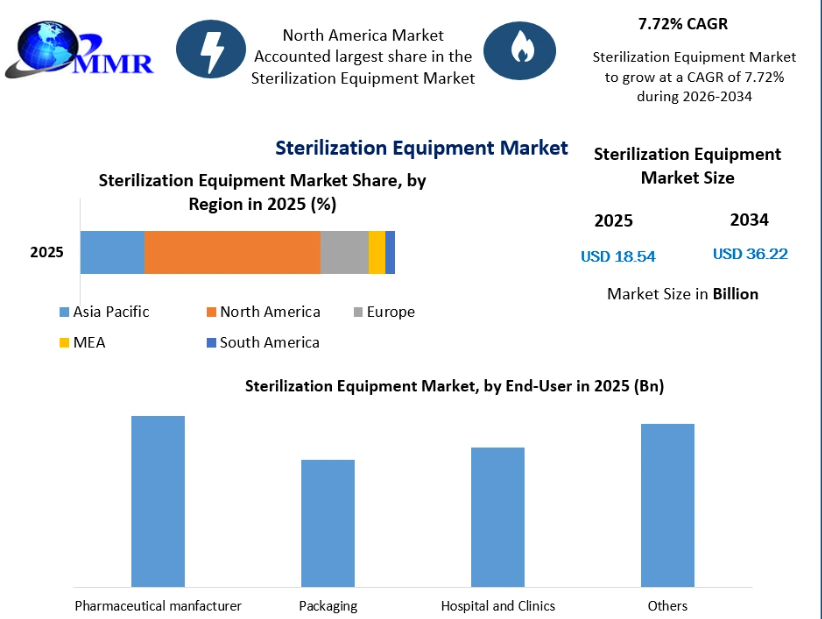
The global Sterilization Equipment Market was valued at USD 18.54 billion in 2025 and is projected to reach approximately USD 36.22 billion by 2034, growing at a CAGR of 7.72% during the forecast period from 2026 to 2034. The market is witnessing significant growth due to increasing concerns regarding healthcare-associated infections (HAIs), rising surgical procedures, expanding healthcare infrastructure, and growing adoption of advanced sterilization technologies across hospitals, clinics, pharmaceutical facilities, and medical device manufacturing industries.
Feel free to request a complimentary sample copy or view a summary of the report: https://www.maximizemarketresearch.com/request-sample/15397/
Healthcare-associated infections remain a major concern for healthcare systems worldwide. Improperly sterilized surgical instruments and medical devices can contribute to infection transmission, increasing treatment costs, hospital stays, and patient complications. Consequently, healthcare organizations are emphasizing effective infection prevention practices, supporting the adoption of technologically advanced sterilization equipment.
Additionally, technological advancements, including automated sterilization systems, IoT-enabled monitoring, advanced low-temperature sterilization technologies, and smart tracking solutions, are creating new opportunities for market participants. Manufacturers are focusing on developing energy-efficient, environmentally responsible, and high-throughput sterilization systems to address the changing requirements of modern healthcare facilities.
Market Drivers and Trends
Increasing Prevalence of Healthcare-Associated Infections
The increasing prevalence of healthcare-associated infections is one of the primary factors driving the Sterilization Equipment Market. HAIs include surgical site infections, urinary tract infections, bloodstream infections, and hospital-acquired pneumonia. These infections can occur when medical instruments, surgical equipment, or healthcare environments are not properly disinfected and sterilized.
Pathogens such as MRSA, C. difficile, Klebsiella, E. coli, Enterococcus, and Pseudomonas are commonly associated with healthcare-related infections. The growing burden of these infections has encouraged hospitals and healthcare institutions to strengthen infection prevention and control procedures.
Sterilization equipment plays an essential role in reducing contamination risks by ensuring that reusable medical instruments are properly processed before subsequent use. Increasing awareness regarding patient safety and hospital hygiene is therefore supporting market expansion.
Feel free to request a complimentary sample copy or view a summary of the report: https://www.maximizemarketresearch.com/request-sample/15397/
Growing Number of Surgical Procedures and Hospital Admissions
The rising number of surgical procedures worldwide is another significant growth driver. Increasing cases of cardiovascular diseases, cancer, orthopedic conditions, and lifestyle-related disorders have contributed to higher demand for surgical treatments and hospital admissions.
Every surgical procedure requires sterile instruments and equipment to minimize infection risks. As a result, hospitals are expanding their sterile processing departments and investing in high-capacity sterilization equipment.
Emerging economies, particularly India, China, Brazil, and Southeast Asian countries, are witnessing investments in hospitals, specialty clinics, and diagnostic facilities. The expansion of healthcare infrastructure is expected to generate substantial demand for sterilization technologies throughout the forecast period.
Technological Advancements in Low-Temperature Sterilization
Technological innovation is transforming the sterilization equipment industry. Low-temperature sterilization technologies are increasingly preferred for processing heat-sensitive and moisture-sensitive medical instruments that cannot withstand conventional steam sterilization.
Hydrogen peroxide gas plasma, vaporized hydrogen peroxide, and ethylene oxide technologies are widely used for specialized medical equipment, including flexible endoscopes and complex surgical instruments.
In 2025, low-temperature sterilizers accounted for approximately 32.5% of the global market revenue, supported by increasing demand for sterilization solutions suitable for delicate medical devices.
Manufacturers are also introducing automated sterilization systems with improved cycle monitoring, advanced controls, and enhanced processing efficiency. These developments are helping healthcare facilities improve productivity while maintaining stringent sterilization standards.
Expansion of Pharmaceutical and Medical Device Manufacturing
The increasing production of pharmaceutical products, medical devices, surgical instruments, and single-use healthcare products is creating additional opportunities for sterilization equipment manufacturers.
Pharmaceutical manufacturers require controlled sterilization processes to maintain product quality and prevent microbial contamination. Similarly, medical device manufacturers rely on validated sterilization technologies to ensure that their products meet applicable safety and regulatory requirements.
The growing production of implantable medical devices, diagnostic equipment, and disposable medical products is increasing demand for specialized sterilization systems and outsourced contract sterilization services.
Increasing Investments in Emerging Economies
Emerging economies represent attractive growth opportunities for the sterilization equipment industry. Countries such as India, China, Brazil, Russia, and other Southeast Asian markets are investing in healthcare infrastructure, hospital modernization, and infection prevention initiatives.
India's expanding private hospital sector, increasing healthcare expenditure, and growing patient population are creating favorable conditions for market development. Similarly, China's investments in advanced medical infrastructure and pharmaceutical manufacturing are supporting the adoption of modern sterilization technologies.
However, high equipment acquisition costs, maintenance expenses, and the requirement for trained professionals remain important challenges, particularly for smaller hospitals and healthcare facilities.
Key Market Segments Covered
The Sterilization Equipment Market is segmented by Product Type, End User, and Technology to provide a comprehensive understanding of market demand and industry developments.
By Product Type
The market is categorized into heat sterilizers, low-temperature sterilizers, ethylene oxide sterilizers, hydrogen peroxide sterilizers, other sterilizers, and radiation sterilization devices.
Low-temperature sterilizers held the largest market share of approximately 32.5% in 2025. Their growing adoption is primarily attributed to their ability to sterilize heat-sensitive and moisture-sensitive medical instruments without damaging their materials or functional properties.
Ethylene oxide and hydrogen peroxide sterilization systems are increasingly utilized for complex medical devices, flexible endoscopes, and specialized surgical equipment.
Heat sterilizers, particularly steam autoclaves, continue to maintain strong demand because of their effectiveness, reliability, and widespread application in hospitals, dental clinics, and laboratories. Radiation sterilization devices are also important for processing medical products and disposable healthcare equipment at an industrial scale.
By End User
Based on end user, the market includes hospitals and clinics, pharmaceutical manufacturers, medical device manufacturers, food and beverage producers, packaging, and other end users.
Hospitals and clinics dominated the Sterilization Equipment Market in 2025. The segment's leading position is supported by increasing surgical procedures, rising hospital admissions, and the growing need to prevent healthcare-associated infections.
Hospitals require sterilization equipment for surgical instruments, reusable medical devices, diagnostic equipment, and other clinical tools. The increasing number of healthcare facilities and investments in modern sterile processing departments are further contributing to segment growth.
Pharmaceutical manufacturers represent another important end-user segment because sterilization is essential for maintaining product safety and manufacturing quality. Medical device manufacturers also require specialized sterilization systems to process medical instruments, implants, and disposable devices.
By Technology
Based on technology, the market is categorized into gravity, vacuum, and steam sterilization technologies.
Steam sterilization remains a widely adopted method because of its effectiveness, relatively low operating costs, and compatibility with numerous heat-resistant medical instruments.
Gravity-based sterilizers are commonly used in applications involving basic medical instruments and laboratory equipment. Vacuum-based technologies support the sterilization of complex instruments by improving steam penetration and air removal.
The increasing demand for advanced sterilization cycles and improved processing efficiency is encouraging manufacturers to develop technologically sophisticated systems.
Feel free to request a complimentary sample copy or view a summary of the report: https://www.maximizemarketresearch.com/request-sample/15397/
Regional Market Insights
North America
North America dominated the global Sterilization Equipment Market in 2025, accounting for approximately 36.6% of worldwide revenue. The region's leadership is supported by advanced healthcare infrastructure, high healthcare expenditure, increasing awareness of infection prevention, and stringent healthcare quality requirements.
The United States represents a major contributor to regional demand because of its extensive hospital network, large medical device manufacturing industry, and growing adoption of advanced sterilization technologies.
The presence of established manufacturers, including STERIS, Advanced Sterilization Products, and Midmark, further strengthens the region's competitive position.
Europe
Europe represents a significant market for sterilization equipment, supported by established healthcare infrastructure, stringent medical device regulations, and increasing emphasis on infection prevention.
Countries such as Germany, the United Kingdom, France, Italy, and Sweden are investing in advanced hospital equipment and sterilization technologies. The increasing focus on sustainable healthcare operations is also encouraging the adoption of energy-efficient sterilization systems.
Manufacturers are introducing improved steam sterilizers and low-temperature sterilization solutions to address the requirements of hospitals, pharmaceutical companies, and medical device manufacturers.
Asia Pacific
Asia Pacific is expected to witness substantial growth during the forecast period due to increasing healthcare expenditure, expanding hospital infrastructure, and rising awareness of hospital-acquired infections.
India, China, Japan, South Korea, Singapore, Malaysia, and Thailand are important markets for sterilization equipment manufacturers.
The growing number of private hospitals, increasing surgical procedures, expanding pharmaceutical manufacturing capabilities, and government initiatives to improve healthcare quality are creating favorable market conditions.
India and China offer particularly attractive opportunities because of their large patient populations and increasing investments in healthcare infrastructure. The expansion of medical device manufacturing facilities is also expected to strengthen regional demand.
Middle East and Africa
The Middle East and Africa market is supported by healthcare infrastructure development, increasing investments in hospital facilities, and growing awareness of infection prevention.
Countries such as Saudi Arabia, the UAE, South Africa, and Egypt are investing in modern healthcare infrastructure and advanced medical technologies. These developments are expected to support the adoption of sterilization equipment across hospitals and healthcare institutions.
South America
South America is experiencing gradual market expansion, driven by improvements in healthcare infrastructure, increasing medical procedures, and rising investments in hospital modernization.
Brazil and Argentina represent important markets in the region. Growing awareness of infection control and the modernization of healthcare facilities are expected to create opportunities for sterilization equipment manufacturers.
Major Industry Players
The global Sterilization Equipment Market is characterized by the presence of established healthcare technology companies, specialized sterilization equipment manufacturers, and infection prevention service providers.
Leading companies are focusing on product innovation, acquisitions, strategic partnerships, manufacturing expansion, and technological improvements to strengthen their market positions.
Major industry players include:
-
Getinge Group
-
Advanced Sterilization Products (ASP)
-
Tuttnauer
-
MMM Group
-
Sterigenics International, Inc.
-
Midmark Corporation
-
Cantel Medical
-
Andersen Products, Inc.
-
Matachana Group
-
Sterile Technologies, Inc.
-
3M Company
-
Belimed AG
-
Metall Zug Group
-
Getinge AB
-
Celitron Medical Technologies Kft.
-
Nanosonics Ltd.
-
LTE Scientific
-
STERIS Corporation
-
TSO3
-
Sotera Health
Recent Industry Developments
The sterilization equipment industry is witnessing continuous innovation and strategic developments as manufacturers focus on improving sterilization efficiency, operational performance, and infection prevention capabilities.
-
STERIS plc: The company has continued to strengthen its low-temperature sterilization portfolio, addressing the growing requirements of healthcare facilities for processing sensitive medical instruments.
-
Getinge AB: The company focuses on advanced sterilization systems, sustainable healthcare technologies, and improved operational efficiency for hospital sterilization departments.
-
Sotera Health: Through its Sterigenics business, the company continues to support medical device manufacturers through contract sterilization services and expanded processing capabilities.
-
MMM Group: The company focuses on advanced sterilization equipment and digital integration to improve monitoring, traceability, and operational efficiency.
-
Belimed AG: The company continues to develop sterilization and infection prevention technologies for healthcare and life sciences applications.
These developments demonstrate the industry's increasing focus on automation, sustainability, advanced sterilization processes, and improved patient safety.
Frequently Asked Questions (FAQs)
1. What is the global Sterilization Equipment Market size in 2025?
The global Sterilization Equipment Market was valued at approximately USD 18.54 billion in 2025.
2. What is the expected market size of the Sterilization Equipment Market by 2034?
The market is projected to reach approximately USD 36.22 billion by 2034, driven by increasing demand for infection prevention technologies and advanced healthcare infrastructure.
3. What is the expected CAGR of the Sterilization Equipment Market during 2026–2034?
The global Sterilization Equipment Market is expected to grow at a CAGR of 7.72% during the forecast period from 2026 to 2034.
4. Which product type dominated the Sterilization Equipment Market in 2025?
Low-temperature sterilizers dominated the market in 2025, accounting for approximately 32.5% of total market revenue. Their adoption is supported by increasing demand for sterilizing heat-sensitive and moisture-sensitive medical instruments.
5. Which end-user segment held the largest market share in 2025?
Hospitals and clinics held the largest market share due to increasing surgical procedures, rising hospital admissions, and growing requirements for infection prevention.
Conclusion
The global Sterilization Equipment Market is positioned for substantial growth through 2034, supported by increasing awareness of infection prevention, rising surgical procedures, and continuous improvements in healthcare infrastructure. The growing burden of healthcare-associated infections is encouraging hospitals and medical institutions to invest in reliable sterilization technologies to improve patient safety and operational efficiency.

 English
 Arabic
 Spanish
 Portuguese
 Deutsch
 Turkish
 Dutch
 Italiano
 Russian
 Romaian
 Portuguese (Brazil)
 Greek
