


 About Urh Social
 Terms of Service
 Privacy Policy
 Contact
Key Considerations for Starting a Preservative-Free Juice Bottling Business
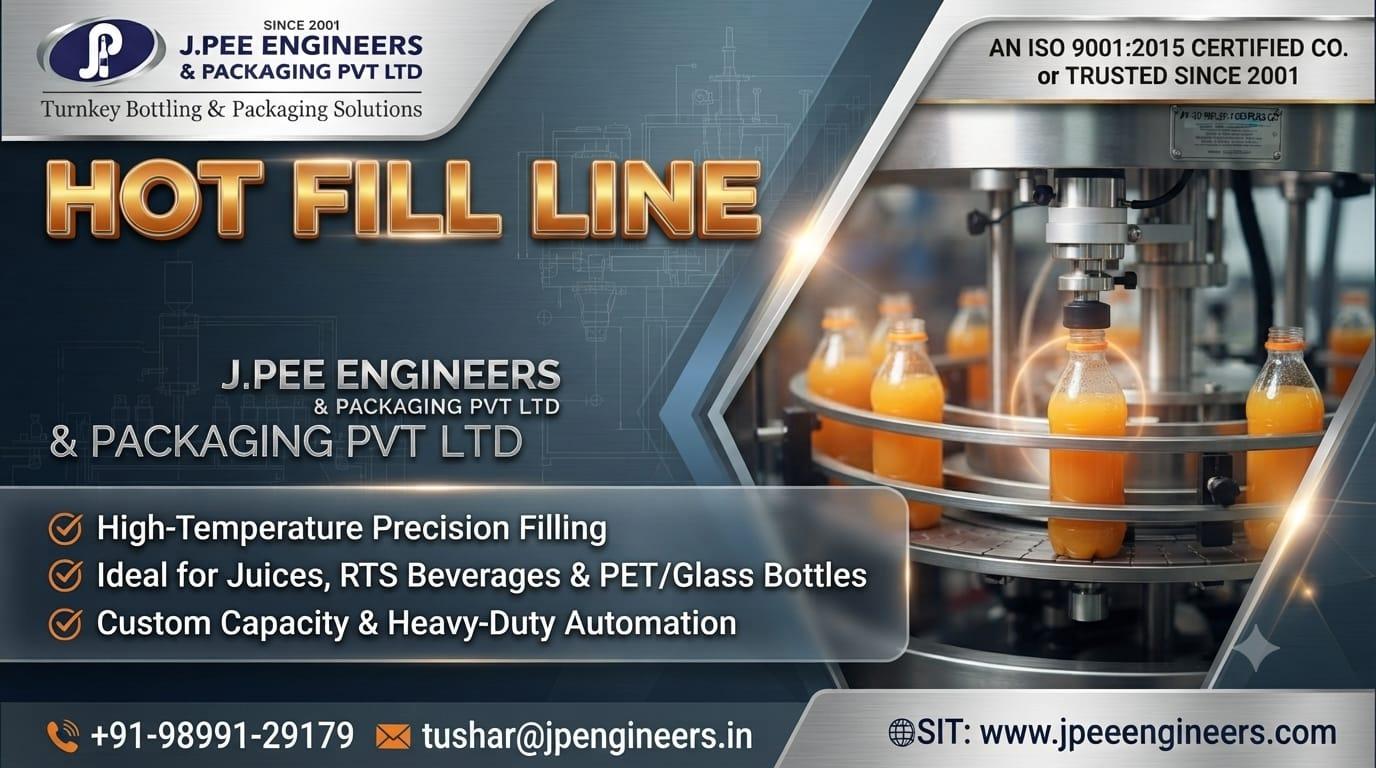
Starting a packaged juice business involves several decisions beyond choosing a recipe and designing a bottle. Manufacturers must establish a process that supports consistent product quality, hygienic handling, suitable packaging, and reliable output. For businesses exploring preservative-free beverage categories, thermal processing and hot-fill technology can be important areas to evaluate.
Hot filling is used for selected non-carbonated beverages, including fruit juices, nectars, and certain flavoured drinks. The process involves heating the product under controlled conditions, filling compatible containers while hot, applying closures, and managing the subsequent cooling stage. A suitably configured Hot Fill Line brings these operations together within a planned production system.
Define the Product Before Selecting Machinery
The first task is to establish what the business intends to manufacture. A clear mango beverage, pulpy fruit juice, herbal drink, and flavoured water may have different processing characteristics. Viscosity, acidity, suspended particles, ingredient stability, and sensitivity to heat all influence the production design.
Manufacturers should document the beverage formulation, expected batch size, container type, and desired production volume. These details help determine the suitable pasteurisation technology, transfer pumps, filling arrangement, and cleaning requirements.
A product range should also be considered. If the business plans to introduce several flavours, the machinery may need appropriate changeover arrangements. This can reduce operational complications when switching between compatible products.
Establish a Suitable Thermal Processing System
Thermal processing is central to hot-fill manufacturing. The beverage passes through a heating system where temperature and holding time are controlled to achieve the required treatment. The exact process must be validated for the product and packaging combination.
Plate heat exchangers may be considered for suitable low-viscosity liquids, while tubular systems can be evaluated for beverages containing pulp or fibre. The choice depends on the product's physical properties and the required processing conditions.
Manufacturers should ask how the system monitors temperature and maintains consistent treatment. They should also review the product-contact materials, cleaning arrangements, and transfer design. These considerations help create a production environment that supports hygiene and repeatability.
Maintain Accuracy During Bottle Filling
The filling machine is responsible for delivering the intended beverage quantity into each container. Consistent filling helps maintain package presentation and control product wastage. The selected filler should be compatible with the beverage temperature, bottle format, and required production speed.
Bottle dimensions and neck finishes should be checked before finalising the filling equipment. Manufacturers should also review how bottles are transferred to the filler and how filled containers move towards the capping section.
Capping equipment needs to apply closures consistently. Poor closure application may lead to leakage or packaging failures during storage and distribution. Cap compatibility, torque settings, and sealing performance should therefore be included in machine trials and commissioning checks.
Understand the Role of Bottle Inversion
In some hot-fill processes, sealed bottles are inverted after capping. This allows the hot beverage to contact the inner surface of the closure and the headspace. It forms part of the intended thermal treatment of the package.
The inversion section should be designed around container stability and conveyor movement. Bottle dimensions, shape, closure type, and product temperature can influence the arrangement. The process must be validated rather than assumed to provide the same result for every product.
Select Suitable Containers for Hot-Fill Applications
Packaging is an important technical decision. Heat-set PET bottles and compatible glass containers may be suitable for different hot-fill products. Standard packaging should not be assumed to withstand the thermal conditions without verification.
Manufacturers should review the container material, wall design, shape, neck finish, and closure specifications. Practical trials can help assess performance during filling, capping, inversion, and cooling.
The packaging decision also affects the commercial identity of the beverage. Glass containers may support a premium presentation, while suitable PET formats can offer different advantages for handling and distribution. The right choice depends on product positioning and operating requirements.
Plan an Effective Cooling Arrangement
Cooling is a necessary stage after hot filling and sealing. Containers need to reach suitable handling temperatures before moving through labelling and final packaging operations.
A cooling tunnel should be sized according to line speed, container material, bottle dimensions, and required cooling performance. Water circulation, temperature control, drainage, conveyor speed, and cleaning access should all be considered.
When comparing Hot Fill Line Manufacturers, buyers should check whether the proposed cooling section is properly matched to the filler and the overall production capacity. A mismatch can cause bottle accumulation and interrupt the flow of the plant.
Evaluate Production Capacity and Automation
A new beverage business should select capacity based on realistic demand projections. Factors include daily output, bottle size, number of shifts, product variety, and distribution plans.
The capacity of the complete line matters more than the rated speed of one machine. Processing, filling, capping, conveying, and cooling sections should be coordinated to avoid bottlenecks.
PLC-based automation can help monitor and coordinate important operations. The required level of automation should match the plant's operating scale and available technical resources. Staff training is also important so operators can understand process controls and respond to abnormal conditions.
Consider the Complete Project Scope
A machinery purchase should include more than the supply of individual machines. Buyers should review plant layout, utility requirements, equipment installation, commissioning, product trials, and operator training.
JPEE Engineers provides information about hot-fill production systems for fruit juices, nectars, ready-to-drink teas, sports drinks, and functional beverages. Its described equipment approach includes pasteurisation, filling, capping, inversion, and cooling, along with PLC-based process control and food-grade stainless-steel construction.
A discussion with Hot Fill Production Line Suppliers should cover the actual product and plant requirements. Buyers should also clarify the availability of spare parts, preventive maintenance support, and technical assistance after installation.
Build Hygiene and Maintenance into Daily Operations
Good equipment design must be supported by effective operating procedures. Product-contact areas, transfer lines, filling components, and connected equipment require suitable cleaning and inspection arrangements.
Manufacturers should establish cleaning schedules, maintenance responsibilities, and operating records. They should also confirm the applicable FSSAI and other regulatory requirements for their particular product and facility.
Preventive maintenance can help identify wear or operational issues before they cause prolonged downtime. Training operators to monitor equipment conditions and follow documented procedures supports more consistent plant operation.
Make Decisions with Long-Term Production in Mind
A successful juice bottling business needs a production system that matches its product, packaging, and market requirements. Equipment selected without considering the complete process may create avoidable bottlenecks or require costly changes later.
Manufacturers should compare process configurations, review packaging compatibility, validate thermal treatment, and evaluate the supplier's technical support. With these decisions addressed before installation, a hot-fill plant can provide a structured foundation for producing suitable packaged beverages in India.
Frequently Asked Questions
1. What is a preservative-free juice bottling plant?
It is a beverage manufacturing facility designed to produce suitable juices without adding artificial preservatives, using an appropriate validated processing and packaging method.
2. Is hot filling suitable for all types of fruit juice?
No. Suitability depends on acidity, formulation, pulp content, viscosity, packaging material, and validated processing conditions.
3. What is the difference between a plate and tubular heat exchanger?
Plate heat exchangers are commonly used for suitable low-viscosity products, while tubular systems may be considered for beverages containing pulp or fibre.
4. Can one hot-fill line handle multiple beverage flavours?
A suitably designed line may handle multiple compatible products. Changeover procedures and cleaning requirements should be considered when planning the product range.
5. How does automation support beverage production?
Automation can coordinate equipment functions, monitor process parameters, support consistent filling, and reduce the need for certain manual operations.
6. What should be checked during a hot-fill plant installation?
Buyers should review equipment positioning, utilities, product transfer connections, conveyor alignment, safety arrangements, commissioning tests, and operator training.
7. Why is supplier support important after purchasing a hot-fill line?
Technical support, spare-parts availability, maintenance guidance, and troubleshooting assistance can help manufacturers maintain equipment performance and minimise avoidable downtime.

 English
 Arabic
 French
 Spanish
 Portuguese
 Deutsch
 Turkish
 Italiano
 Russian
 Romaian
 Portuguese (Brazil)
 Greek
