


 About Urh Social
 Terms of Service
 Política de Privacidade
 Contact
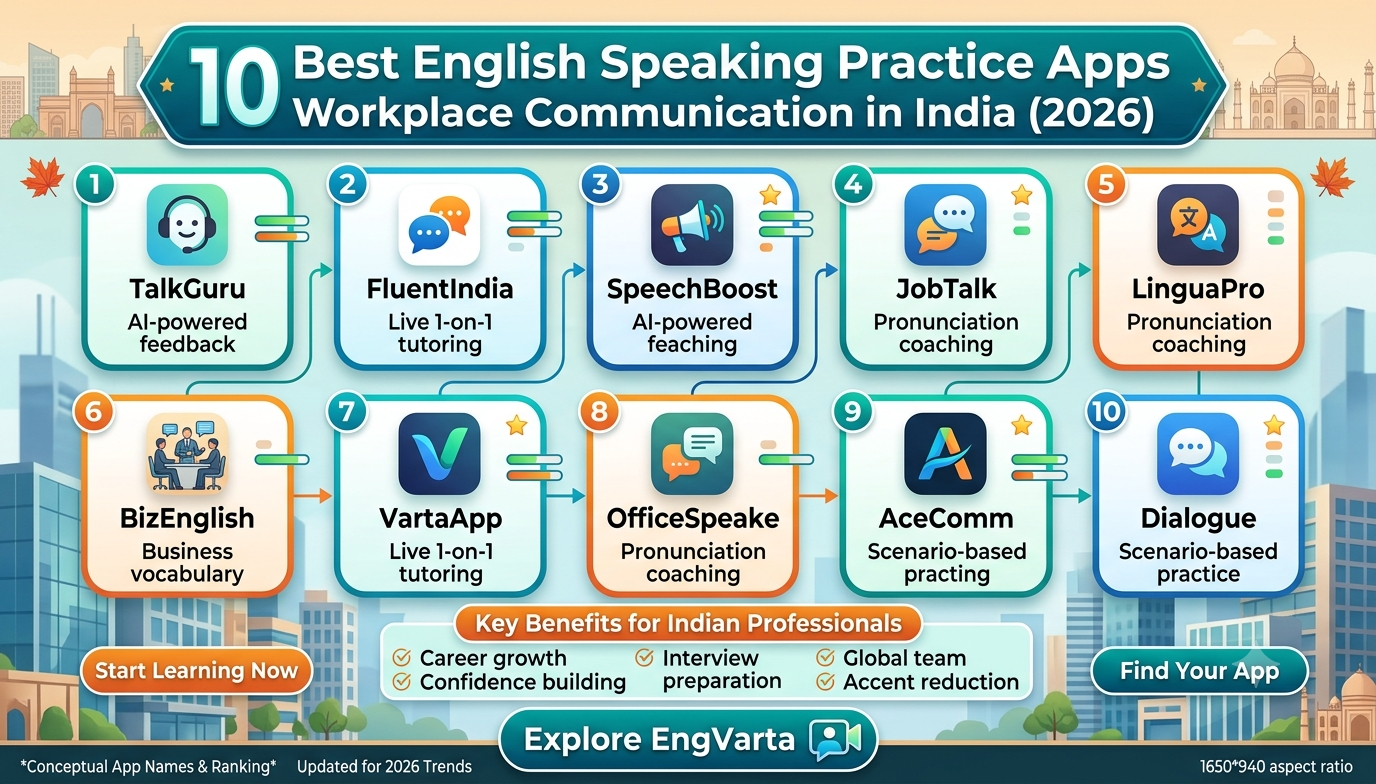
10 Best English Speaking Practice Apps for Workplace Communication in India (2026)
Imagine you are attending a project meeting. You understand your manager's instructions, know what your team needs to do, and even have a useful suggestion. However, when it is your turn to speak, you struggle to find the right words. You worry about grammar, pronunciation, and how your colleagues might judge your English.
This is a common challenge for Indian students, freshers, and working professionals. Understanding English is one skill; using it naturally in workplace conversations is another.
The right English-speaking practice app can help you rehearse meetings, explain project updates, ask questions, prepare presentations, and communicate more clearly with managers and clients. However, different apps solve different problems. Some offer AI conversations, others provide human tutors, while some focus on pronunciation or foundational vocabulary.
If you are searching for the Best English Speaking App for Meeting Confidence with Bosses (2026), start by identifying your biggest challenge: hesitation, pronunciation, limited vocabulary, or a lack of real conversation practice.
Here are ten platforms worth considering for workplace English communication in India, along with their strengths, limitations, and practical uses.
How We Selected the Best English-Speaking Practice Apps
This list considers the following factors:
-
Speaking practice: Does the platform let you speak aloud and respond to questions?
-
Workplace relevance: Can you practise meetings, presentations, interviews, or professional conversations?
-
Feedback: Does it offer pronunciation guidance, corrections, or tutor feedback?
-
Learning style: Is it designed for AI practice, human conversations, structured lessons, or writing assistance?
-
Accessibility and cost: Are free features available, and can Indian learners check suitable subscription options?
These recommendations are based on publicly available product information, not a claim that every platform was independently tested. Prices, free-plan limits, and features can change, so check official websites before subscribing.
10 Best English Speaking Practice Apps for Workplace Communication
1. EngVarta — Best for Guided Spoken-English Practice
Best for: Professionals who understand English but hesitate during live conversations.
Key features: EngVarta offers one-to-one spoken-English practice with human English experts. Its official website describes live audio sessions, real-time corrections, assignments, vocabulary support, and quizzes. Learners can select session durations and practise according to their goals. EngVarta's official website provides details about its current offering.
How it helps at work: Before a meeting, practise explaining a project delay, requesting clarification, or responding to feedback from your manager. A guided conversation gives you an opportunity to organise your thoughts aloud and receive feedback rather than simply reading prepared sentences.
Limitations: It requires paid practice beyond the applicable trial or offer. Unlike an AI chatbot, you practise with a human expert, so availability and the plan you select matter.
Pricing: Trial terms and session plans are published on the official website; verify current prices before purchasing.
Verdict: Consider EngVarta if your main difficulty is speaking spontaneously and you want guided human conversation practice rather than another self-study course.
2. ELSA Speak — Best for Pronunciation and Speaking Clarity
Best for: Learners who know what they want to say but struggle with pronunciation, clarity, or speech delivery.
Key features: ELSA Speak provides AI-powered pronunciation feedback, personalised learning paths, and interactive role-play. Its official product information also describes workplace, meeting, presentation, and interview practice tools. Explore ELSA Speak.
How it helps at work: Rehearse a short project update, listen to feedback, and repeat difficult sentences. Its workplace-oriented practice is particularly relevant when preparing to present information clearly.
Limitations: AI feedback is not the same as receiving feedback from a colleague or manager during an unpredictable conversation. You should also verify which tools are included in your selected plan.
Pricing: A free option and paid plans are advertised, with subscription details available on the official pricing page.
Verdict: A strong option for professionals who want targeted pronunciation and speaking feedback, especially before presentations or client calls.
3. Speak — Best for AI Conversation Practice
Best for: Learners who want to speak regularly without scheduling lessons with a person.
Key features: Speak is an AI-based language-learning platform focused on speaking practice, interactive conversations, and feedback. Its suitability for you depends on the current English course, conversation modes, and subscription available in your region.
How it helps at work: Use an AI conversation tool to practise introducing yourself, explaining your responsibilities, or answering questions about a project. Repeat the same scenario using different words to become more flexible.
Limitations: AI conversations can provide convenient repetition, but they may not fully reproduce the interruptions, disagreements, or contextual expectations of an actual workplace meeting.
Pricing: Check the official Speak website for current plans and regional availability.
Verdict: Consider Speak if you prefer private, repeatable AI conversations and want to develop a regular speaking habit.
4. Duolingo — Best for Building Foundational English Habits
Best for: Beginners who need consistent vocabulary, sentence-building, and listening practice.
Key features: Duolingo offers structured language lessons and speaking exercises. Its AI-powered Video Call feature with Lily provides conversational practice to eligible Duolingo Max subscribers in supported courses and regions.
How it helps at work: Beginners can build the foundations needed to introduce themselves, discuss daily activities, and form simple sentences before moving to more demanding workplace conversations.
Limitations: General language lessons are not a substitute for sustained practice with workplace-specific situations, such as negotiating deadlines or explaining technical problems. Advanced AI features may require a paid subscription.
Pricing: A free learning option is available, with paid subscriptions and feature access depending on the plan.
Verdict: Choose Duolingo to strengthen basic English consistently. If you already communicate comfortably in simple sentences but struggle in meetings, combine it with dedicated conversation practice.
5. HelloTalk — Best for Informal Language Exchange
Best for: Learners who want to practise English with people from different language backgrounds.
Key features: HelloTalk supports language exchange through text, voice messages, and video communication, alongside translation and correction tools. Its official website describes free core features and options for finding conversation partners.
How it helps at work: Discuss familiar subjects such as technology, business news, or daily routines with a language partner. You can also explain your job responsibilities and practise expressing opinions in English.
Limitations: Conversations depend on finding a suitable partner who is available and willing to practise consistently. The quality of feedback may vary, and professional coaching is not guaranteed.
Pricing: Core features are available for free, while additional features may require payment.
Verdict: Useful for affordable, informal English conversation practice, particularly if you are comfortable initiating conversations with strangers and organising your own learning.
6. Tandem — Best for Practising Natural Conversations
Best for: Intermediate learners who want more exposure to real conversations.
Key features: Tandem is a language-exchange platform that connects learners for communication and language practice. Before joining, review its current options for text, voice, or video conversations and any paid features on the official Tandem website.
How it helps at work: Practise explaining an opinion, discussing industry trends, or describing a workplace challenge. Speaking with different people can help you become more comfortable understanding varied accents and conversational styles.
Limitations: Tandem is not a dedicated corporate English course. Finding reliable partners and receiving useful corrections require initiative.
Pricing: Check the official website or app for current free and paid options.
Verdict: A practical choice for learners who already have basic English skills and want regular interaction without paying for every conversation.
7. Cambly — Best for Live Tutor Conversations
Best for: Professionals who want real-time conversations with English-speaking tutors.
Key features: Cambly offers private and small-group lessons, tutor selection, and learning activities. Its higher-tier offerings include structured lessons and targeted feedback.
How it helps at work: Ask a tutor to conduct a mock client call, challenge your proposal, or ask follow-up questions after a presentation. Request specific feedback on clarity, vocabulary, and how professionally you communicate.
Limitations: Tutor sessions cost money, and the usefulness of each session depends on your preparation and the tutor's approach. Not every conversation automatically focuses on workplace English.
Pricing: Cambly advertises different plans for group and individual learning. Prices and promotions can vary, so check the current checkout details.
Verdict: Consider Cambly if you value live conversation and want to practise responding to another person rather than an AI system.
8. italki — Best for Personalised English Lessons
Best for: Learners who want a teacher to address specific communication weaknesses.
Key features: italki is a platform for finding language teachers and tutors. Depending on the instructor, learners can arrange lessons around speaking, pronunciation, business English, or interview preparation. Review tutor qualifications, lesson descriptions, and available schedules before booking.
How it helps at work: Work with a tutor on a presentation, practise an appraisal conversation, or prepare answers to challenging interview questions. Ask for corrections and a short list of priorities to practise between lessons.
Limitations: Teaching quality, lesson structure, and expertise vary by tutor. You must select an instructor who understands your goals.
Pricing: Tutors set their own rates, so lesson costs vary. Visit italki to review available teachers and current prices.
Verdict: A good option when you need personalised instruction or a structured English speaking course online tailored to your profession.
9. Praktika — Best for AI Tutors and Repeated Role-Play
Best for: Learners who feel nervous speaking aloud and want a low-pressure way to practise.
Key features: Praktika offers AI language tutors, interactive conversations, and feedback on pronunciation, grammar, and word choice. Its official website describes personalised learning and conversational practice.
How it helps at work: Simulate an introduction to a new team, explain a task to a colleague, or practise responding to a question from a manager. Repeat the scenario until you can express your ideas more naturally.
Limitations: AI tutors cannot fully replace human feedback on professional judgement, team dynamics, or the consequences of a real workplace conversation.
Pricing: Praktika offers free access with limitations and paid plans. Check the current terms and subscription options in the app or official help centre.
Verdict: Worth considering if you want convenient AI conversation practice without arranging appointments with a human tutor.
10. Grammarly — Best for Professional Writing Support
Best for: Professionals who write emails, reports, proposals, and meeting summaries in English.
Key features: Grammarly provides writing assistance, including grammar corrections, clarity suggestions, and AI-powered writing support.
How it helps at work: Draft a clear email asking for a deadline extension, refine a project update, or check whether your message sounds professional. Then practise explaining the same message aloud without reading it word for word.
Limitations: Grammarly is primarily a writing assistant, not a dedicated spoken-English practice platform. Better written messages do not automatically translate into fluent live conversations.
Pricing: A free option and paid Pro subscription are available; check the official pricing page for current regional terms.
Verdict: Use Grammarly as a supporting tool if written communication is part of your challenge. Pair it with an actual speaking-practice app if meetings and conversations are your priority.
Which App Should You Choose for Workplace Communication?
The most suitable option depends on the skill you need to develop.
-
For beginners: Start with Duolingo to build foundational vocabulary and sentence patterns, then add speaking practice.
-
For pronunciation and clarity: Try ELSA Speak for targeted speech feedback.
-
For hesitation during meetings: Consider EngVarta for guided human conversations or Speak and Praktika for AI-based role-play.
-
For presentations and client calls: Practise realistic scenarios with a tutor through Cambly or italki.
-
For free or low-cost practice: Explore the free features of Duolingo and HelloTalk, while checking their limits.
-
For professional emails and reports: Use Grammarly alongside a tool that lets you speak aloud.
-
For interview preparation: Rehearse common questions with an AI tool or a tutor who can challenge your answers and provide feedback.
When comparing the Best English Speaking Apps in India in 2026, remember that a free app is not automatically the best value. Consider how much active speaking it offers, how relevant its exercises are to your job, and whether it helps you identify recurring mistakes.
The best online spoken English classes may be more suitable if you need a teacher-led curriculum, scheduled lessons, and accountability. Meanwhile, independent AI practice works well for flexible repetition. Human-guided sessions can add personalised feedback, and language-exchange platforms offer opportunities for informal conversation.
Choose the method you can sustain rather than subscribing to several platforms at once.
How to Practise Workplace English for 20 Minutes a Day
A simple daily routine can make your app practice more relevant to your actual job.
Minutes 1–5: Describe your work
Speak aloud about your priorities, completed tasks, and upcoming deadlines.
For example: “Today, I am reviewing the client feedback and preparing the revised proposal.”
Minutes 6–10: Prepare for a meeting
Practise explaining progress, challenges, and next steps. Try this example:
“The first phase is complete. We are waiting for the final data, so the next phase may take an additional two days.”
Minutes 11–15: Practise spontaneous responses
Ask an AI tutor or human partner to challenge you with questions such as:
-
“Why is the project delayed?”
-
“What alternative do you recommend?”
-
“Can you finish this by Friday?”
-
“What support do you need from the team?”
Answer without reading a prepared script.
Minutes 16–20: Review and repeat
Identify two or three sentences that were difficult to express. Correct them, repeat them aloud, and use the improved versions in a new example.
Useful workplace phrases include:
-
“Could you please clarify the expected deadline?”
-
“I would like to suggest an alternative approach.”
-
“The main challenge is the delay in receiving the required information.”
-
“I need a little more time to verify these figures.”
-
“Let me explain the next steps.”
-
“I understand your feedback, and I will work on those improvements.”
-
“Could I share a different perspective on this?”
Adapt these phrases to your real responsibilities instead of memorising them mechanically. The goal is to communicate your meaning clearly, not to sound as though you are reciting a textbook.
Common Mistakes to Avoid When Practising Workplace English
-
Memorising vocabulary without speaking: Use each new word in a sentence about your work.
-
Waiting for perfect grammar: Prioritise clear meaning, then review repeated errors.
-
Practising inconsistently: Schedule a short daily session rather than relying on occasional long lessons.
-
Memorising complete answers: Practise answering the same question in different ways.
-
Using only writing tools: If you hesitate during meetings, spend time speaking aloud.
-
Ignoring feedback: Record recurring mistakes and deliberately practise corrected sentences.
-
Expecting immediate fluency: Treat improvement as a gradual process that requires repetition and real communication.
Conclusion
The best English-speaking practice app for workplace communication depends on your biggest challenge. Duolingo can help build foundations, ELSA Speak focuses on speech feedback, AI tutors offer repeatable role-play, and platforms such as Cambly and italki provide opportunities for live conversations. Grammarly supports professional writing, while HelloTalk and Tandem can help you practise with language partners.
If you need guided spoken-English practice, EngVarta is another option to evaluate. Its human-led format may suit learners who want to practise expressing ideas and receive feedback during conversations.
Start by identifying one situation that makes you hesitate—perhaps giving a project update, asking your manager a question, or speaking to a client. Choose one suitable platform, practise for 20 minutes a day, and review your progress regularly.
Consistent, relevant practice is more useful than downloading multiple apps and using none of them regularly.

 English
 Arabic
 French
 Spanish
 Deutsch
 Turkish
 Dutch
Dutch
 Italiano
 Russian
 Romaian
 Portuguese (Brazil)
 Greek
Greek
