


 About Urh Social
 Terms of Service
 Privacy Policy
 Contact
What Results Can You Expect from Exosome Hair Therapy in Dubai?
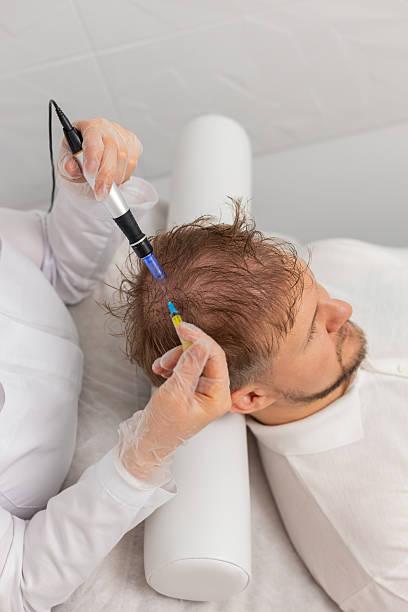
What results can you expect from Exosome Hair Therapy in Dubai? The intended goal is to support the condition of thinning hair and improve the appearance of density and hair quality where the follicles remain responsive. Results develop gradually rather than immediately, and individual outcomes depend on the cause and extent of hair loss.
For patients considering treatment, understanding what can realistically change is more useful than focusing on dramatic before-and-after claims.
What Changes May Become Noticeable First
Hair does not suddenly become thicker immediately after treatment. Early improvement may be subtle and can involve changes that are difficult to notice without consistent photographs.
Depending on the individual response, patients may eventually observe:
- Improved visual fullness
- Stronger-looking existing hair
- Better coverage in areas of mild thinning
- Changes in the appearance of fine or miniaturized hairs
- A healthier-looking overall scalp and hair profile
The degree of improvement varies considerably between patients.
Why Hair Density and Hair Thickness Are Different
Hair density refers broadly to how much hair is present in an area, while hair caliber describes the diameter of individual strands. A scalp can look fuller even when the number of follicles has not dramatically changed if existing hairs become visually stronger or thicker.
This distinction is important when evaluating treatment results. A realistic assessment should consider both the number of visible hairs and the quality of the strands that are already growing.
Exosome Hair Therapy in Dubai Results Develop Over Time
Tajmeels Clinic information indicates that visible changes may begin to appear around two months. This should be viewed as a general reference point rather than a guaranteed deadline.
Hair growth follows biological cycles, so some patients may notice changes earlier while others require more time before an improvement becomes obvious.
| Stage | What May Be Observed |
|---|---|
| Immediately after treatment | Temporary scalp sensations or treatment-related changes may occur |
| Early weeks | Major visible hair growth should not be expected |
| Around two months | Some patients may begin noticing visible changes |
| Later follow-up | Density and hair quality can be assessed more meaningfully |
| Longer term | Maintenance and underlying hair-loss management may influence durability |
How Clinicians Evaluate Hair Restoration Results
A good result assessment is more than looking in the mirror under different lighting conditions. Clinical photographs taken from the same angles, distances, and lighting can make gradual changes easier to identify.
A clinician may compare:
- Hairline appearance
- Mid-scalp coverage
- Crown visibility
- Hair shaft caliber
- Overall scalp visibility
- Changes in shedding
- Patient-reported satisfaction
Why Lighting Can Mislead Patients
Bright overhead lighting can make the scalp appear more visible, while wet or freshly styled hair can make strands appear denser. Photographs taken under inconsistent conditions can therefore exaggerate or hide changes.
For this reason, standardized photographs are more useful than casual phone pictures taken at different times.
What Exosome Therapy May Not Achieve
Patients should not assume that exosome treatment can restore every area of advanced hair loss. When follicles have been significantly compromised or an area has remained completely bald for a long period, the treatment strategy may be different.
A consultation can help determine whether the remaining follicles are suitable for a regenerative-support approach or whether another option, such as hair transplantation, should be considered.
Factors That Influence Individual Results
Results are affected by more than the treatment itself. Hair loss is multifactorial, and ongoing hormonal, genetic, nutritional, inflammatory, or medical influences can continue to affect the follicles.
Important considerations include:
- The underlying diagnosis
- Stage of hair loss
- Remaining follicular activity
- Age and biological factors
- Scalp health
- Previous treatments
- Adherence to aftercare
- Ongoing management of progressive hair loss
Realistic Expectations Matter
A successful treatment should be judged against the patient's starting point and agreed treatment objective. For one person, reducing the visual impact of early thinning may represent meaningful improvement; for another, the goal may be supporting existing density before considering surgical restoration.
The aim is improvement, not an artificial guarantee of complete restoration.
Common Misunderstandings About Hair Restoration Results
One common misconception is that visible improvement should occur within days. Hair follicles operate on biological timelines, so a short-term post-treatment appearance does not predict the eventual outcome.
Another misconception is that every patient will experience the same level of density improvement. Individual follicular condition and the cause of hair loss make personalized assessment essential.
A third misunderstanding is that one treatment automatically stops future hair loss. Supporting existing follicles does not necessarily remove the underlying reason for progressive hair thinning.
When Should You Review Your Results?
Patients should give the treatment enough time for meaningful assessment while continuing any broader hair-loss plan recommended by their clinician.
If there is continued rapid shedding, new areas of thinning, scalp irritation, or no meaningful improvement during the expected review period, another clinical assessment may be appropriate.
Clinic note: The most useful result is not necessarily the most dramatic photograph. A meaningful improvement may involve better hair caliber, reduced scalp visibility, improved coverage, or preservation of existing density.
Making Results Easier to Track
Before starting Exosome Hair Therapy in Dubai, patients can ask how progress will be documented and when their results will be reviewed.
This creates a more objective baseline and helps both patient and clinician decide whether further treatment or another hair-restoration approach is appropriate.
A Long-Term View of Hair Quality
Hair restoration is best approached as an ongoing assessment of follicular health rather than a single appointment with an instant result. Understanding the timeline, measuring changes consistently, and addressing the underlying pattern of hair loss can lead to more informed decisions.
To explore personalized aesthetic and hair-restoration care in Dubai, visit Tajmeels Clinic.

 Arabic
 French
 Spanish
 Portuguese
 Deutsch
 Turkish
 Dutch
Dutch
 Italiano
 Russian
 Romaian
 Portuguese (Brazil)
 Greek
Greek
