


 About Urh Social
 Terms of Service
 Politique de confidentialité
 Contact
Can PRP Hair Treatment in Abu Dhabi Help Receding Temples
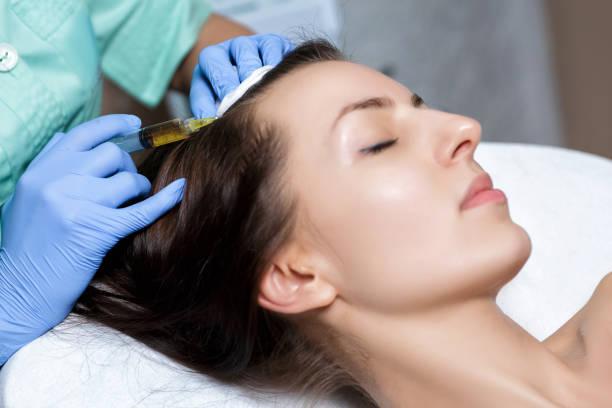
Temple recession can subtly alter the shape of the hairline before broader thinning becomes obvious. PRP Hair Treatment in Abu Dhabi may help support existing follicles around a thinning temple when those follicles remain biologically active, potentially improving hair caliber and the visual transition between the frontal hairline and side of the scalp.
Why Temple Recession Needs Precise Assessment
The temples are among the most structurally delicate areas of the hairline. They form the transition between frontal scalp hair and the sideburn region, so even a relatively small reduction in density can change the perceived shape of the face.
The Temple Is Not a Uniform Hairline
Hair direction changes around the temple. Follicles become progressively finer toward the temporal edge, and naturally occurring temple recession can occur even without active hair loss.
A practitioner therefore needs to distinguish an individual's normal temporal architecture from progressive recession before deciding whether treatment is appropriate.
Miniaturization Can Change the Temple Shape
When susceptible follicles gradually produce finer shafts, the temple may look increasingly empty even though some hairs remain present.
This distinction is important because visible fine hairs can indicate a very different treatment situation from an area where mature terminal hairs have already disappeared.
Hairline Geometry Matters
The goal is not necessarily to push the hairline forward as far as possible. Natural restoration depends on preserving an appropriate transition between the frontal hairline, temple point, and side hair.
A treatment plan focused only on filling an empty-looking region can produce an unnatural visual effect if the underlying hairline geometry is ignored.
How PRP May Support Thinning Temple Follicles
PRP involves preparing platelet-rich plasma from the patient's own blood and introducing it into selected scalp areas. The treatment is designed to provide a concentrated source of platelet-associated growth factors around targeted regions.
Targeting the Temporal Region
For temple thinning, injection placement needs to follow the actual area of reduced density rather than treating the entire scalp identically.
Fine-gauge injections can be distributed through the affected region according to the practitioner's assessment of follicular density, hair direction, and the extent of thinning.
Supporting Hair That Is Still Present
PRP is most relevant when the temple contains follicles that are still producing hair but have become weaker or finer.
The objective is to support the existing growth environment. It is not a surgical method for physically relocating follicles into an empty temple.
Improving the Transition Zone
Temple treatment can also focus on the gradual transition between the frontal hairline and temporal scalp. Supporting finer hairs in this zone may help the area appear less sharply depleted.
The visual effect depends on the number and condition of remaining follicles, so results should be assessed individually rather than expected to follow a fixed pattern.
Receding Temples Versus a Naturally Mature Hairline
Not every temple recession requires intervention. Some people naturally develop a more mature hairline as they age without experiencing significant progressive thinning.
Signs That Need Further Assessment
A changing temple should receive closer attention when there is a noticeable difference between older and newer photographs, progressive reduction in hair caliber, increased scalp visibility, or similar changes occurring elsewhere on the scalp.
Family history can also provide useful context, although it does not by itself establish the cause of an individual's hair loss.
Why Photographs Are Useful
Temple changes can be difficult to judge in a mirror because hair direction and lighting strongly influence the appearance.
Standardized photographs taken from the front, both sides, and slightly above can provide a more reliable baseline for monitoring the temporal areas.
Clinical Factors Used to Plan Temple PRP
| Assessment Factor | What It Reveals | Why It Matters |
|---|---|---|
| Temple density | Number of visible hairs in the region | Helps determine the degree of thinning |
| Hair caliber | Thickness of individual strands | Helps identify miniaturization |
| Frontal hairline | Overall hairline architecture | Prevents isolated temple treatment from disrupting proportions |
| Temporal symmetry | Differences between left and right sides | Identifies uneven recession |
| Scalp visibility | Extent of exposed scalp | Helps map treatment zones |
| Hair-loss progression | Whether recession is changing | Helps determine whether active management is appropriate |
| Donor area | Available permanent hair | Important if surgical restoration is later considered |
A detailed assessment is particularly useful because the temple region can look sparse for reasons other than active follicular loss.
Injection Mapping Around the Temples
Temple PRP requires more than identifying a visible gap and injecting directly into its center. The treatment area should account for the surrounding transition zone.
Mapping the Frontal-Temporal Junction
The frontal-temporal junction is where hair direction, caliber, and density begin to change. Mapping this region helps identify where thinning actually begins.
The practitioner may also assess the surrounding frontal scalp because temple recession can occur alongside broader frontal miniaturization.
Respecting Natural Hair Direction
Hair around the temple does not grow in the same direction as central frontal hair. Treatment planning should therefore follow the existing anatomical pattern rather than treating the region as a flat grid.
This matters for both clinical precision and later evaluation of visual improvement.
Avoiding Over-Treatment
More injections do not automatically mean better density. The objective is controlled delivery to clinically relevant areas using an individualized protocol.
The treatment page describes PRP as a personalized procedure in which the number of sessions and treatment requirements can vary according to the patient's condition and extent of thinning.
How Temple PRP Fits Into Broader Hair Restoration
Temple recession can occur as an isolated concern or as one part of a wider hair-loss pattern.
When Thinning Is Limited to the Temples
If the frontal center and crown remain stable while the temples gradually become thinner, the treatment plan can focus on the temporal regions and surrounding hairline.
This situation requires careful observation because the appearance of isolated recession can change over time.
When the Hairline Is Also Thinning
A receding temple may accompany frontal hairline miniaturization. In that case, focusing exclusively on the temple can overlook the larger pattern.
The practitioner may evaluate the entire frontal zone before determining whether PRP should be used as a targeted or broader treatment.
For people comparing hair restoration options in Dubai, this distinction is important because non-surgical follicular support and surgical follicular redistribution address different stages of hair loss.
Environmental Considerations in Abu Dhabi
The local environment can affect scalp comfort and hair-care habits, even though climate itself is not a direct diagnosis of hair loss.
Heat and Perspiration
High temperatures can increase sweating, which may make the scalp feel uncomfortable after treatment. Keeping the scalp clean according to post-procedure instructions can help maintain comfort.
Strong Sun Exposure
Abu Dhabi's intense sunlight makes sun protection particularly relevant after scalp procedures. The treatment guidance advises limiting direct sun exposure after PRP.
Patients who spend significant time outdoors should plan activities around the recommended recovery instructions.
Indoor Air Conditioning
Frequent movement between hot outdoor conditions and heavily air-conditioned interiors can contribute to dryness of the scalp and hair shaft. Gentle hair care and appropriate scalp hygiene can help reduce unnecessary irritation.
When Temple Improvement May Become Noticeable
PRP does not immediately change the shape of a receding hairline. Hair follicles operate according to biological growth cycles, so visible changes develop gradually.
The Initial Recovery Period
Temporary tenderness, redness, swelling, or itching can occur following scalp injections. These effects generally represent the short-term treatment response rather than an indication of increased hair density.
The Following Months
Visible hair changes are typically assessed over several months rather than several days. The treatment information for PRP describes noticeable improvement around three to six months, while individual response can differ.
Longer-Term Observation
Temple recession can continue to evolve if an underlying pattern of hair loss remains active. Follow-up assessment can therefore be valuable even when early improvement is observed.
When PRP May Not Be Enough for Temple Recession
PRP has limitations. If a temple has been completely devoid of visible hair for a prolonged period, there may be insufficient existing follicular activity for a regenerative treatment to provide the desired degree of coverage.
Extensive Temporal Loss
When the objective is to physically reconstruct a substantially recessed hairline, a hair transplant may be considered if the patient has adequate donor supply.
A transplant can move donor follicles into the temporal region, whereas PRP does not relocate follicles.
Mixed Treatment Strategies
Some patients may have both miniaturized native hairs and areas requiring surgical restoration. In such situations, a clinician may evaluate whether non-surgical treatment and transplantation have complementary roles.
The appropriate sequence depends on the stability of hair loss, donor availability, existing density, and the desired restoration pattern.
Questions About PRP Hair Treatment in Abu Dhabi for Receding Temples
Can PRP Hair Treatment in Abu Dhabi Help Receding Temples
It may support existing follicles in thinning temple areas and potentially improve hair caliber and visible coverage. The response depends on the condition of the follicles.
Can PRP Restore a Completely Empty Temple
PRP is not designed to transplant new follicles into an empty area. Extensive permanent loss may require evaluation for surgical restoration instead.
How Long Does Temple PRP Take to Show Results
Changes generally take several months to become noticeable. The expected timeline varies between individuals.
Does Temple PRP Change the Natural Hairline Shape
The aim is to support existing hair rather than artificially redesign the hairline. Treatment planning should preserve the patient's natural temporal architecture.
Can Both Temples Be Treated
Yes, when clinically appropriate. The two sides can be assessed separately because recession is not always perfectly symmetrical.
The Strategic Investment
Temple recession deserves careful evaluation because this small anatomical region can have a disproportionate effect on overall facial framing. The most useful approach is to determine whether the area contains viable thinning follicles, identify the true progression pattern, and select treatment according to the amount of restoration required.
For patients seeking individualized hair restoration planning, Tajmeels Clinic offers PRP-based hair treatment with assessment of the patient's pattern and treatment requirements before proceeding.

 English
 Arabic
 Spanish
 Portuguese
 Deutsch
 Turkish
 Dutch
Dutch
 Italiano
 Russian
 Romaian
 Portuguese (Brazil)
 Greek
Greek
