


 About Urh Social
 Terms of Service
 Privacy Policy
 Contact
Scalp Micropigmentation in Dubai for Dark Hair Contrast
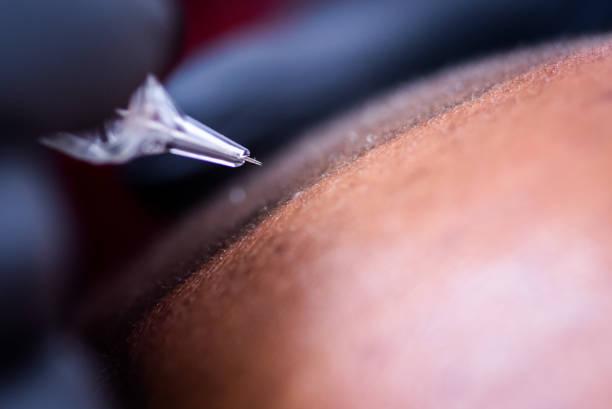
Scalp Micropigmentation in Dubai can reduce the visual contrast created when dark hair sits against a more visible scalp, particularly in areas with reduced density. The treatment uses controlled follicular impressions to soften the difference between hair-bearing and exposed scalp without attempting to reproduce the full color of individual hair shafts.
Dark hair creates a strong visual frame around areas where scalp is visible. That contrast can make modest thinning appear more pronounced, especially with short hairstyles or directional lighting.
The Science of Dark Hair Contrast
Contrast Is More Important Than Hair Color Alone
The visual effect depends on the relationship between hair, scalp, lighting, and density. A person with very dark hair may notice scalp exposure even when a reasonable number of follicles remain.
SMP addresses this optical relationship by adding tiny points that resemble follicular shadows. The International Society of Hair Restoration Surgery describes SMP as a technique that can create the appearance of shaved hair, stubble, or greater density.
Dark Hair Does Not Mean Dark Pigment
A common misconception is that SMP pigment should simply match the patient's hair color. The objective is different: the impressions should reproduce the visual effect of follicles beneath the hair.
Using excessive pigment to match very dark hair can create an overly dense scalp appearance. Controlled contrast is therefore more important than literal color matching.
Where Dark-Hair Contrast Commonly Appears
Dark-haired patients may notice scalp visibility in several situations:
- Between widely spaced follicles
- Across areas of gradual thinning
- Around a changing part line
- Beneath very short hairstyles
- Around previously restored regions
- Where hair shafts have become finer
- In areas exposed directly to overhead illumination
Each situation requires its own assessment. Treating every visible scalp region with the same pigment density can create unnecessary saturation.
Assessing Contrast Before Treatment
Evaluating the Scalp in Natural Conditions
The scalp should be assessed under more than one lighting condition. Direct illumination can make scalp exposure appear considerably stronger than it does in softer ambient light.
Hair should also be viewed at the patient's usual grooming length. A density issue that disappears when hair is longer may require a different strategy from one that remains obvious after clipping.
Looking at Density Rather Than Darkness
The treatment plan should identify the areas where contrast is visually disruptive. It should not simply follow every region that looks lighter.
This distinction helps maintain natural variation. Real hair density is not perfectly uniform, and eliminating every visible scalp area can produce an artificial result.
SMP Treatment for Dark Hair Contrast
Calibrating Pigment Intensity
Dark hair requires careful control of pigment intensity because excessive contrast can be more noticeable than the original concern.
The impressions should support the existing follicular pattern while maintaining enough visual separation between individual points.
Adjusting Point Distribution
The spacing between impressions affects how the treated area is perceived from a normal viewing distance. Closely clustered points can merge visually, while excessive spacing may fail to reduce the perceived gap.
A practitioner therefore has to balance point size, distance, density, and the surrounding hair pattern rather than relying on a fixed template.
Controlling Pigment Depth
SMP is intended to place pigment superficially in the scalp. ISHRS notes that pigment deposited too deeply can spread and produce blurred or blotchy results.
This is particularly relevant with dark hair because a poorly controlled dark impression can stand out strongly against the surrounding skin.
Dark Hair and Short-Cropped Styling
Why Clipping Reveals Contrast
When hair is clipped close to the scalp, there is less hair shaft length available to obscure the underlying skin. The contrast between dark follicular points and visible scalp consequently becomes more apparent.
SMP can complement this style by creating additional follicular-shadow impressions within selected areas.
Maintaining a Stubble-Like Appearance
A close-cropped SMP design should resemble the visual pattern of naturally emerging stubble. This requires variation rather than identical points arranged in regular rows.
The International Society of Hair Restoration Surgery emphasizes that SMP relies on specialized pigment placement and microscopic point patterns rather than conventional tattooing.
Dark Hair With Fine or Miniaturized Shafts
The Density Illusion
Hair shaft diameter can significantly affect perceived coverage. Dark hair that has become finer may expose more scalp even though follicles are still present.
SMP can reduce the visual contrast beneath these hairs, but it cannot restore shaft thickness or reverse follicular miniaturization.
Monitoring Ongoing Hair Changes
If native hair continues to thin, the relationship between the original hair and pigmented areas can change. Treatment planning should therefore account for the possibility of future density changes.
Camouflage is most predictable when the underlying hair-loss pattern has been appropriately assessed.
Dark Hair After Hair Transplantation
A transplant can improve biological coverage, but some patients may still notice visible scalp between established follicles. The contrast can be particularly apparent when the surrounding hair is very dark.
ISHRS identifies SMP as a possible adjunct for low-density areas and for improving the visual appearance of some post-transplant results.
The transplant should first be allowed to mature sufficiently so that the remaining density pattern can be evaluated accurately.
Dark Hair and Different Scalp Conditions
Not every dark-haired person with visible scalp is an SMP candidate. The underlying scalp should be assessed for conditions that may affect treatment.
Active inflammation, infection, or scarring processes require appropriate medical evaluation. ISHRS guidance notes that active scarring alopecia and other active scalp disorders should be stabilized before cosmetic pigmentation is performed.
This prevents cosmetic camouflage from being used as a substitute for managing an active scalp disorder.
Managing Contrast Around Existing Hairlines
Frontal Transition Zones
The frontal region is particularly sensitive to pigment intensity because it is immediately visible against the forehead. Dark-haired patients may be tempted to request a stronger edge to eliminate scalp visibility.
A more natural approach uses gradual density and irregular follicular spacing rather than a solid frontal boundary.
Areas Behind the Hairline
The zone immediately behind the frontal edge can often tolerate a different visual density because existing hair provides additional context.
The transition between these regions should remain gradual so the scalp does not appear to have a sharply defined pigment border.
Dubai Lighting and Dark Hair
Dubai's bright outdoor sunlight can emphasize the contrast between dark hair and exposed scalp. Strong overhead lighting indoors can create a similar effect by illuminating spaces between follicles.
This makes lighting an important part of the assessment process. The treatment should be designed for how the scalp looks in ordinary daily environments rather than only under controlled clinic lighting.
For patients exploring personalized hair restoration care in Dubai, the assessment should consider hair length, workplace environments, outdoor exposure, styling habits, and the patient's typical lighting conditions.
Sun Exposure and Pigment Appearance
People living in a high-sun environment should take scalp protection seriously after SMP. Ultraviolet exposure can influence the long-term appearance of cosmetic pigmentation.
The appropriate level of sun protection and timing after treatment should follow the treating provider's instructions. Patients who spend extended periods outdoors may require particular attention to scalp coverage once the skin has healed.
Dark Hair Contrast Versus Hair Transplantation
SMP and transplantation address different aspects of visible density.
A transplant introduces actual follicular units into a recipient area. SMP adds visual follicular impressions without creating new biological hair.
For someone with dark hair and adequate donor availability, transplantation may be discussed when genuine follicular coverage is the primary objective. For someone whose main concern is visible scalp between existing follicles, cosmetic pigmentation represents a different treatment pathway.
In selected cases, the two techniques can complement one another.
Factors That Should Shape the Treatment Plan
A dark-haired SMP assessment should consider:
- Natural hair color
- Scalp tone
- Hair shaft thickness
- Existing follicular density
- Preferred haircut
- Degree of scalp visibility
- Pattern of hair loss
- Previous restoration procedures
- Scalp texture
- Sun exposure
- Expected future hair changes
These variables influence both the visual target and the amount of pigmentation required.
What a Natural Result Should Look Like
A well-planned result should not make the scalp appear uniformly dark. Instead, the pigment should work quietly within the existing follicular pattern.
At normal viewing distance, the eye should perceive improved continuity rather than identify individual pigment impressions as separate cosmetic marks.
This is why restraint is particularly important for dark-haired patients. More pigment does not automatically mean more realistic density.
Maintenance for Dark-Hair SMP
Pigmentation gradually interacts with normal skin turnover and environmental exposure. Its appearance can change over time, although the rate varies between individuals.
Dark-haired patients should monitor the relationship between the treated scalp and surrounding native hair. If the hair becomes finer, lighter, or significantly more sparse, the original visual balance may need reassessment.
Any future refinement should be based on the current appearance rather than automatically duplicating the initial treatment pattern.
Strategic Investment in Dark-Hair Contrast
Dark hair can make even moderate scalp exposure visually prominent because of the strong contrast between the hair and skin. SMP can address that contrast by introducing carefully calibrated follicular impressions rather than attempting to turn the entire scalp into a darker surface.
If you are considering Scalp Micropigmentation in Dubai for visible scalp contrast with dark hair, a consultation with Tajmeels Clinic can help determine the appropriate pigment intensity, spacing, and treatment pattern for your existing hair and scalp characteristics.

 English
 Arabic
 French
 Spanish
 Portuguese
 Deutsch
 Turkish
 Italiano
 Russian
 Romaian
 Portuguese (Brazil)
 Greek
Greek
