


 About Urh Social
 Terms of Service
 Privacy Policy
 Contact
Hybrid Hair Transplant in Dubai: Assessing Donor Capacity
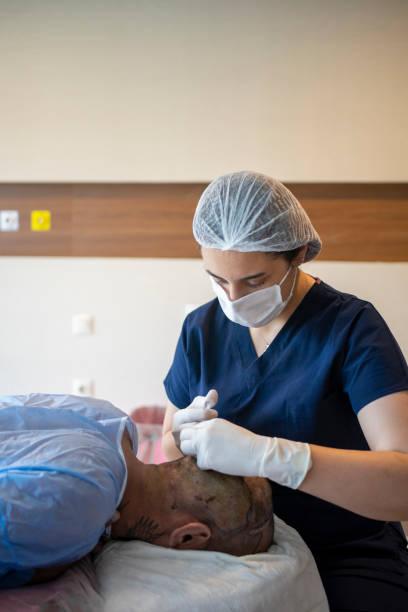
The amount of hair available for transplantation is determined by the donor scalp, not simply by the size of the bald area. Hybrid Hair Transplant in Dubai requires a detailed assessment of donor density, follicular-unit composition, scalp characteristics, and safe harvesting limits before FUE and FUT are combined into a restoration strategy.
Donor Capacity Is the Foundation of Surgical Planning
Patients often begin a hair-transplant consultation by asking how many grafts they need. Clinically, the more important question comes first: how many suitable grafts can the donor area realistically provide without creating visible depletion?
The answer depends on individual anatomy.
A large recipient area does not mean that an equally large number of grafts can safely be harvested. The surgeon must balance the desired coverage against the biological resources available at the back and sides of the scalp.
The Donor Zone Is Not an Unlimited Reservoir
Hair transplantation redistributes existing follicles. It does not create an additional supply of permanent donor hair.
Every follicular unit removed through FUE is permanently removed from its original location. FUT similarly removes a defined strip of donor tissue.
The remaining donor area therefore needs to retain enough density to look natural after harvesting and remain useful if future restoration becomes necessary.
Donor Quality Matters Alongside Donor Quantity
Two patients can have apparently similar donor coverage but very different transplantation potential.
One may have dense follicular units containing multiple hairs, while another may have lower density with predominantly one- or two-hair units.
Hair shaft diameter also influences the visual contribution of each graft. A donor area with thick shafts may provide stronger coverage than the same graft count composed of finer hair.
What Surgeons Examine in the Donor Area
Donor assessment is more detailed than visually checking whether the back of the scalp looks full.
The surgeon evaluates the density, distribution, follicular-unit composition, scalp characteristics, previous extraction sites, and the quality of hair available for transplantation.
Follicular Density
Density describes how many follicles or follicular units exist within a particular scalp area.
Higher density may provide more harvesting flexibility, but it does not mean every available follicle should be removed.
Extraction must be distributed in a way that avoids creating obvious thinning.
Follicular-Unit Composition
A follicular unit can contain different numbers of hairs.
A donor area with a high proportion of multi-hair units can potentially provide more visible hair coverage from the same number of grafts than one dominated by single-hair units.
This is why graft count alone can be misleading when comparing treatment plans.
Hair Shaft Caliber
The thickness of the hair shaft affects the amount of scalp that can be visually concealed.
Coarser hair generally produces stronger visual coverage, while fine hair may require a more carefully optimized density strategy.
The surgeon should therefore evaluate hair caliber when estimating what the available donor supply can realistically accomplish.
The Safe Donor Zone Requires Careful Mapping
Not every hair on the scalp is equally suitable for transplantation.
The donor area is generally evaluated according to the stability and characteristics of the follicles within it. Hair that is susceptible to future miniaturization may not provide the same long-term reliability as stable donor follicles.
Mapping the Permanent Hair Characteristics
The surgeon examines the distribution of stable donor hair rather than simply selecting the darkest or densest-looking areas.
This distinction becomes particularly important in patients with advanced hair loss, where the visible donor area may already have experienced some miniaturization.
Avoiding Extraction From Vulnerable Areas
Harvesting aggressively from marginal areas can compromise the appearance of the donor region later.
The goal is not to remove every follicle that can technically be extracted. It is to select suitable follicles while maintaining an acceptable donor appearance.
Why Hybrid Surgery Changes Donor Planning
Hybrid transplantation uses both FUE and FUT, meaning donor capacity must be evaluated from two perspectives.
The surgeon must determine whether individual extraction is appropriate in selected areas and whether a strip harvest is suitable for the patient's scalp anatomy and restoration requirements.
FUE Uses Distributed Extraction
FUE removes individual follicular units from multiple donor sites.
This can allow the surgeon to distribute extraction across the donor region rather than removing one continuous section of tissue.
However, poorly planned extraction can still produce visible depletion if too many neighboring follicles are removed.
FUT Uses a Defined Donor Strip
FUT obtains follicular units from a surgically removed strip.
The resulting linear donor incision means scalp laxity, strip width, closure strategy, and scar characteristics become important considerations.
The technique can provide substantial numbers of follicular units without requiring the same pattern of individual extraction used in FUE.
Hybrid Planning Uses Both Donor Strategies
The potential value of combining the techniques comes from their different harvesting characteristics.
Rather than asking whether FUE or FUT is universally superior, the surgeon determines whether each method has a useful role within the patient's overall donor strategy.
Donor Capacity Should Be Estimated Before Graft Promises Are Made
A graft estimate should be based on physical examination and surgical planning, not on the number a patient wants to receive.
A patient requesting 5,000 grafts, for example, may not have the donor capacity to support that number while maintaining a satisfactory donor appearance.
Recipient Size Is Only One Variable
The surface area requiring coverage matters, but so do:
- Donor density
- Follicular-unit composition
- Hair caliber
- Hair-loss severity
- Recipient-area size
- Desired density
- Hair characteristics
- Existing native hair
- Future hair-loss risk
- Previous transplant procedures
These factors interact rather than functioning independently.
Visual Coverage Can Differ From Graft Coverage
The goal of transplantation is visual improvement, not necessarily complete follicular replacement of every bald square centimeter.
Strategic placement can create stronger cosmetic coverage by prioritizing areas that have the greatest influence on overall appearance.
This is particularly important when donor resources are limited.
Advanced Hair Loss Creates a Donor-Recipient Mismatch
Patients with extensive baldness may have a large recipient area but a comparatively limited donor supply.
This mismatch is one of the most difficult planning problems in hair restoration.
Norwood Progression Changes the Calculation
Advanced Norwood stages can involve extensive loss across the frontal scalp, mid-scalp, and crown.
The surgeon must consider whether the available donor follicles can realistically improve all affected regions or whether treatment priorities need to be established.
Tajmeels describes its Hybrid method as particularly relevant to advanced hair loss and lists it among the techniques used for larger restoration requirements.
Complete Coverage May Not Be a Realistic Goal
Patients sometimes assume that transplantation should restore the same density they had before hair loss.
In advanced cases, the donor supply may not support that objective.
A more realistic strategy may involve creating a natural hairline, improving frontal density, strengthening the mid-scalp, and approaching the crown according to the remaining graft budget.
This is not a limitation of surgical technique alone. It is a consequence of donor biology.
Donor Hair Distribution Influences the Final Design
The location of available donor hair can influence how the restoration is constructed.
Hair characteristics can differ between the occipital region and the temporal or lateral donor areas.
Occipital Hair May Behave Differently
The central back of the scalp often contains a substantial amount of donor hair, but its density and follicular composition still vary between patients.
The surgeon should not assume that all occipital follicles are identical.
Temporal Donor Hair Requires Caution
Hair near the sides and temples can be finer and may have different long-term characteristics.
Extraction patterns must be designed to avoid visible irregularities, particularly in patients with shorter hairstyles.
Previous Hair Transplantation Can Reduce Donor Capacity
A patient's donor assessment changes significantly if FUE or FUT has already been performed.
Previous procedures may have removed a meaningful number of follicles, created scar tissue, altered density, or changed the distribution of remaining donor hair.
Previous FUE Leaves Extraction History
Although FUE does not create a linear strip scar, previous extraction sites can affect the remaining donor density.
A second procedure therefore requires assessment of what has already been harvested rather than treating the donor area as untouched.
Previous FUT Creates Scar-Related Considerations
A previous strip harvest may leave a linear scar and reduce the amount of donor tissue available for another strip procedure.
The surgeon must assess scalp laxity, existing scar quality, and the remaining donor region before considering another intervention.
This is one reason revision transplantation requires more individualized planning than a first procedure.
Donor Capacity and Future Hair Loss Must Be Connected
A transplant plan should not consume all available donor resources simply because the patient currently has extensive baldness.
Future progression matters.
Native Hair May Continue to Miniaturize
Androgenetic hair loss can continue after transplantation.
If substantial donor resources are used to create a very low hairline while native hair behind it continues thinning, the final pattern may become difficult to manage.
A Donor Reserve Can Be Valuable
Preserving some donor capacity gives the patient greater flexibility if future progression or another restoration need develops.
This does not mean every patient requires a second transplant. It means the first operation should be planned with the possibility of future biological changes.
How Donor Capacity Influences Graft Allocation
Once donor availability has been estimated, grafts can be distributed according to visual priority.
The process is similar to allocating a limited surgical resource across several recipient zones.
| Recipient zone | Main planning objective | Donor consideration |
|---|---|---|
| Frontal hairline | Natural transition and facial framing | Often requires carefully selected single-hair units |
| Frontal zone | Stronger density behind the hairline | Can use varied follicular-unit compositions |
| Mid-scalp | Continuity with frontal restoration | Requires efficient graft distribution |
| Crown | Follow natural whorl and provide coverage | Can require substantial graft allocation |
| Transition areas | Blend transplanted and native hair | Must account for future native-hair changes |
This approach helps prevent the common mistake of treating every recipient area as equally important.
Density Should Be Designed Around Donor Reality
Patients often use the word "density" to mean a completely full scalp.
Clinically, density is more nuanced.
Higher Density Requires More Donor Resources
Increasing the number of grafts per area consumes more donor follicles.
If the donor supply is limited, excessive density in one region may leave insufficient grafts for another area.
Strategic Density Can Produce Better Overall Coverage
The surgeon can use follicular-unit characteristics, hair caliber, recipient anatomy, and existing native hair to determine where density will produce the strongest visual benefit.
This is especially important for advanced hair loss.
A carefully distributed restoration can look more balanced than an extremely dense frontal area combined with an untreated or disproportionately thin crown.
What a Donor Assessment Should Include
A thorough consultation should provide more than a verbal estimate.
Patients should understand how the proposed graft number was calculated and what limitations were identified.
Useful Donor Assessment Questions
Patients can ask:
- How dense is my donor area?
- What is the average follicular-unit composition?
- Which areas are considered suitable for harvesting?
- How much donor hair can be safely removed?
- Would FUE, FUT, or a combination better suit my anatomy?
- How will the donor area look after harvesting?
- How much donor reserve should remain for future needs?
- How will my current hair-loss pattern affect graft allocation?
The answers should be based on examination rather than a standardized package.
Donor Capacity Is More Important Than a Headline Graft Number
A treatment plan should not be judged primarily by whether it promises thousands of grafts.
The relevant question is whether the proposed graft number is compatible with the patient's donor characteristics and long-term restoration goals.
For people comparing hair restoration options in Dubai, donor assessment is one of the most useful parts of a consultation because it reveals what can realistically be achieved before surgical harvesting begins.
The Strategic Investment
The strongest transplant strategy is not necessarily the one that removes the largest number of follicles. It is the one that uses available donor resources intelligently while preserving the appearance and future potential of the scalp.
A Hybrid procedure can provide two harvesting approaches, but neither FUE nor FUT can overcome an inadequate biological donor supply. Careful mapping, realistic graft estimation, strategic density, and long-term planning therefore remain central to the decision.
Patients considering Hybrid Hair Transplant in Dubai can review the treatment approach and broader surgical options through Tajmeels Clinic before proceeding with an individualized donor and recipient assessment.

 English
 Arabic
 French
 Spanish
 Portuguese
 Deutsch
 Dutch
Dutch
 Italiano
 Russian
 Romaian
 Portuguese (Brazil)
 Greek
Greek
