


 About Urh Social
 Terms of Service
 Privacy Policy
 Contact
Hair Transplant in Abu Dhabi for Early Hair Loss: Timing
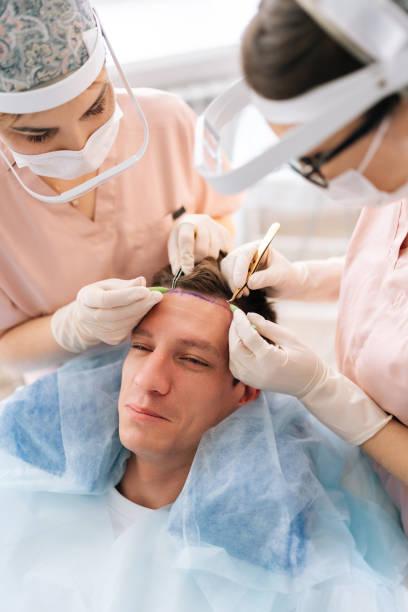
Hair Transplant in Abu Dhabi for early hair loss is mainly a question of timing, stability, and long-term planning rather than simply deciding how soon surgery can be performed. When recession or thinning has only recently appeared, assessing the cause and future progression can help determine whether transplantation is appropriate now or whether stabilizing the native hair should come first.
Early intervention can be useful in selected cases, but performing surgery too aggressively while hair loss is still evolving can create unnecessary donor depletion and an unnatural relationship between transplanted and native hair.
Hair Transplant in Abu Dhabi and the Meaning of Early Hair Loss
Early hair loss can appear as mild temple recession, reduced frontal density, increased scalp visibility, or gradual thinning around the crown.
The visible change may be subtle, but the underlying biological process can already be active. Some follicles may be progressively miniaturizing even though they continue producing visible hair.
This makes diagnosis important before deciding on a surgical solution.
Hair Transplant in Abu Dhabi Requires Pattern Assessment
Male and female hair-loss patterns can develop differently, and not every form of shedding is suitable for immediate transplantation.
A clinical assessment may distinguish pattern hair loss from temporary shedding, inflammatory scalp conditions, nutritional problems, hormonal influences, or other causes.
Transplantation is designed to redistribute suitable follicles. It does not automatically correct an unresolved cause of widespread hair shedding.
Why Early Does Not Always Mean Better
A patient may assume that treating hair loss immediately will prevent further recession.
A transplant does not stop the progression of untreated native follicles. If the remaining hair continues to thin after surgery, the transplanted area may eventually become surrounded by weaker native hair.
The best timing therefore depends on stability and future planning rather than age or the first appearance of recession alone.
Hair Transplant in Abu Dhabi and Hair-Loss Stability
One of the most important considerations is whether the pattern of loss has become sufficiently predictable.
If the hairline is changing rapidly, it can be difficult to determine where a stable long-term hairline should be positioned.
A conservative approach may be preferable when progression is uncertain.
Signs That Hair Loss May Still Be Developing
Patients may notice:
- Increasing temple recession
- Progressive frontal thinning
- Widening visible scalp
- Reduced hair caliber
- Increasing shedding
- Crown density changes
- Noticeable changes over consecutive months
- Similar progressive hair loss among close relatives
These signs do not establish candidacy on their own, but they indicate why professional assessment can be valuable before committing to surgery.
Hair Transplant in Abu Dhabi and Native Hair Preservation
Early hair-loss patients often have considerable native hair remaining.
That existing hair can provide substantial cosmetic coverage, making it important to protect rather than unnecessarily replace it.
Recipient-site planning must account for the location of existing follicles. Poorly positioned incisions can potentially damage native hairs and reduce the density the patient already has.
Hair Transplant in Abu Dhabi for a Developing Hairline
A developing hairline presents a design challenge.
If a patient has mild recession, lowering the hairline substantially may require many grafts and create a long-term mismatch if the native hair continues to recede.
A more conservative design can sometimes integrate better with future changes.
The goal is to create a hairline that looks natural now without making future progression difficult to manage.
Hair Transplant in Abu Dhabi and Donor Reserve
Every transplant uses part of the patient's finite donor supply.
This matters particularly for younger patients with early-stage hair loss because they may potentially require additional restoration later.
A surgeon must therefore consider not only how many grafts are needed today but also how many stable follicles should remain available for future treatment.
| Early hair-loss consideration | Why it matters |
|---|---|
| Current recession | Determines immediate restoration needs |
| Future progression | Influences hairline design |
| Donor density | Determines available graft supply |
| Hair caliber | Affects visual coverage |
| Native hair density | Helps determine whether surgery is necessary |
| Patient age | Influences long-term planning |
| Family pattern | Can provide context for progression |
| Medical management | May help preserve native hair where appropriate |
A lower graft requirement at an early stage does not automatically make surgery the best option.
Hair Transplant in Abu Dhabi and Conservative Hairline Design
The frontal hairline strongly influences facial appearance.
Creating an excessively low hairline can consume donor resources that may later be needed for areas affected by progressive thinning.
A mature hairline generally allows a more sustainable distribution of grafts.
Hairline Geometry Matters
A natural hairline contains irregularity and changes gradually in density.
The leading edge may use finer follicular units, while thicker units can be positioned behind the transition. The angle of implantation also changes progressively from the frontal region toward the central scalp.
This design becomes particularly important when the patient still has substantial native hair.
Hair Transplant in Abu Dhabi for Early Temple Recession
Early temple recession can be difficult to interpret because the temporal corners naturally mature with age.
Not every change represents pathological hair loss.
If the recession is mild and stable, surgery may not provide enough benefit to justify using donor follicles. If progression is established and the patient has sufficient donor reserve, localized restoration may become more reasonable.
The decision should be based on the pattern rather than simply how deep the temples appear.
Hair Transplant in Abu Dhabi and Crown Thinning
Early crown thinning presents another timing issue.
The crown has a circular or spiral growth pattern and can require a significant number of grafts to produce visible improvement.
If the thinning is mild, strategic medical management may sometimes be considered before surgical restoration.
If transplantation is eventually required, the surgeon must determine whether crown coverage should take priority over the frontal scalp.
Hair Transplant in Abu Dhabi and Graft Prioritization
When donor resources are limited, grafts should be directed toward the areas that create the greatest overall improvement.
For many patients, the frontal region has greater visual importance because it frames the face.
The crown may be addressed later depending on progression, donor capacity, and the patient's aesthetic priorities.
Hair Transplant in Abu Dhabi and Medical Stabilization
Some patients with early hair loss may benefit from discussing nonsurgical management with a qualified medical professional before considering transplantation.
The purpose is not to delay treatment indefinitely. It is to determine whether existing native follicles can be preserved and whether the progression can be better understood.
The appropriate medical approach depends on the diagnosis, health history, contraindications, and individual circumstances.
A surgical consultation should therefore consider the patient's current hair as well as the follicles that may otherwise be lost in the future.
Hair Transplant in Abu Dhabi and FUE Planning
FUE involves harvesting individual follicular units from the donor region and placing them into recipient sites.
For early hair loss, the technique can be used conservatively when the patient is an appropriate candidate. However, the method does not remove the need for long-term planning.
The key question remains how many grafts should be used and where they should be placed.
Patients comparing hair restoration options in Abu Dhabi should evaluate the proposed treatment strategy rather than choosing a procedure solely according to its technique name.
Graft Numbers Should Follow the Diagnosis
A predetermined graft package can be unsuitable for a patient with early-stage loss.
Someone with limited recession may require relatively few grafts, while another patient with diffuse thinning could require a broader strategy.
The number should follow donor capacity, recipient requirements, hair characteristics, and the anticipated progression of loss.
Hair Transplant in Abu Dhabi and Future-Proofing
Future-proofing does not mean predicting exactly how a patient's hair will look decades later.
It means designing the current procedure so that foreseeable progression does not immediately create an obvious imbalance.
This can involve maintaining a mature hairline, conserving donor follicles, avoiding excessive temple advancement, and considering whether crown restoration should be postponed.
Preserving Options for a Second Procedure
Some patients may eventually need another procedure.
If the initial operation consumes a large percentage of the donor reserve, future options become narrower.
A conservative first procedure can therefore be strategically valuable even when a patient initially wants maximum density.
Hair Transplant in Abu Dhabi and UAE Lifestyle Planning
Early recovery still requires sensible postoperative planning regardless of the number of grafts.
Abu Dhabi's intense sunlight and high outdoor temperatures can make scalp protection important after treatment. Patients should follow the treating clinician's instructions concerning sun exposure, washing, exercise, and physical activity.
Air-conditioned environments can also contribute to scalp dryness or discomfort. Postoperative care should be based on the clinic's instructions rather than experimenting with cosmetic products during healing.
Hair Transplant in Abu Dhabi: When Waiting May Be Sensible
Waiting does not necessarily mean abandoning the idea of transplantation.
In some patients, a period of observation or medical management can provide useful information about the stability of the hair-loss pattern.
This may make future hairline planning more accurate and help prevent unnecessary graft use.
A patient with stable recession and adequate donor supply may be a different surgical candidate from someone whose hairline is visibly changing every few months.
Hair Transplant in Abu Dhabi: When Earlier Planning Makes Sense
Early consultation can still be valuable even when immediate surgery is not recommended.
A professional assessment can establish baseline density, identify miniaturization, discuss future progression, and outline possible treatment pathways.
This allows the patient to understand the available donor reserve before substantial additional hair loss occurs.
Early planning is therefore different from rushing into surgery.
Hair Transplant in Abu Dhabi: Questions to Ask About Timing
Patients considering treatment at an early stage should ask:
- Is my hair loss stable enough for transplantation?
- What is causing my current thinning?
- Are my donor follicles sufficiently stable?
- How could my hairline change over the next several years?
- Would medical management be appropriate?
- How many grafts would be reasonable now?
- Should the temples or crown be treated at this stage?
- How much donor reserve should remain for future needs?
- What hairline design would remain appropriate if recession continues?
- Would monitoring my hair for a period improve the treatment plan?
These questions help distinguish between an appropriate early intervention and a procedure that may be premature.
Hair Transplant in Abu Dhabi: The Strategic Investment
The right time for Hair Transplant in Abu Dhabi is determined less by how quickly a patient wants a visible change and more by the stability of the hair-loss pattern, donor capacity, native-hair preservation, and long-term design. Early-stage patients can benefit from planning before surgery, even when the immediate recommendation is to monitor or stabilize the hair first.
A sustainable restoration should account for the hair that remains as carefully as the hair that has already been lost. By protecting donor resources and designing around realistic future progression, patients can make better decisions about whether transplantation is appropriate now or at a later stage.

 Arabic
 French
 Spanish
 Portuguese
 Deutsch
 Turkish
 Dutch
Dutch
 Italiano
 Russian
 Romaian
 Portuguese (Brazil)
 Greek
Greek
