


 About Urh Social
 Terms of Service
 Politique de confidentialité
 Contact
Hair Transplant in Dubai for Revision Planning
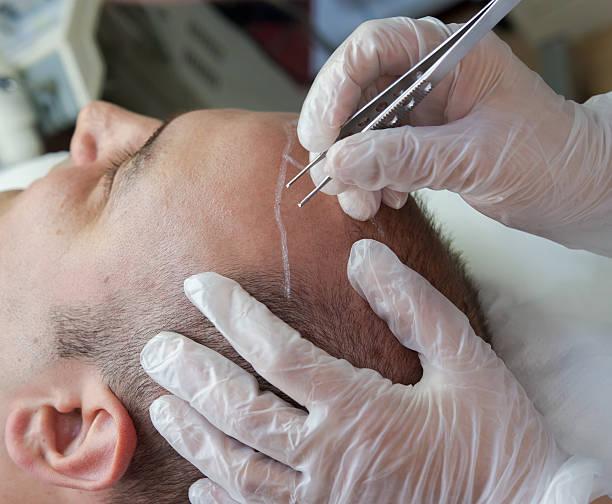
Previous hair restoration does not always produce the appearance a patient expected. Hair Transplant in Dubai can be considered for carefully assessed revision cases involving uneven graft distribution, visible scarring, unnatural follicle placement, or insufficient long-term coverage. The challenge is that corrective surgery must work around existing transplanted follicles and whatever donor supply remains.
Revision planning therefore requires more than simply adding new grafts. The surgeon must first identify what went wrong, determine which follicles remain viable, assess the donor area's capacity, and establish whether another procedure can improve the overall appearance without creating additional problems.
Why Revision Hair Restoration Requires Different Planning
A first-time transplant begins with a relatively straightforward question: where can healthy follicles be moved to improve coverage?
A revision case has additional variables.
There may already be transplanted follicles occupying the recipient area. Some may have survived well, while others may have grown at inconsistent angles or produced an unnatural pattern. The donor area may also have fewer available follicles because of previous extraction.
This changes the surgical strategy.
Previous Grafts Become Part of the Anatomy
Existing grafts cannot simply be ignored during a corrective procedure. New recipient sites must be created carefully around them to avoid unnecessary trauma to functioning follicles.
The assessment may include:
- Existing transplanted follicle distribution
- Native hair remaining between grafts
- Hair direction and angle
- Areas with poor graft survival
- Donor density
- Donor scarring
- Scalp elasticity and tissue characteristics
- Current pattern of hair loss
The objective is to understand the scalp as it exists now rather than plan the procedure as if no previous surgery had occurred.
The Original Procedure Matters
Records from the previous procedure can be extremely useful. Information such as the approximate graft number, extraction method, implantation technique, and date of surgery can help establish how much donor capacity may have already been used.
When records are unavailable, clinical examination and scalp assessment become even more important.
Common Problems Addressed During Revision Hair Transplant in Dubai
Not every unsatisfactory transplant has the same underlying problem. A patient may describe the result simply as “unnatural,” while the actual cause could involve several different factors.
| Previous-result problem | What may need assessment | Possible planning priority |
|---|---|---|
| Uneven graft distribution | Density and follicle positioning | Selective redistribution or additional grafting |
| Artificial-looking hairline | Hairline shape and follicle direction | Natural transition reconstruction |
| Poor growth | Graft survival and scalp condition | Determine viable areas before adding grafts |
| Visible donor scars | Scar characteristics and surrounding hair | Camouflage strategy where appropriate |
| Depleted donor area | Remaining follicular reserve | Conservative graft allocation |
| Incorrect hair direction | Existing follicle angles | Blending and visual correction |
| Continued native hair loss | Current progression pattern | Stabilization and long-term planning |
This distinction matters because adding more grafts without identifying the original problem can reproduce the same visual imbalance.
Assessing the Donor Area Before Corrective Surgery
Donor availability is one of the most important limitations in revision surgery.
A patient who has undergone previous transplantation may have already used a significant proportion of their strongest available follicles. Additional extraction must therefore be approached conservatively.
Donor Density Is Not the Same as Donor Availability
A scalp can appear reasonably dense while still having limited safe extraction potential.
The assessment should consider the distribution of follicular units, the quality of the remaining hair, previous extraction sites, and the likelihood of future hair loss in areas surrounding the traditional donor zone.
Overharvesting an already compromised donor region can make both the scalp and future treatment options less favorable.
Remaining Donor Supply Should Guide Expectations
When donor resources are limited, the objective may need to shift from complete correction to meaningful visual improvement.
For some patients, concentrating available grafts on the most noticeable defect may produce a better result than attempting to correct every imperfection.
This is particularly important in revision hair transplant in Dubai planning, where the available graft budget may be considerably smaller than during the original procedure.
Correcting an Unnatural Previous Hairline
One of the more complex revision situations involves a hairline that looks overly uniform, excessively low, sharply defined, or inconsistent with the patient's natural facial structure.
The solution is not necessarily to place more follicles directly in front.
A more natural appearance may require improving the transition between the existing hairline and surrounding native hair. The surgeon may need to evaluate follicular size, spacing, direction, and the position of existing grafts.
Hairline Irregularity Can Improve Naturalness
A natural hairline generally contains variation rather than a perfectly straight row of follicles.
In revision planning, the visual goal may involve softening a rigid edge by creating a more irregular transition zone around existing grafts. This requires careful placement because the new follicles need to integrate with the previous pattern.
Existing Grafts May Limit the Correction
If earlier grafts were positioned very close together or at unsuitable angles, there may be limited space for adding new follicles.
In selected cases, corrective strategies may involve working around existing grafts rather than removing them. More complex cases may require discussion of whether poorly positioned grafts can be modified or relocated, depending on their characteristics and the condition of the surrounding scalp.
Hair Transplant Repair When Growth Was Uneven
Patchy growth after an earlier procedure does not automatically mean that another transplant is required.
The cause should first be investigated.
Poor growth can relate to the original graft quality, surgical handling, recipient-site conditions, postoperative factors, or continuing hair loss affecting native follicles around the transplanted area.
A clinical evaluation can help distinguish between a genuinely underfilled region and an area where the apparent lack of density is mainly caused by ongoing native-hair loss.
For carefully selected patients, corrective graft placement can then be directed toward the areas producing the greatest visual improvement.
When Previous Transplant Scarring Becomes Part of the Problem
Scarring can occur in either the donor or recipient area depending on the previous surgical approach.
The appearance of a scar depends on several factors, including the technique used, individual healing characteristics, scar size, and the surrounding hair pattern.
Donor Scars Require Individual Assessment
A visible donor scar may become more noticeable when surrounding hair becomes thinner.
Additional transplantation around a scar may sometimes provide camouflage, but this depends on the scar's vascularity, tissue characteristics, available donor follicles, and the likelihood of successful graft growth.
The scar itself should therefore be evaluated rather than treated simply as another area requiring density.
Recipient Scarring Can Affect Graft Placement
If previous surgery created substantial tissue changes in the recipient area, new graft placement may require additional caution.
The surgeon needs to consider whether the tissue can support new follicular units effectively and how existing grafts will interact with the proposed correction.
Timing Matters Before Considering a Revision
Patients sometimes seek corrective surgery too soon because the initial result does not immediately match expectations.
Hair growth develops gradually, and premature intervention can make it difficult to determine the final outcome of the original procedure.
A proper assessment should consider:
- Time elapsed since the previous procedure
- Current hair growth
- Ongoing native-hair loss
- Donor-area condition
- Scalp health
- Stability of the existing result
- Realistic availability of additional grafts
Waiting for the appropriate assessment period can prevent unnecessary intervention and provide a clearer picture of what actually needs correction.
Building a Revision Strategy Around Visual Priorities
A revision procedure should not necessarily attempt to correct every visible issue simultaneously.
A staged approach can sometimes make more sense, particularly when donor resources are limited.
Priority One: Correct the Most Visible Defect
The first objective may be the feature that most strongly affects the overall appearance, such as an unnatural transition, conspicuous patch, or obvious imbalance.
Priority Two: Preserve Existing Hair
Native follicles may continue producing useful coverage. New graft placement should be planned around these follicles whenever possible rather than treating the entire recipient area as empty.
Priority Three: Protect Future Options
Revision planning should account for the possibility of future hair loss.
Using every available donor follicle during one corrective procedure may produce short-term improvement while leaving fewer options later.
A conservative strategy can therefore be more valuable than maximum extraction.
Questions to Ask Before a Revision Hair Transplant
Can a previous transplant be corrected?
Often, yes. The appropriate approach depends on the cause of the unsatisfactory result, existing grafts, scalp condition, and remaining donor supply.
Does revision surgery require more planning than a first transplant?
Yes. Existing grafts, previous extraction sites, scarring, and remaining donor capacity all have to be incorporated into the surgical plan.
Can new grafts be placed between old transplanted follicles?
In suitable cases, additional grafts can be strategically placed around existing follicles, but the spacing and condition of the recipient area must be assessed first.
What if the donor area was heavily harvested previously?
The remaining donor supply needs careful evaluation. Limited resources may require a more conservative or staged corrective strategy.
Can an unnatural hairline be improved?
Potentially. Correction depends on the position, density, direction, and characteristics of the existing grafts, along with the availability of suitable donor follicles.
Dubai-Specific Considerations During Revision Planning
Dubai's climate can add practical considerations to postoperative planning.
Strong sunlight, high temperatures, outdoor exposure, and extensive use of air conditioning can all affect how patients manage their scalp during recovery. Following postoperative instructions regarding sun protection, physical activity, washing, and environmental exposure is particularly important.
Patients with demanding professional or social schedules may also benefit from discussing recovery timing in advance.
The objective is not simply to schedule surgery around a convenient date. It is to allow sufficient time for appropriate postoperative care and minimize avoidable environmental stress during early healing.
Setting Realistic Expectations for Corrective Hair Restoration
Revision surgery should be approached with realistic expectations.
A corrective procedure may substantially improve the appearance of a previous transplant without recreating an untouched, completely natural scalp.
The available donor supply, condition of the recipient tissue, quality of previous grafts, ongoing hair loss, and presence of scarring all influence what can realistically be achieved.
A strong revision plan therefore balances three objectives: improve the current appearance, protect existing follicles, and preserve future treatment options.
The Strategic Investment
For patients considering corrective surgery after an unsatisfactory previous procedure, Hair Transplant in Dubai should be approached as a planning decision rather than simply another round of graft placement. A detailed assessment can help determine whether the priority should be graft addition, visual blending, scar camouflage, correction of follicle direction, or a staged combination of approaches.
For patients seeking a structured assessment of their restoration options, Tajmeels Clinic can provide a starting point for discussing individual hair-restoration needs and appropriate treatment planning.

 English
 Arabic
 Spanish
 Portuguese
 Deutsch
 Turkish
 Dutch
Dutch
 Italiano
 Russian
 Romaian
 Portuguese (Brazil)
 Greek
Greek
