


 About Urh Social
 Terms of Service
 Política de privacidade
 Contact
The Role of Innovation in Shaping the UAE’s Future Business Landscape
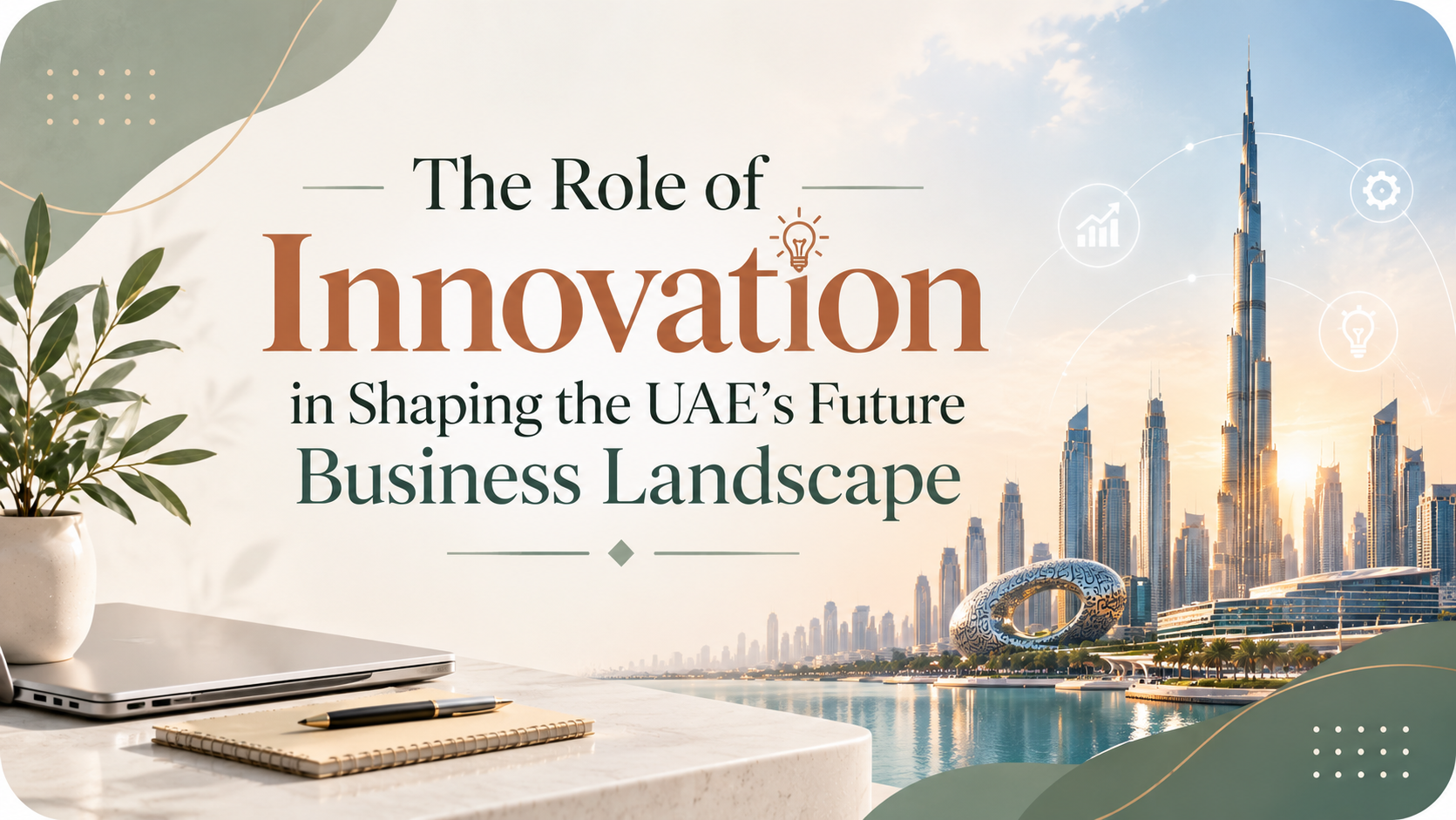
Innovation has become one of the most important forces influencing modern economies. It affects how companies create products, how governments deliver services, how consumers make decisions, and how entrepreneurs identify new opportunities. In the UAE, innovation has become closely connected with economic development, digital transformation, investment, and the creation of new industries.
The country's business environment has developed significantly as technology and entrepreneurship have gained greater importance. Companies are now expected to respond quickly to changing customer needs while using new tools to improve productivity and develop better services.
This transformation has also created a stronger environment for founders and emerging companies. The UAE Startup Ecosystem reflects this shift by connecting entrepreneurs with investors, technology providers, professional networks, and markets that can support business development.
Innovation Is More Than Technology
Innovation is often associated with software, artificial intelligence, or advanced technology, but its meaning is much broader.
A company can innovate by changing how it serves customers, improving its delivery process, creating a new pricing model, or finding a more efficient way to manage operations.
A restaurant that introduces a better reservation system is using innovation. A logistics company that improves delivery routes is innovating. A financial company that simplifies a complex process for customers is also creating innovation.
The common factor is improvement.
Why the UAE Has a Strong Innovation Focus
The UAE has invested heavily in creating an environment where businesses can experiment with new ideas and technologies.
The country's international business connections provide access to companies and professionals from different markets. Its infrastructure supports modern commerce, while major cities such as Dubai and Abu Dhabi have developed strong business communities.
This combination creates an environment where ideas can move quickly between industries.
Entrepreneurs can observe international trends, adapt them to local needs, and potentially develop products that can later be offered in other markets.
Digital Transformation Is Affecting Every Sector
Digital transformation is no longer limited to technology companies.
Banks, retailers, hotels, real estate companies, logistics providers, healthcare organizations, media businesses, and professional service firms are all adopting digital systems.
Websites and applications have changed customer communication. Cloud platforms have changed workplace collaboration. Data analytics has changed decision-making. Digital payments have changed transactions.
Artificial intelligence is now adding another layer to this transformation by supporting research, automation, customer service, content production, and information processing.
For businesses, the challenge is deciding which technologies genuinely improve their operations.
The Importance of Entrepreneurs
Entrepreneurs often play an important role in introducing new ideas because they can experiment with business models that larger organizations may be slower to adopt.
A startup can focus on one specific problem and develop a specialized solution.
If customers respond positively, the company can gradually expand.
This process can create new competition within established industries and encourage larger organizations to improve their own products and services.
Entrepreneurship can therefore influence the wider economy even when individual startups remain relatively small.
Innovation and Investment
Investment plays an important role in turning ideas into businesses.
A promising company may require funding for product development, research, employees, marketing, technology infrastructure, and international expansion.
Investors, however, typically need evidence that a business can create sustainable value.
This means entrepreneurs need more than an attractive concept. They need to demonstrate customer demand, understand their market, control costs, and develop a realistic growth strategy.
A strong relationship between founders and investors can provide both financial support and strategic guidance.
Creating Products for International Markets
The UAE's diverse population can give companies useful experience in serving customers with different cultural backgrounds and expectations.
A product that works for one customer group may need modification for another market.
Entrepreneurs who operate in a multicultural environment can learn how language, pricing, communication, design, and customer service influence purchasing decisions.
This experience can become valuable when companies expand internationally.
Dubai's global connections also make it possible for businesses to meet potential partners and customers from different regions.
Innovation in Real Estate
Real estate is another area where innovation is influencing the UAE's business landscape.
Developers are increasingly using technology to improve planning, marketing, customer communication, property management, and building operations.
Digital property platforms allow buyers and tenants to research options remotely. Virtual tours can help international customers evaluate properties before visiting. Data systems can provide information about market activity and demand.
Smart building technologies can also support energy management, security, and maintenance.
These developments show how technology can influence an industry traditionally associated with physical assets.
The Middle Section: Understanding Property and Business Growth
Real estate can have a broader economic impact because property development is connected with construction, finance, retail, hospitality, transportation, and professional services.
A detailed Dubai Real Estate Analysis can help explain how property demand, development activity, investment patterns, and changing consumer preferences interact with the wider business environment.
For entrepreneurs, these trends can matter even when their businesses are not directly related to property.
A growing business may need office space. A retail startup may require a suitable location. A hospitality company may depend on tourism and property development.
Real estate can therefore influence business costs, customer access, employee location, and expansion decisions.
Artificial Intelligence and Smarter Decisions
Artificial intelligence is increasingly being used to process large quantities of information.
Businesses can use AI-supported systems to analyze customer behavior, identify patterns, automate repetitive tasks, and assist with forecasting.
However, companies should not assume that every AI system automatically improves decision-making.
Data quality matters. Human review matters. The objectives of the organization matter.
Businesses need to understand what information a system is using and whether its results are appropriate for the decision being considered.
Responsible implementation can help companies gain value while reducing unnecessary risks.
The Changing Customer Experience
Innovation is also changing what consumers expect from businesses.
Customers increasingly want simple digital experiences, fast communication, flexible payment methods, reliable delivery, and easy access to information.
This means companies need to consider the complete customer journey.
A business might have an excellent product but still lose customers if ordering is difficult or customer support is slow.
Innovation therefore needs to address the full experience rather than focusing only on individual technologies.
Small Businesses Can Benefit From Innovation
Innovation is not reserved for large corporations.
Small companies can use affordable digital tools to improve marketing, bookkeeping, customer management, online sales, communication, and productivity.
For a small business, even a relatively simple improvement can make a meaningful difference.
Automating repetitive administrative tasks can save employee time. Better online communication can improve customer service. A well-designed website can help potential customers understand a company's services.
The key is selecting tools that solve genuine problems.
The Importance of Skilled Professionals
Innovation requires people who can understand both technology and business objectives.
Developers need to understand user requirements. Managers need to understand digital systems. Marketing professionals need to understand analytics. Entrepreneurs need to understand customers.
This creates demand for professionals who can work across different areas.
Soft skills are also important. Communication, teamwork, critical thinking, leadership, and problem-solving remain essential even when advanced technology is involved.
Education and the Future Workforce
The changing business environment is also influencing education.
Students and professionals increasingly need opportunities to develop digital skills alongside traditional academic knowledge.
Online learning platforms can help people acquire specialized capabilities without leaving their jobs.
Businesses can also provide internal training to help employees adapt to new technologies.
A workforce that continues learning can make it easier for organizations to introduce new systems without creating major disruption.
Building Responsible Innovation
Innovation should also be responsible.
Companies need to consider privacy, cybersecurity, data protection, accessibility, and the potential impact of new technologies on customers and employees.
A technology solution that creates efficiency but damages customer trust may not provide long-term value.
Responsible innovation involves asking not only whether something can be done but also whether it should be done and how it can be implemented safely.
Competition Encourages Better Services
When businesses compete through innovation, consumers can benefit from better products and services.
Competition can encourage companies to improve quality, reduce unnecessary friction, develop new features, and provide better customer support.
It can also encourage traditional businesses to modernize.
This creates a cycle in which innovation influences competition and competition encourages further innovation.
The Role of Digital Entrepreneurship
Digital entrepreneurship is likely to remain an important part of the UAE's business environment.
Online platforms make it easier to reach customers, while cloud tools allow businesses to operate with smaller initial teams.
Entrepreneurs can test ideas, measure customer response, and modify their products before making large investments.
This flexibility can help new companies respond to market changes.
However, digital entrepreneurship still requires strong fundamentals: customer research, financial management, legal awareness, marketing, and operational discipline.
Preparing for the Next Stage
The next stage of innovation will likely involve deeper integration between AI, automation, data analytics, connected devices, digital finance, and online services.
Businesses may increasingly use technology to create personalized customer experiences and improve internal decision-making.
At the same time, consumers will become more aware of privacy, security, and the value of their personal information.
Companies will therefore need to balance convenience with responsibility.
What Businesses Can Learn
The UAE's innovation journey offers an important lesson for businesses: technology is most useful when it supports a clear objective.
Companies should begin with a problem rather than a fashionable technology.
They should understand their customers, measure results, train employees, and improve systems gradually.
This approach can make innovation more practical and sustainable.
Looking Beyond Individual Companies
Innovation can influence an entire economy when businesses, investors, universities, government organizations, and professional communities interact.
New ideas can create companies. Companies can create jobs. Jobs can increase consumer activity. New products can encourage further investment.
This interconnected process can contribute to long-term economic development.
The UAE's continued focus on diversification makes this relationship particularly important.
Conclusion
Innovation is becoming a defining feature of the UAE's future business landscape. Technology is influencing established industries while entrepreneurs are creating new products, services, and business models.
The most successful innovations are likely to be those that solve practical problems, improve customer experiences, increase efficiency, and create sustainable commercial value.
Real estate, technology, entrepreneurship, finance, tourism, and consumer services are increasingly connected through this transformation. UAE Economy News can provide an important internal perspective for following the broader economic developments that influence businesses, investment, employment, and market confidence.
As the UAE continues to develop its economy, innovation will remain an important part of the country's commercial future. Businesses that combine technology with strong management, responsible decision-making, skilled people, and a clear understanding of customers will be better prepared for the opportunities ahead.
Frequently Asked Questions
What does innovation mean for UAE businesses?
Innovation means improving products, services, operations, customer experiences, or business models. It can involve technology but does not necessarily require advanced software.
Why is entrepreneurship important for economic development?
Entrepreneurs can introduce new products, create jobs, increase competition, and develop solutions to emerging customer needs.
How is technology changing real estate?
Technology is influencing property marketing, digital transactions, virtual tours, property management, building systems, and data analysis.
Can small businesses benefit from digital innovation?
Yes. Small businesses can use digital tools for marketing, customer management, online sales, communication, payments, and administrative work.
Why is artificial intelligence important for businesses?
AI can help companies process information, automate repetitive activities, analyze data, and support customer services when used appropriately.
What should businesses consider before adopting new technology?
Businesses should evaluate the problem being solved, expected benefits, costs, security, privacy, employee training, customer impact, and long-term sustainability.

 English
 Arabic
 French
 Spanish
 Portuguese
 Deutsch
 Turkish
 Dutch
Dutch
 Italiano
 Russian
 Romaian
 Greek
Greek
