


 About Urh Social
 Terms of Service
 Política de privacidade
 Contact
How Much Does Ecommerce SEO Cost in 2026? A Complete Guide
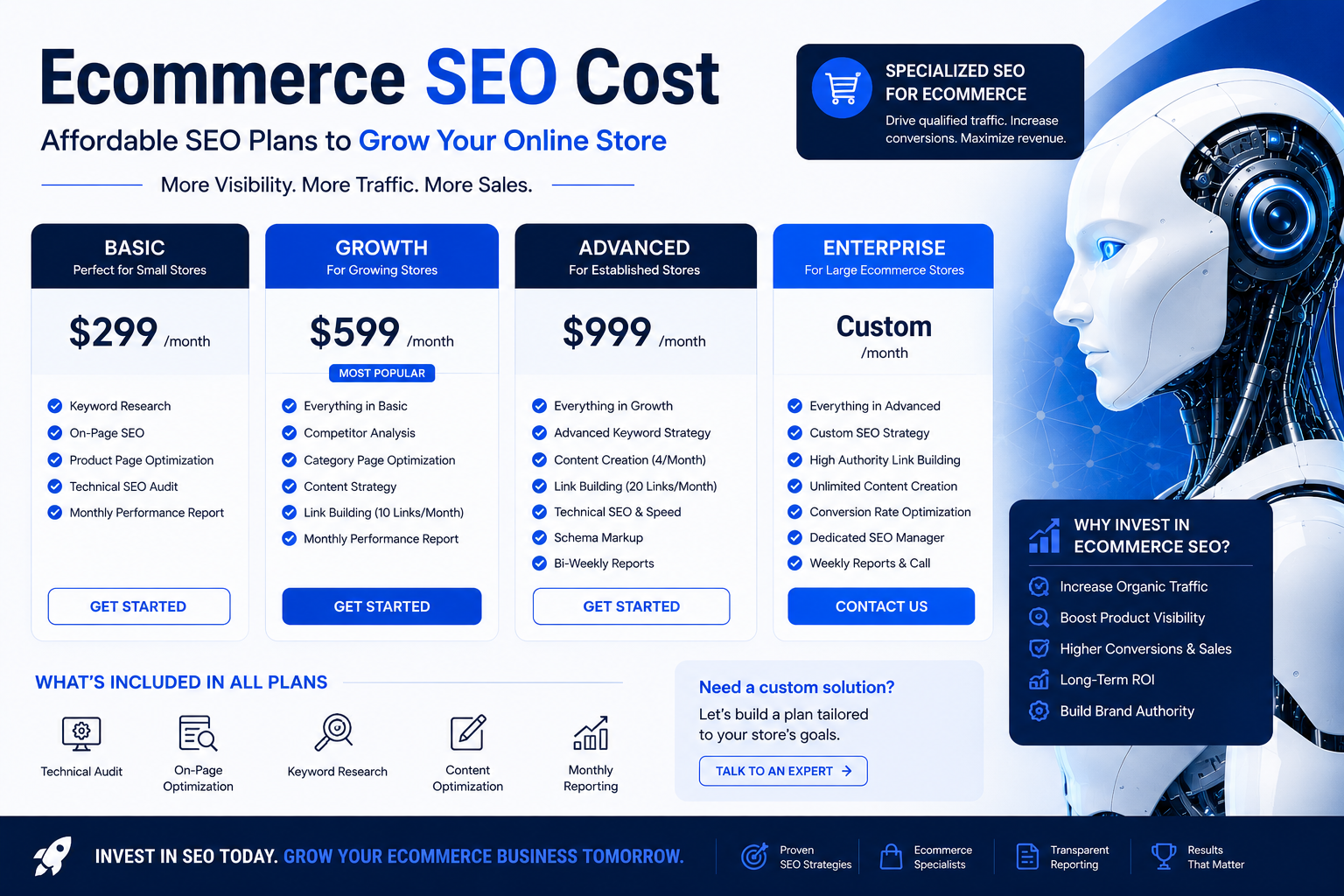
Ecommerce SEO is one of the most effective ways for online stores to attract potential customers without depending entirely on paid advertising. However, one of the first questions business owners ask before investing is: how much does ecommerce SEO cost in 2026? The answer depends on several factors, including website size, number of products, competition, target locations, technical requirements, content needs, and the type of SEO service selected.
Understanding Ecommerce SEO Cost can help businesses create realistic budgets and choose services that match their growth objectives. Some stores may need basic on-page optimization, while large ecommerce websites may require technical SEO, product-page optimization, content marketing, link building, and ongoing performance monitoring. In this guide, we will explore ecommerce SEO expenses, common pricing models, package options, and the factors that influence the overall investment.
What Is Ecommerce SEO?
Ecommerce SEO is the process of improving an online store so that its product, category, and informational pages can appear higher in search engine results. The goal is to increase organic visibility, attract relevant visitors, and generate more sales from unpaid search traffic.
Unlike traditional SEO, ecommerce SEO often involves optimizing hundreds or thousands of product pages. It can include keyword research, category-page optimization, product descriptions, internal linking, technical improvements, structured data, image optimization, content creation, and link building.
A successful ecommerce SEO strategy focuses not only on rankings but also on attracting users who are likely to purchase. This makes SEO an important long-term marketing investment for online retailers.
How Much Does Ecommerce SEO Cost in 2026?
Ecommerce SEO pricing can vary considerably depending on the scope of work. Small online stores may spend around $500 to $1,500 per month on basic SEO services, while medium-sized ecommerce businesses may invest approximately $1,500 to $4,000 per month. Larger stores operating in competitive markets can spend $4,000 to $10,000 or more each month.
These figures are general market ranges rather than fixed prices. An ecommerce business with 50 products and a local target market will have very different requirements from a retailer with 10,000 products competing nationally or internationally.
Businesses should evaluate the expected workload and business potential instead of selecting an SEO provider based only on the lowest monthly price.
Ecommerce SEO Packages and What They Include
Different agencies offer different ecommerce seo packages based on website size and business objectives. Basic packages may cover keyword research, on-page optimization, technical checks, and monthly reporting. More comprehensive packages can include content marketing, link acquisition, product-page optimization, competitor research, conversion optimization, and technical SEO.
A basic package may be suitable for a small store that has a limited number of products and relatively low competition. A growing ecommerce company may require a more advanced package with regular content creation and link building. Enterprise stores generally need customized campaigns because their websites contain large numbers of URLs and complex technical structures.
Before purchasing a package, businesses should carefully review what is included. A low-cost package may look attractive but may not provide enough resources to improve a large ecommerce website.
Common Ecommerce SEO Pricing Models
SEO agencies generally use several pricing structures. The most suitable model depends on the business's goals, website size, and expected workload.
Monthly SEO Retainers
Monthly retainers are one of the most common options for ecommerce businesses. The client pays a fixed amount every month for an agreed range of services.
This model works well because SEO requires continuous monitoring and optimization. Search trends change, competitors publish new content, and websites require ongoing technical improvements. A monthly campaign allows an agency to adjust its strategy based on performance.
Project-Based SEO
Some businesses choose a one-time SEO project. This may involve a technical audit, website migration, SEO setup, keyword research, or ecommerce website optimization.
Project-based SEO can be useful for businesses that need to solve specific problems before beginning an ongoing campaign. However, a one-time project may not be enough for highly competitive industries where consistent optimization is necessary.
Hourly SEO Consulting
Some SEO professionals charge by the hour. This approach is often suitable when a business already has an internal marketing team but needs expert guidance.
Hourly consulting can cover technical recommendations, SEO strategy, keyword research, website audits, or training. The total cost depends on the consultant's experience and the number of hours required.
Factors That Affect Ecommerce SEO Cost
Several factors influence the final cost of an ecommerce SEO campaign. Understanding them makes it easier to compare proposals from different providers.
Website Size and Number of Products
The size of an ecommerce website has a major impact on SEO workload. A store with 100 products requires significantly less optimization than a website with 20,000 products.
Large websites often require extensive technical audits, URL management, internal linking, duplicate-content control, indexation management, and scalable optimization processes.
Competition
Highly competitive industries generally require greater investment. If established brands dominate the search results, an ecommerce business may need more content, stronger backlinks, better technical optimization, and a longer campaign to compete.
Low-competition niches may achieve meaningful improvements with a smaller budget.
Target Location
Local, national, and international SEO campaigns have different requirements. A store targeting one city may require a smaller campaign than a company competing across multiple countries.
International ecommerce SEO can involve multilingual content, country-specific keyword research, international targeting, and technical configuration, increasing the overall cost.
Website Technology
The ecommerce platform can also influence SEO work. Platforms such as Shopify, WooCommerce, Magento, and custom ecommerce systems have different technical structures.
Problems involving site speed, navigation, faceted URLs, redirects, canonical tags, structured data, and indexing may require developer involvement, which can increase the project budget.
Content Requirements
Content is an important component of ecommerce SEO. Businesses may need optimized product descriptions, category-page copy, buying guides, comparison articles, FAQs, and blog posts.
Stores operating in competitive markets often require a consistent content strategy. The volume and quality of content required can therefore have a significant impact on monthly SEO expenses.
Link Building
High-quality backlinks can improve a website's authority and visibility, but acquiring relevant links requires research, outreach, content creation, and relationship building.
Businesses competing for difficult keywords may need ongoing link-building campaigns. The required investment depends on the quality, relevance, and competitiveness of the target market.
Is Ecommerce SEO Worth the Investment?
Ecommerce SEO can provide substantial long-term value because organic traffic does not require a payment for every individual click. Once a page establishes strong visibility, it can continue attracting relevant visitors over time.
For example, a well-optimized product category can rank for multiple relevant search terms and bring qualified users to the website every month. This can reduce dependence on paid advertising while creating an additional source of customer acquisition.
However, SEO should not be treated as an instant sales solution. Results depend on competition, website quality, search demand, content, technical health, and implementation. Businesses should generally evaluate SEO as a long-term growth strategy rather than expecting immediate results.
How to Choose the Right Ecommerce SEO Package
Businesses should start by identifying their current SEO problems and growth objectives. Instead of purchasing the largest package available, they should select services that address their actual needs.
A small store may prioritize technical SEO, product-page optimization, and keyword research. A growing retailer may need content marketing and link building in addition to technical improvements. Large ecommerce websites may require enterprise-level technical SEO, international optimization, advanced analytics, and dedicated SEO management.
It is also important to ask agencies how they measure success. Useful performance indicators include organic traffic, keyword visibility, qualified visitors, conversions, revenue from organic search, and improvements in important landing pages.
How to Get Better Value From Ecommerce SEO
Businesses can improve the return on their SEO investment by ensuring that technical, content, and conversion strategies work together. SEO should not focus exclusively on rankings.
Product pages should provide useful information, clear pricing, high-quality images, reviews where appropriate, and simple navigation. Category pages should help users understand available products and move easily toward purchase.
Regular reporting is also important. Reviewing organic traffic, rankings, conversions, indexed pages, and technical issues helps businesses understand where their investment is producing results and where adjustments are needed.
Final Thoughts on Ecommerce SEO Cost in 2026
Ecommerce SEO Cost in 2026 depends on many factors, including website size, competition, product volume, target market, technical complexity, content requirements, and link-building needs. Small businesses may begin with a modest monthly campaign, while larger ecommerce companies often require significantly larger and more customized investments.
Rather than choosing a provider based only on price, businesses should compare the strategy, deliverables, experience, reporting process, and expected workload. The right Ecommerce SEO Pricing should align with the store's goals and provide enough resources to create sustainable organic growth.
Investing in the right ecommerce seo packages can help online stores improve visibility, attract qualified visitors, and generate more opportunities for sales over time. A well-planned campaign treats SEO as a continuous growth channel and adapts to changes in customer behavior, competition, and search technology.
Conclusion
Ecommerce SEO is a long-term investment that can help online businesses build sustainable organic traffic and reduce their dependence on paid acquisition. In 2026, there is no universal SEO price because every ecommerce website has different requirements. The best approach is to evaluate the website, competition, product range, target audience, and business goals before selecting a package. By focusing on measurable outcomes and consistent optimization, ecommerce brands can make their SEO investment more effective and build stronger search visibility.

 English
 Arabic
 French
 Spanish
 Portuguese
 Deutsch
 Turkish
 Dutch
Dutch
 Italiano
 Russian
 Romaian
 Greek
Greek
