


 About Urh Social
 Terms of Service
 Politique de confidentialité
 Contact
How Is the Saudi Arabia Contact Lenses Market Evolving?
Introduction to Vision Care and Aesthetic Optics in the Kingdom
The Kingdom of Saudi Arabia is currently experiencing a dynamic transformation in personal health, eye care, and lifestyle aesthetics. As modern urban populations spend extended hours working, studying, and engaging with digital screens, the demand for effective vision correction products has risen dramatically. At the same time, cultural shifts, growing disposable incomes, and the widespread influence of social media fashion trends have propelled aesthetic and cosmetic optics into the mainstream.
Navigating this rapidly expanding commercial sector requires a deep understanding of macroeconomic forecasts, shifting consumer preferences, and the underlying drivers shaping regional demand. From specialized medical corrections to daily cosmetic wear, the Kingdom's optical landscape presents unique opportunities for industry stakeholders, healthcare providers, and retail enterprises alike.
Market Size and Long-Term Financial Projections
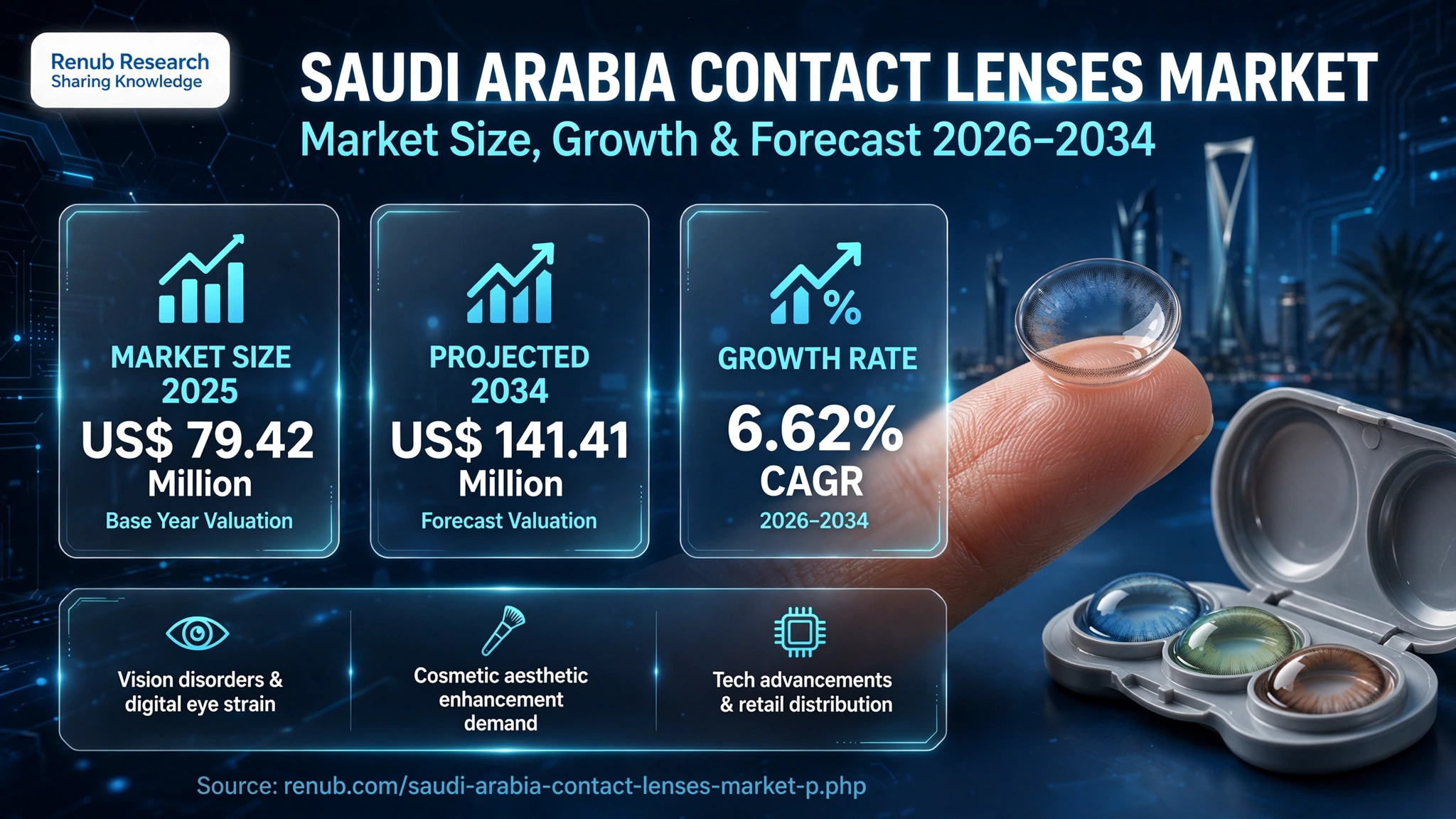
Strategic industry evaluations highlight a strong and steady expansion trajectory for the Saudi Arabian optical sector. According to comprehensive market metrics, the Saudi Arabia contact lenses market is projected to grow from US$ 79.42 Million in 2025 to US$ 141.41 Million by 2034. This robust growth is underpinned by a consistent compound annual growth rate (CAGR) of 6.62% throughout the forecast period spanning from 2026 to 2034.
This sustained upward movement is largely powered by rising standards of living, technological innovations in lens manufacturing, and greater consumer accessibility across major metropolitan hubs such as Riyadh, Jeddah, Dammam, and Mecca. As people increasingly favor the convenience and physical freedom of contact lenses over traditional spectacles, market penetration continues to deepen across diverse age demographics.
Core Growth Drivers and Market Dynamics
Rising Prevalence of Vision Disorders and Screen Strain
One of the primary catalysts behind market expansion is the escalating frequency of refractive errors, including myopia (nearsightedness), hyperopia (farsightedness), astigmatism, and presbyopia. The pervasive use of digital devices—such as smartphones, tablets, and computers—has contributed heavily to digital eye strain and worsening vision across younger generations. Consequently, students and working professionals are actively seeking reliable, comfortable vision correction alternatives. Increased access to routine eye check-ups and professional optometry services further ensures that more individuals receive accurate prescriptions for daily wear or specialized corrective lenses.
Soaring Popularity of Cosmetic and Aesthetic Enhancements
Beyond clinical necessity, the market is heavily driven by the booming demand for cosmetic contact lenses. Particularly popular among young adults and women, colored and patterned lenses are widely utilized to refine personal appearance for daily wear, special occasions, and social events. Influenced by beauty trends, celebrities, and social media platforms, consumers view cosmetic lenses as an essential fashion accessory. The strong presence of specialized retail outlets, beauty stores, and e-commerce platforms has made purchasing these lifestyle items exceptionally seamless.
Technological Advancements and Supply Chain Evolution
Innovations in material science have fundamentally redefined wearer comfort and safety. Modern contact lenses crafted from advanced silicone hydrogel materials offer exceptional oxygen permeability, significantly reducing eye dryness, irritation, and discomfort during prolonged use. Furthermore, continuous investments and corporate developments—such as major global players consolidating their control over manufacturing monomers and integrating artificial intelligence into eye care technologies—have optimized supply chain efficiency and boosted overall consumer confidence.
Frequently Asked Questions
What is the projected market size of the Saudi Arabia contact lenses market by 2034?
The market is projected to reach US$ 141.41 Million by 2034, expanding upward from US$ 79.42 Million in 2025 at a steady CAGR of 6.62%.
What key factors are driving the demand for contact lenses in Saudi Arabia?
Primary drivers include the rising prevalence of vision disorders and digital eye strain, increasing disposable incomes, and a strong cultural preference for cosmetic and aesthetic enhancement products.
Why are silicone hydrogel lenses becoming increasingly popular?
Silicone hydrogel lenses provide superior oxygen permeability compared to standard soft hydrogel options, which minimizes eye irritation, dryness, and discomfort during long hours of daily wear.
How do distribution channels like retail and hospital pharmacies support the market?
Retail pharmacies offer high accessibility, product variety, and promotional discounts across commercial centers, while hospital pharmacies cater specifically to patients requiring specialized therapeutic, post-surgical, or medically fitted corrective lenses.
Are cosmetic contact lenses intended for vision correction?
No, cosmetic contact lenses are primarily designed to change or enhance eye color for aesthetic and fashion purposes rather than correcting refractive errors, though prescription cosmetic variants are also available.
What challenges does the Saudi Arabian contact lens market face?
Major challenges include the risk of eye infections resulting from improper hygiene or unprescribed use, alongside price sensitivity surrounding premium daily disposable options and imported international brands.
Which major cities are key hubs for the contact lenses market in Saudi Arabia?
Riyadh, Jeddah, Dammam, and Mecca represent major commercial hubs driving high market demand due to their large populations, advanced healthcare infrastructure, and high standard of living

 English
 Arabic
 Spanish
 Portuguese
 Deutsch
 Turkish
 Dutch
Dutch
 Italiano
 Russian
 Romaian
 Portuguese (Brazil)
 Greek
Greek
