


 About Urh Social
 Terms of Service
 Privacy Policy
 Contact
Why Material Selection Matters in Footwear Manufacturing
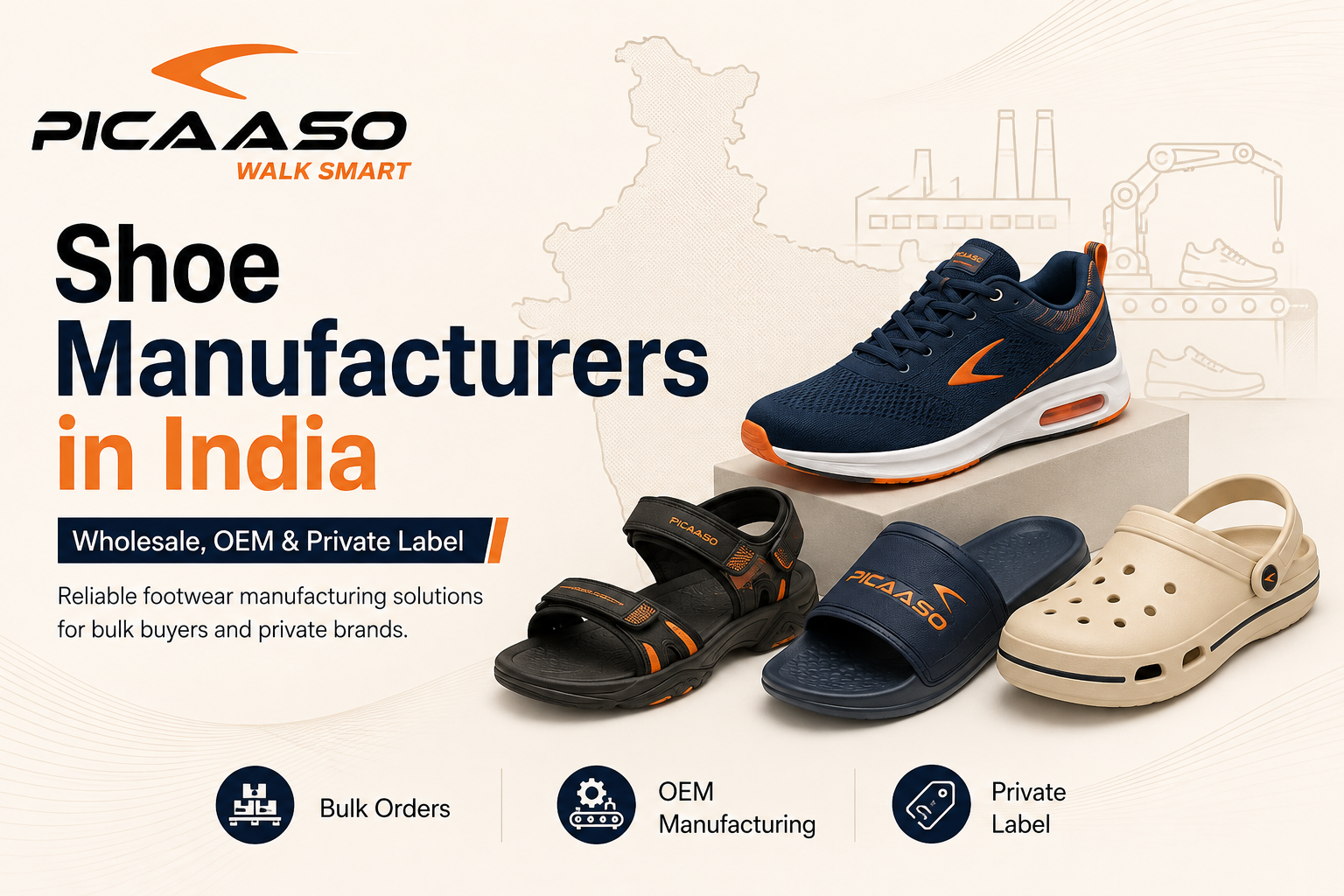
A shoe may look simple from the outside, but its construction involves several materials and manufacturing stages. The choice of upper fabric, sole material, cushioning and other components can influence how lightweight, flexible, comfortable and durable the finished footwear feels.
How Does Material Selection Begin?
Footwear materials are generally selected according to the intended use of the product. Casual shoes, sports shoes, sandals and slippers can require different combinations of materials because their design and performance requirements are not the same.
Businesses comparing shoe manufacturers in India may therefore consider the manufacturer’s experience with different footwear materials, production methods and product categories before moving ahead with bulk production.
What Materials Are Commonly Used?
Modern footwear can include EVA, PU, PVC, TPR, rubber, mesh, leather and synthetic fabrics. Each material performs a different role depending on where and how it is used in the footwear.
For example, mesh may be selected for certain uppers, while materials such as EVA, rubber, PU or TPR can be considered for sole construction. Manufacturers may also combine multiple materials within the same shoe to achieve the required balance of structure and comfort.
Why Is the Sole Important?
The sole forms the base of footwear and affects several aspects of the wearing experience. Its material can influence cushioning, weight, flexibility and contact with the ground.
This makes sole selection an important part of footwear development rather than simply a finishing decision made at the end of production.
What Is EVA Sole?
People researching footwear materials often ask what is EVA sole and why it appears in so many shoe categories.
EVA stands for Ethylene Vinyl Acetate. It is a lightweight and flexible foam material that can be used in footwear soles and midsoles. It is commonly associated with cushioning and is found in products such as sports shoes, walking shoes, slippers, sandals and casual footwear.
Like any material, EVA has characteristics that make it more suitable for some applications than others. Product type and expected usage should therefore be considered when selecting a sole material.
How Materials Move Through Production
Once materials and product specifications have been finalised, footwear production may move through pattern making, cutting, stitching, sole preparation and assembly.
The upper components are prepared according to the required shape and sizing before being attached to the sole. Small differences during these stages can influence the final fit and appearance of the footwear.
Why Are Samples Useful?
Samples allow buyers to assess how selected materials perform when combined into a finished product. Instead of reviewing individual materials separately, buyers can examine the actual footwear for comfort, sizing, stitching, sole flexibility and finishing.
If an issue appears during sample evaluation, adjustments can be considered before larger quantities enter production.
Quality Checks Before Packaging
After assembly, footwear may be checked for elements such as stitching, sizing, finishing and sole attachment. These inspections are particularly useful for bulk manufacturing, where maintaining consistency between pairs is important.
Packaging generally follows once the finished footwear has completed the required quality checks.
Conclusion
Material selection is one of the foundations of footwear manufacturing. Upper materials, sole construction and production methods all contribute to how the finished footwear looks and performs.
Understanding commonly used materials such as EVA, along with the basic stages of shoe manufacturing, can help buyers evaluate footwear products and manufacturing options more effectively.

 English
 Arabic
 French
 Spanish
 Portuguese
 Deutsch
 Turkish
 Italiano
 Russian
 Romaian
 Portuguese (Brazil)
 Greek
Greek
