


 About Urh Social
 Terms of Service
 Politique de confidentialité
 Contact
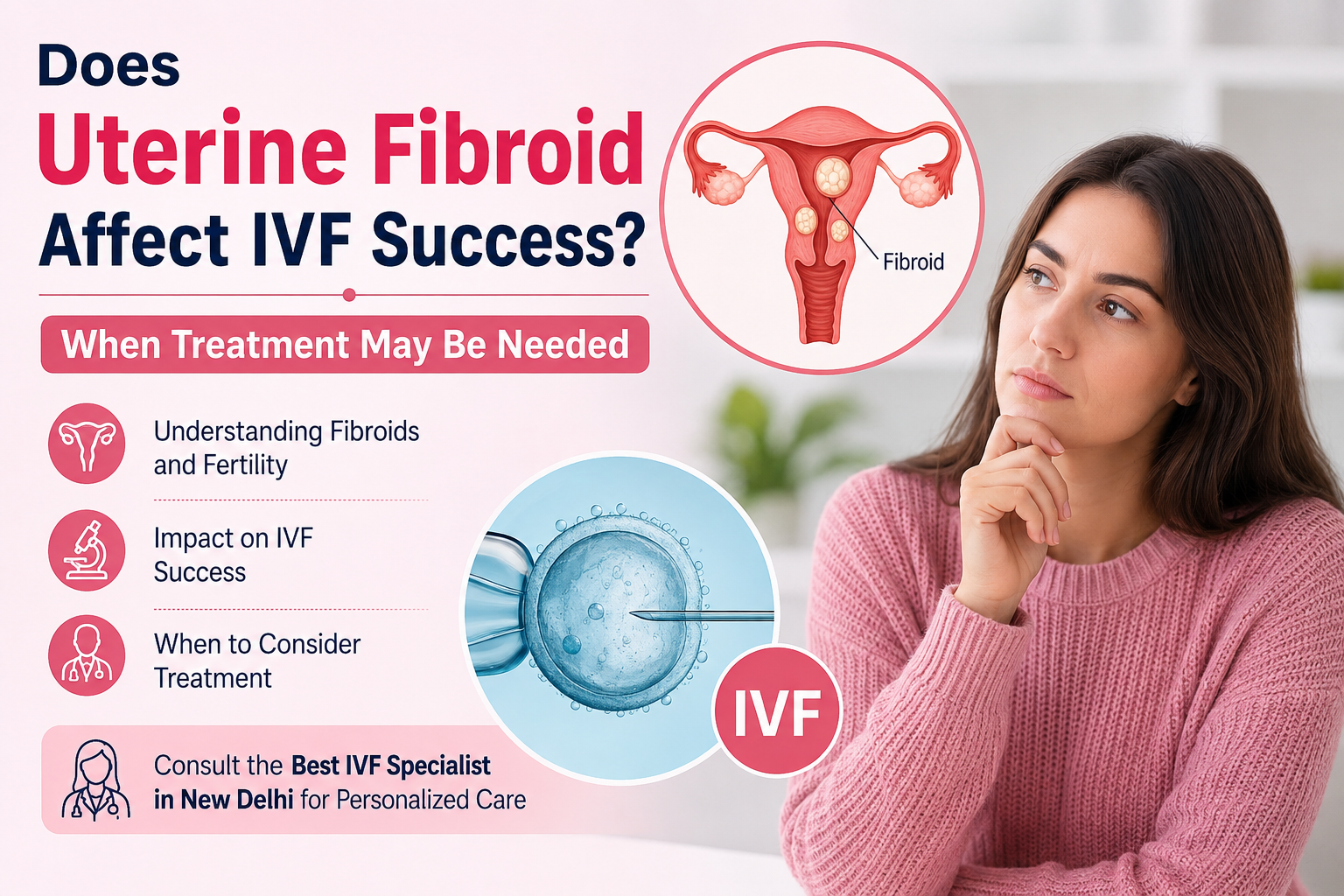
Does Uterine Fibroid Affect IVF Success? When Treatment May Be Needed
Introduction
Being told that you have a uterine fibroid while preparing for IVF can immediately raise an important question: Will this fibroid reduce my chances of having a baby?
The answer is not always straightforward. Some fibroids have little or no effect on fertility, while others can interfere with the shape of the uterus or the implantation of an embryo. The location, size, number, and relationship of a fibroid to the uterine cavity all matter.
Learn how uterine fibroids may affect IVF success, when treatment is needed, and how the best ivf specialist in new delhi can help.
Think of the uterus as a room where an embryo needs a comfortable place to settle. A small growth outside the room may not matter much, but a growth that changes the shape of the space where the embryo needs to implant may require more attention.
Fortunately, having a fibroid does not automatically mean that IVF will fail. Treatment decisions should be individualized after a proper fertility and uterine assessment.
Table of Contents
| Sr# | Headings |
|---|---|
| 1 | What Are Uterine Fibroids? |
| 2 | Can Fibroids Affect Fertility? |
| 3 | Does a Fibroid Affect IVF Success? |
| 4 | Which Fibroids Are More Likely to Cause Problems? |
| 5 | Why the Location of a Fibroid Matters |
| 6 | Can Fibroid Size Affect IVF? |
| 7 | When Is Fibroid Treatment Recommended Before IVF? |
| 8 | What Is Myomectomy? |
| 9 | Can IVF Be Done Without Removing a Fibroid? |
| 10 | How Doctors Evaluate Fibroids Before IVF |
| 11 | Does Fibroid Removal Improve IVF Outcomes? |
| 12 | How to Prepare for IVF With Fibroids |
| 13 | Choosing the Best IVF Specialist in New Delhi |
| 14 | Frequently Asked Questions |
| 15 | Conclusion |
1. What Are Uterine Fibroids?
Uterine fibroids are non-cancerous growths that develop in or around the muscular wall of the uterus. They are common during the reproductive years and may occur as a single growth or as several fibroids.
Some women have fibroids without experiencing any symptoms. Others may have:
-
Heavy or prolonged menstrual bleeding
-
Pelvic pressure or discomfort
-
Lower abdominal or back pain
-
Pain during sexual intercourse
-
Frequent urination
-
Constipation or pressure on the bowel
-
An enlarged abdomen
-
Fertility difficulties in some cases
According to the American College of Obstetricians and Gynecologists, fibroids can sometimes be associated with infertility, although other causes of infertility are more common and should also be investigated.
This is why discovering a fibroid during an IVF evaluation does not immediately mean that it is the reason for infertility.
2. Can Fibroids Affect Fertility?
Yes, some fibroids can affect fertility, but not every fibroid does.
The main concern is whether the fibroid changes the inside of the uterus or interferes with normal reproductive function.
A fibroid may potentially affect fertility by:
-
Changing the shape of the uterine cavity
-
Interfering with embryo implantation
-
Affecting the uterine lining
-
Altering blood flow around the implantation area
-
Causing inflammation or changes in the local uterine environment
-
Occasionally affecting access to the ovaries during egg retrieval when the pelvic anatomy is significantly distorted
However, the evidence does not support treating every fibroid simply because a woman is undergoing IVF. The American Society for Reproductive Medicine (ASRM) notes that there is insufficient evidence that all fibroids reduce the likelihood of pregnancy. The effect depends considerably on fibroid characteristics, particularly whether the uterine cavity is distorted.
That distinction is extremely important.
3. Does a Fibroid Affect IVF Success?
A uterine fibroid may affect IVF success, but its impact depends largely on where it is located and whether it distorts the uterine cavity.
During IVF, eggs are collected and fertilized in a laboratory. An embryo is then transferred into the uterus. Therefore, even though fertilization occurs outside the body, the uterus still needs to provide a suitable environment for implantation and pregnancy.
If a fibroid significantly changes the cavity where the embryo is transferred, it may become more relevant to IVF outcomes.
By contrast, a fibroid that is located away from the uterine cavity may have little effect on implantation.
This is why fertility specialists generally look beyond the simple question, “Do I have a fibroid?” They ask:
“What type of fibroid do I have, where is it located, how large is it, and does it change the uterine cavity?”
That more detailed assessment helps determine whether treatment should happen before embryo transfer.
4. Which Fibroids Are More Likely to Cause Problems?
Fibroids are commonly categorized according to where they grow.
Submucosal Fibroids
These grow toward or into the uterine cavity.
Submucosal fibroids are generally the type that raises the greatest concern for fertility, particularly when they distort the cavity.
ASRM reports fair evidence that hysteroscopic removal of cavity-distorting fibroids improves clinical pregnancy rates.
Intramural Fibroids
These develop within the muscular wall of the uterus.
Their effect on fertility is more complicated. Some intramural fibroids may not cause a significant problem, while others can affect the shape of the uterine cavity, particularly when they are large or positioned in a way that changes the cavity contour.
Subserosal Fibroids
These grow toward the outer surface of the uterus.
Subserosal fibroids generally have less direct impact on embryo implantation because they do not usually grow into the uterine cavity. ASRM states that there is insufficient evidence that removing non-cavity-distorting subserosal fibroids improves fertility.
5. Why the Location of a Fibroid Matters
Imagine placing furniture inside a room.
A small table against an outside wall may not interfere with someone moving around the room. But a large object positioned directly in the center could change how the entire room functions.
Fibroids can work in a similar way.
A fibroid's location can be more important than simply knowing its size.
A small fibroid that distorts the uterine cavity may deserve more attention than a larger fibroid that remains completely outside the cavity.
Doctors therefore use ultrasound and, when appropriate, other uterine imaging techniques to determine how a fibroid relates to the uterine cavity.
This information can help the fertility team decide whether to proceed with IVF, treat the fibroid first, or monitor it.
6. Can Fibroid Size Affect IVF?
Size can matter, but there is no single size that automatically means a fibroid must be removed before IVF.
A specialist may consider:
-
The diameter of the fibroid
-
Its exact location
-
Whether it distorts the uterine cavity
-
The number of fibroids
-
Symptoms
-
Previous fertility treatment outcomes
-
Age and ovarian reserve
-
Other fertility factors
-
Whether the fibroid interferes with egg retrieval
ASRM notes that evidence is insufficient to establish a universal size, number, or location threshold for most non-cavity-distorting fibroids.
Therefore, it is usually better to avoid decisions based solely on a measurement such as “3 cm” or “5 cm.”
The overall reproductive picture matters more than one number.
7. When Is Fibroid Treatment Recommended Before IVF?
Not every woman with fibroids needs treatment before IVF.
Treatment may be considered when a fibroid:
-
Distorts the uterine cavity
-
Is associated with significant symptoms
-
Is suspected of interfering with implantation
-
Causes substantial distortion of pelvic anatomy
-
Makes access to the ovaries difficult during egg retrieval
-
Is associated with particular reproductive problems where treatment may reasonably improve outcomes
For asymptomatic women with cavity-distorting fibroids, ASRM states that myomectomy may be considered to optimize pregnancy outcomes. However, routine removal of non-cavity-distorting fibroids is generally not advised solely to improve pregnancy outcomes.
This means that surgery should not automatically be the first step simply because a fibroid has been discovered.
A fertility specialist should balance the potential benefit of removal against the risks of surgery, recovery time, possible scar formation, and the impact on the overall fertility timeline.
8. What Is Myomectomy?
Myomectomy is a procedure used to remove fibroids while preserving the uterus.
Depending on the fibroid's location and characteristics, different surgical approaches may be considered.
Hysteroscopic Myomectomy
This approach is performed through the vagina and cervix without making an abdominal incision. It may be suitable for selected fibroids that project into the uterine cavity.
Laparoscopic or Robotic Myomectomy
Small abdominal incisions are used to remove suitable fibroids. The appropriate approach depends on factors such as size, number, location, and surgical complexity.
Open Myomectomy
A larger abdominal incision may sometimes be required, particularly when fibroids are large, numerous, or technically difficult to remove using minimally invasive techniques.
The goal is to remove problematic fibroids while preserving the uterus. ACOG notes that pregnancy may remain possible after myomectomy, although surgery can have risks, including internal scarring, and pregnancy management may sometimes require special consideration.
9. Can IVF Be Done Without Removing a Fibroid?
Yes, in many cases IVF can proceed without fibroid removal.
If a fibroid is small, does not distort the uterine cavity, causes no significant symptoms, and is unlikely to interfere with embryo transfer or egg retrieval, a fertility specialist may recommend proceeding without surgery.
This approach can be particularly important when time is a major consideration.
For example, a woman with reduced ovarian reserve may not want to delay fertility treatment unnecessarily. On the other hand, if the uterus has a significant cavity-distorting fibroid, addressing the uterine problem before embryo transfer may be considered more beneficial.
There is no one-size-fits-all IVF plan.
The decision should consider the woman's age, ovarian reserve, embryo availability, fibroid characteristics, previous IVF outcomes, and other fertility factors.
10. How Doctors Evaluate Fibroids Before IVF
Before deciding whether a fibroid needs treatment, your fertility team may perform several assessments.
Pelvic Ultrasound
Ultrasound is commonly used to identify fibroids, measure their size, and assess their location.
Assessment of the Uterine Cavity
If there is concern that a fibroid may affect the cavity, additional evaluation may be recommended.
Medical and Fertility History
Your doctor may ask about:
-
Previous pregnancies
-
Miscarriages
-
Previous IVF attempts
-
Menstrual symptoms
-
Pelvic pain
-
Previous uterine surgery
-
Duration of infertility
Assessment of Other Fertility Factors
Fibroids should not distract from other potential causes of infertility.
Your fertility evaluation may also consider ovarian reserve, ovulation, fallopian tubes, sperm health, age, and other reproductive factors.
ACOG describes IVF as a treatment in which eggs and sperm are handled outside the body before an embryo is transferred into the uterus.
11. Does Fibroid Removal Improve IVF Outcomes?
It can in selected situations, particularly when the fibroid distorts the uterine cavity.
However, the evidence does not show that removing every fibroid automatically improves IVF success.
ASRM's guideline concludes that hysteroscopic myomectomy for cavity-distorting fibroids improves clinical pregnancy rates, while evidence is insufficient to say that removal of every type of fibroid improves live-birth outcomes. It also states that myomectomy generally should not be performed solely to improve pregnancy outcomes in asymptomatic women with non-cavity-distorting fibroids.
This is an important point for patients because more treatment is not always better treatment.
Surgery itself has potential risks. ACOG notes that myomectomy can preserve the uterus but may sometimes cause internal scarring, and additional fibroids can develop later.
The right question is therefore not simply, “Can my fibroid be removed?”
Instead, ask:
“Is removing this fibroid likely to improve my individual fertility treatment plan enough to justify the procedure and delay?”
12. How to Prepare for IVF With Fibroids
If you have fibroids and are considering IVF, start with a detailed consultation rather than assuming that surgery is necessary.
Consider asking your fertility specialist:
-
What type of fibroid do I have?
-
Does it distort my uterine cavity?
-
Could it interfere with embryo implantation?
-
Could it make egg retrieval difficult?
-
Do you recommend removing it before IVF?
-
What are the benefits and risks of treatment in my case?
-
How long might treatment delay embryo transfer?
-
Could we proceed with IVF without surgery?
-
Are there other factors affecting my fertility?
-
What is the overall treatment plan based on my age and ovarian reserve?
These questions can help you understand why a particular recommendation is being made rather than simply following a generalized rule.
13. Choosing the Best IVF Specialist in New Delhi
If you are searching for the best ivf specialist in new delhi, look beyond advertisements or a single success-rate figure.
A good fertility specialist should be able to explain your situation clearly and discuss both the benefits and limitations of treatment options.
When choosing an IVF specialist, consider:
-
Experience in managing complex fertility cases
-
Proper evaluation of uterine abnormalities
-
Access to experienced gynecological and surgical specialists when required
-
A strong embryology laboratory
-
Individualized treatment planning
-
Clear communication about risks and expectations
-
Appropriate evaluation of both partners
-
Transparent discussion of costs and treatment timelines
Most importantly, your doctor should explain why a fibroid does or does not need treatment before IVF.
Current fertility guidance emphasizes individualized assessment rather than applying a single treatment rule to every patient. NICE's 2026 fertility guidance also stresses consideration of factors such as the diagnosed cause of infertility and ovarian reserve when discussing IVF.
A specialist who takes time to understand the complete fertility picture can help you avoid unnecessary procedures while also identifying uterine problems that may genuinely need attention.
14. Frequently Asked Questions
1. Can I have successful IVF with uterine fibroids?
Yes. Many women with fibroids can undergo successful IVF. The effect depends on the fibroid's location, size, number, and whether it distorts the uterine cavity. A cavity-distorting fibroid generally deserves more attention than a non-cavity-distorting fibroid.
2. Should fibroids always be removed before IVF?
No. Fibroid removal is not automatically required before IVF. Treatment may be considered when a fibroid distorts the uterine cavity, causes significant symptoms, affects pelvic anatomy, or is otherwise considered likely to interfere with fertility treatment.
3. Which fibroid is most likely to affect IVF implantation?
Submucosal and cavity-distorting fibroids are generally the greatest concern because they can directly alter the space where an embryo needs to implant. ASRM reports evidence supporting hysteroscopic removal of cavity-distorting fibroids in selected patients.
4. How long after myomectomy can I start IVF?
There is no single waiting period that applies to every patient. The appropriate timing depends on the type of surgery, depth of uterine repair, healing, fibroid characteristics, and your fertility circumstances. Your gynecologist and fertility specialist should determine when it is appropriate to proceed.
5. Can a fibroid grow during fertility treatment?
Fibroids can change in size, and hormonal factors may influence their growth. However, the clinical significance varies between women. Your specialist can monitor the uterus during treatment and decide whether a fibroid requires additional attention.
15. Conclusion
Uterine fibroids do not automatically mean that IVF will fail. What matters most is understanding the fibroid's location, size, number, symptoms, and effect on the uterine cavity.
Cavity-distorting fibroids may require treatment before embryo transfer, while many non-cavity-distorting fibroids can be monitored without surgery. Current evidence does not support removing every fibroid simply to improve IVF outcomes.
If you are planning IVF and have been diagnosed with a fibroid, a personalized evaluation with an experienced fertility specialist can help you understand your options and avoid unnecessary delays or procedures.
The goal is not to treat every fibroid—it is to create the best possible treatment plan for your individual fertility journey.

 English
 Arabic
 Spanish
 Portuguese
 Deutsch
 Turkish
 Dutch
Dutch
 Italiano
 Russian
 Romaian
 Portuguese (Brazil)
 Greek
Greek
