


 About Urh Social
 Terms of Service
 Privacy Policy
 Contact
GST Refund Planning for Corrugated Box Manufacturers
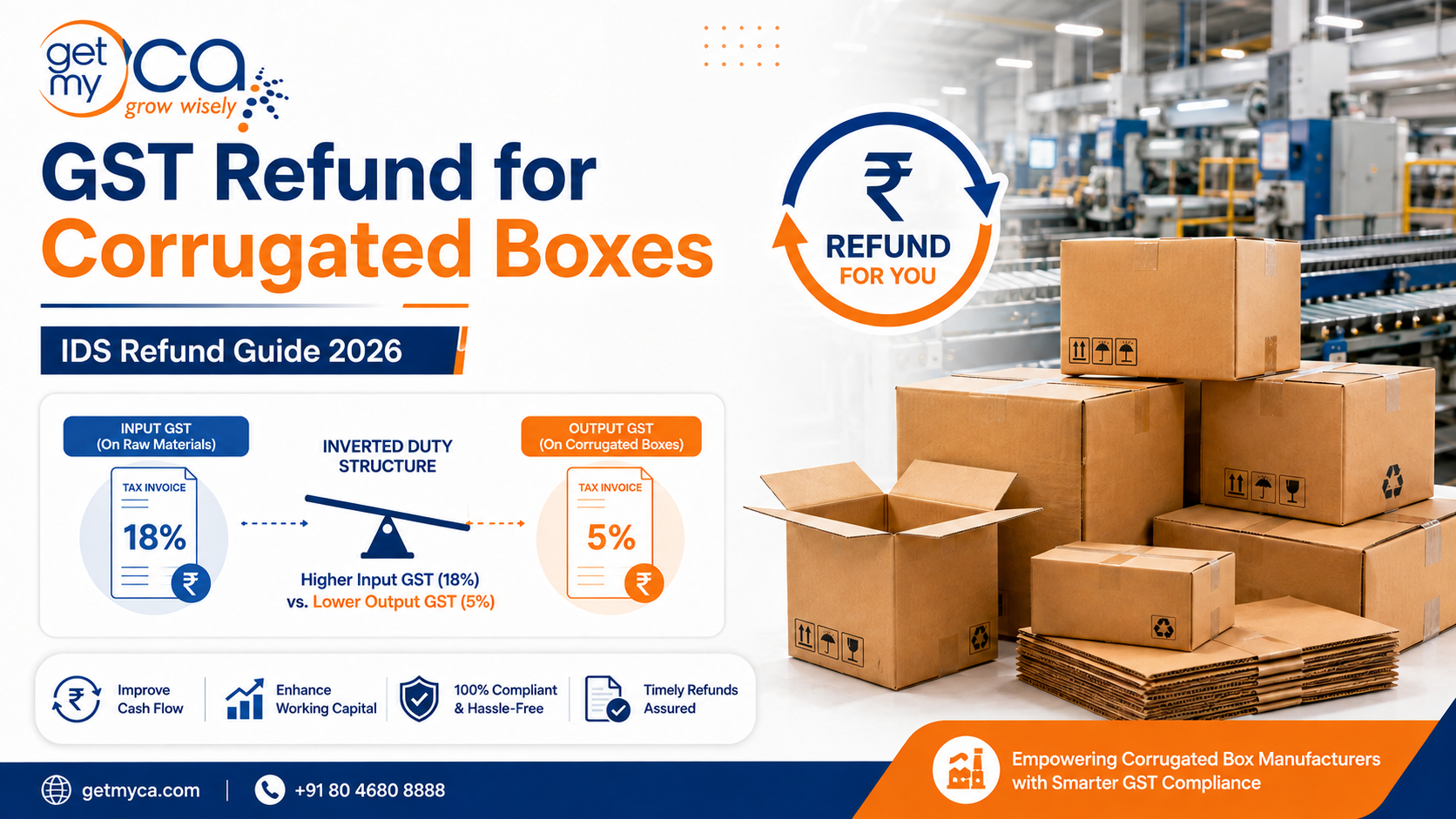
Corrugated box manufacturers may experience accumulation of input tax credit when the GST rate on certain inputs is higher than the GST rate applicable to finished goods. This situation is commonly associated with the inverted duty structure and can affect working capital if the credit remains unutilised.
Understanding the Inverted Duty Structure
An inverted duty structure may arise when raw materials used in manufacturing attract a higher GST rate than the final product. In such cases, eligible businesses may need to evaluate whether accumulated ITC can be considered for refund under the applicable GST provisions.
Manufacturers looking to understand the basic eligibility, documentation and refund mechanism can review information related to GST refund for corrugated box manufacturers.
Importance of Correct ITC Classification
Proper classification of inward supplies is important while reviewing a refund claim. Businesses should separately identify input goods, input services and capital goods because their treatment can differ for refund purposes.
Manufacturers should also maintain proper HSN-wise details, purchase registers, tax invoices and GST return data so that the refund calculation is supported by consistent records.
Reconciliation Before Filing
GST refund preparation generally requires reconciliation between books of accounts and GST returns. Purchase records should be reviewed with GSTR-2B, while outward supply details should be checked with GSTR-1 and GSTR-3B.
Any mismatch in invoice values, tax amounts or classifications should be identified and reviewed before filing. Regular reconciliation can reduce the chances of unnecessary queries during refund processing.
When Professional Review May Be Useful
Refund cases can involve multiple records, calculations and supporting documents. Businesses dealing with significant accumulated ITC may therefore prefer to understand the role of a GST refund consultant in Delhi when reviewing eligibility, reconciliation requirements and refund documentation.
A professional review can also help businesses identify classification or documentation issues before a refund application is prepared.
Maintain Supporting Records
Manufacturers should maintain organised purchase invoices, sales records, GST returns, credit ledger details and other relevant supporting documents. Proper documentation can make it easier to assess the refund position and respond to any queries that may arise during processing.
Conclusion
For corrugated box manufacturers, accumulated ITC can become an important working-capital consideration. Understanding the inverted duty structure, maintaining accurate reconciliations and keeping proper supporting records are important steps before evaluating a refund claim.
Businesses should review their GST position periodically so that eligible refund opportunities and documentation issues can be identified in a timely manner.

 English
 Arabic
 French
 Spanish
 Portuguese
 Deutsch
 Turkish
 Dutch
Dutch
 Russian
 Romaian
 Portuguese (Brazil)
 Greek
Greek
