


 About Urh Social
 Terms of Service
 سياسة الخصوصية
 Contact
Buy 16 Fiber MT Ferrule: Specifications, Applications, and Quality Guide
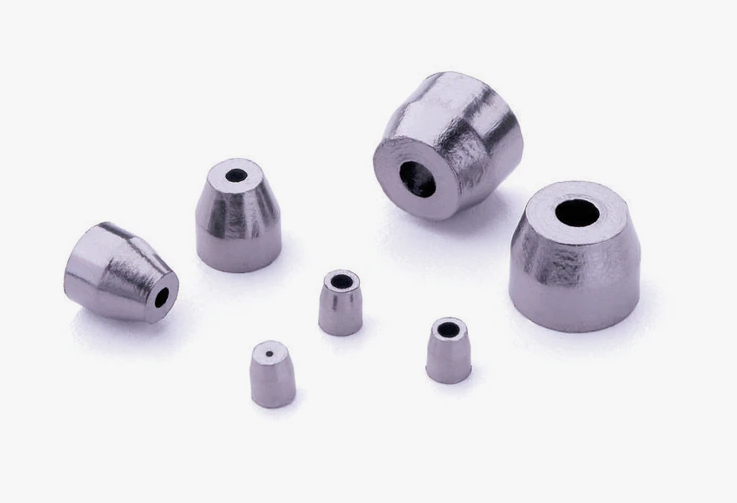
High-density fiber optic networks require precision components that can accommodate multiple optical fibers while maintaining accurate alignment and reliable transmission. A 16-fiber MT ferrule is designed to position multiple fibers within a compact interface, making it useful for multi-fiber connectivity in data centers, telecommunications equipment, optical modules, and specialized fiber assemblies. Organizations looking to buy 16 fiber MT ferrule components should consider more than fiber count alone. Dimensional accuracy, fiber pitch, guide-pin configuration, material quality, polishing, and compatibility with the intended connector assembly can all affect the performance of the finished optical connection.
As network bandwidth requirements continue to increase, multi-fiber connectivity has become increasingly valuable for applications where equipment space, installation efficiency, and fiber density are important. A properly manufactured MT ferrule can help simplify the connection of multiple optical channels through one compact interface. However, the ferrule must meet precise manufacturing tolerances to maintain reliable fiber alignment. Buyers should therefore evaluate technical specifications, quality-control procedures, and supplier capabilities before selecting components for production or network deployment.
Understanding a 16-Fiber MT Ferrule
An MT ferrule is a precision component designed to hold and align multiple optical fibers in a controlled arrangement. A 16-fiber configuration accommodates sixteen optical fiber positions within the ferrule, providing a compact alternative to connecting each fiber independently. The ferrule typically incorporates precision alignment features that allow mating components to position the fibers accurately relative to one another. Fiber-hole dimensions and spacing are manufactured to tight tolerances because even small variations can affect optical alignment and connection performance. The ferrule is generally incorporated into a larger connector, adapter, or optical assembly rather than functioning as a complete connector on its own. For this reason, buyers should evaluate the ferrule alongside the housing, guide-pin system, polishing requirements, and other components that will form the finished assembly.
Applications of 16-Fiber MT Ferrules
Sixteen-fiber MT ferrules can be used in a variety of high-density optical applications where multiple channels need to be aligned simultaneously. Data centers may incorporate multi-fiber assemblies into structured cabling systems and high-density interconnects, while telecommunications equipment can use multi-fiber interfaces to manage large numbers of optical channels efficiently. Optical transceiver assemblies, parallel optical systems, testing equipment, and custom fiber-optic components can also use MT-based ferrule technology. The compact multi-fiber format can reduce the physical space required for connections and support organized cable management in environments where equipment density is increasing. The exact application determines the appropriate ferrule specifications, including fiber type, pitch, guide-pin arrangement, end-face configuration, and mechanical requirements. Selecting the correct configuration at the design stage can help avoid compatibility issues during assembly and installation.
Key Specifications to Consider Before You Buy 16 Fiber MT Ferrule
Technical specifications should be carefully reviewed before purchasing a 16-fiber MT ferrule. Fiber count is only one part of the specification, while fiber type, fiber-hole pitch, hole diameter, ferrule dimensions, alignment features, and guide-pin configuration can be equally important. Buyers should verify whether the ferrule is intended for the specific fiber and connector architecture being developed. Material selection can also affect dimensional stability and mechanical performance, particularly in applications exposed to temperature changes or other environmental conditions. End-face geometry and polishing specifications should be compatible with the intended optical interface. Manufacturing tolerances deserve particular attention because multi-fiber alignment depends on precise positioning across all sixteen fiber locations. A supplier that provides detailed technical drawings, dimensional specifications, and quality documentation can make it easier for engineers and purchasing teams to confirm compatibility before placing an order.
Importance of Precision Manufacturing and Quality
Precision manufacturing is essential for MT ferrules because the optical fibers must remain accurately positioned relative to one another. Variations in fiber-hole placement, ferrule dimensions, or end-face quality can contribute to alignment errors and optical losses. High-quality manufacturing processes should therefore include appropriate dimensional controls and inspection procedures throughout production. Depending on the application, quality assurance may include measurements of fiber-hole geometry, pitch, ferrule dimensions, end-face condition, and other relevant characteristics. Clean manufacturing and careful handling are also important because contaminants can affect the optical interface when the completed connector is assembled. For large production projects, consistent quality between batches is especially valuable because variations can complicate assembly and testing. Buyers should evaluate whether a supplier has established quality-control procedures and can provide documentation supporting the consistency of its products.
Material, Alignment, and Compatibility Considerations
The materials and alignment system used in an MT ferrule directly influence the reliability of the completed optical assembly. Ferrule materials should provide appropriate mechanical stability and dimensional consistency for the intended operating environment. Alignment components, such as guide pins and guide-pin holes, must work together precisely to position mating ferrules correctly. Buyers should also verify compatibility between the ferrule and the selected connector housing or optical module. Even when two components have the same nominal fiber count, differences in pitch, dimensions, alignment features, or end-face specifications can prevent proper integration. Engineers should therefore use manufacturer drawings and technical specifications rather than relying on product names alone. For demanding applications, sample evaluation and dimensional verification before full-scale procurement can help identify compatibility problems early and reduce production risks.
Benefits of Using 16-Fiber MT Technology
The primary advantage of a 16-fiber MT ferrule is its ability to support multiple optical channels through a compact interface. This can help improve fiber density and reduce the physical footprint required for certain connectivity applications. Multi-fiber connections may also simplify assembly by allowing several optical channels to be aligned simultaneously instead of requiring individual single-fiber connections. In large-scale network environments, this approach can contribute to more efficient cable organization and easier management of high fiber counts. The compact architecture can be particularly useful in data centers and optical equipment where rack space and connector density are important considerations. These benefits depend on proper component selection and manufacturing quality, however. A ferrule that does not meet the dimensional and alignment requirements of the intended application may compromise the advantages of the multi-fiber design.
Selecting a Reliable MT Ferrule Supplier
Supplier evaluation should include more than product availability and price. A reliable manufacturer or distributor should be able to provide clear technical specifications, consistent product quality, appropriate documentation, and responsive technical support. Buyers should determine whether the supplier has experience producing multi-fiber ferrules and understands the precision requirements associated with MT technology. Production capabilities, inspection procedures, customization options, minimum order quantities, and lead times may also influence purchasing decisions. For specialized applications, technical communication is particularly important because engineers may require customized dimensions, fiber configurations, materials, or alignment features. Requesting samples before committing to a large production order can provide an opportunity to evaluate fit, dimensions, end-face quality, and assembly compatibility. Establishing a supplier relationship based on documented specifications and consistent quality can provide greater value than choosing solely according to the lowest initial price.
Future of High-Density Fiber Connectivity
Demand for high-density optical connectivity is expected to continue as cloud computing, artificial intelligence infrastructure, high-performance computing, and advanced data center networks generate increasing amounts of data. Higher transmission speeds and greater fiber counts are encouraging network designers to use compact multi-fiber connectivity architectures wherever practical. MT ferrule technology can support this trend by providing precise alignment for multiple optical channels within a relatively small interface. Manufacturing improvements may further increase dimensional accuracy and consistency, while advances in connector design and optical modules can create new applications for multi-fiber ferrules. As network operators and equipment manufacturers seek scalable infrastructure, precision components that support efficient fiber management are likely to remain important. Suppliers capable of combining accurate manufacturing, strong quality control, and flexible production will be well positioned to support these evolving requirements.
Conclusion
A 16-fiber MT ferrule is a precision component designed to support compact, multi-fiber optical connectivity across a range of networking and telecommunications applications. Organizations planning to buy 16 fiber MT ferrule components should carefully evaluate fiber pitch, hole dimensions, alignment features, materials, end-face specifications, connector compatibility, and manufacturing tolerances. Quality assurance and supplier reliability are equally important because small dimensional variations can affect the performance of a completed multi-fiber assembly. By reviewing detailed specifications, requesting samples when appropriate, and selecting suppliers with proven precision-manufacturing capabilities, buyers can build a stronger foundation for reliable optical connectivity. As bandwidth requirements and fiber densities continue to rise, well-engineered MT ferrule technology will remain valuable for developing compact and scalable fiber optic systems.

 English
 French
 Spanish
 Portuguese
 Deutsch
 Turkish
 Dutch
Dutch
 Italiano
 Russian
 Romaian
 Portuguese (Brazil)
 Greek
Greek
