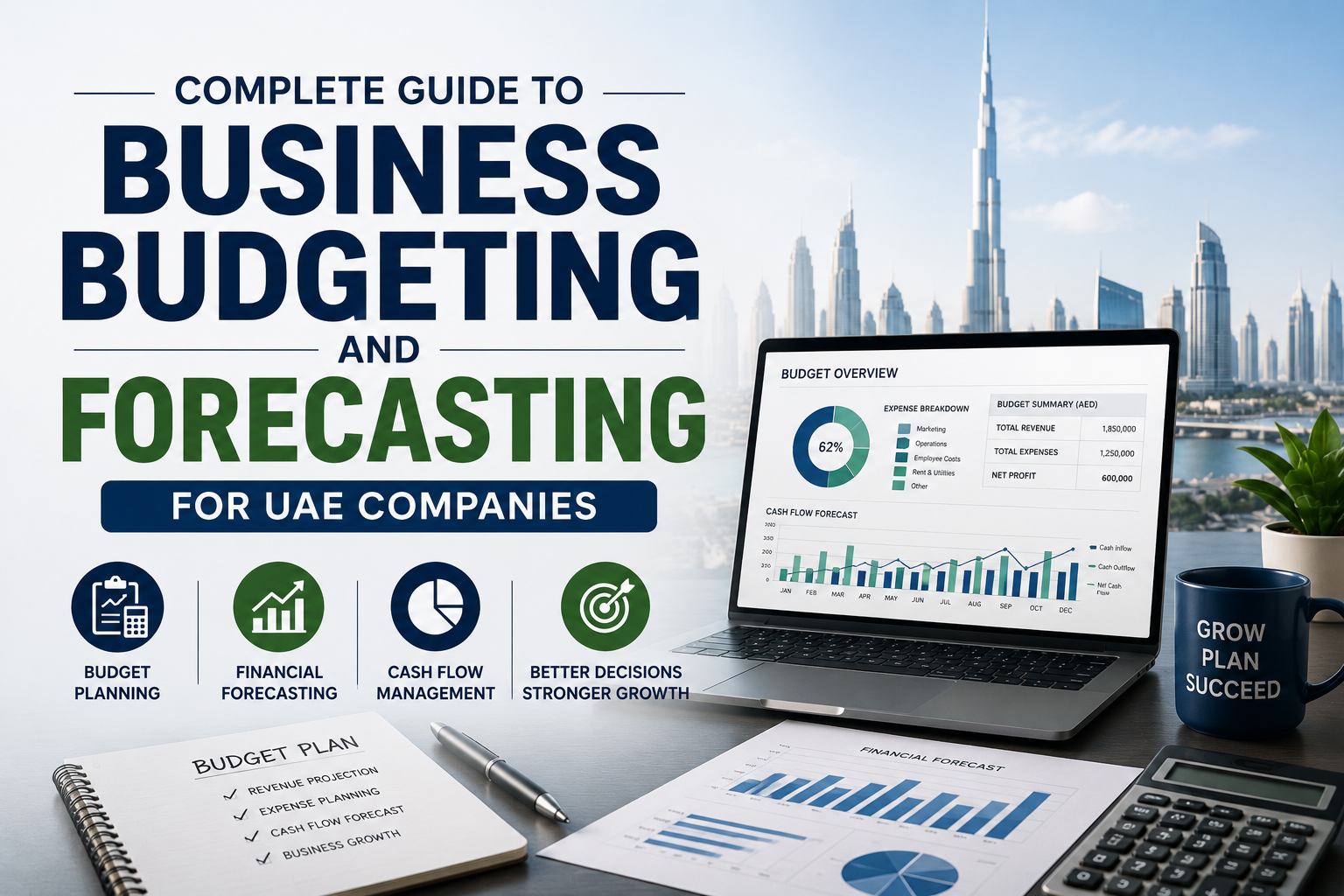
The Complete Guide to Business Budgeting and Forecasting for UAE Companies
In today's competitive business environment, financial planning is no longer just an annual exercise. It has become a strategic tool that helps businesses make informed decisions, manage risks, and prepare for future opportunities. Whether you operate a startup, SME, or large corporation, having a clear financial roadmap is essential for sustainable growth.
One of the most effective ways to achieve this is through business budgeting and forecasting. A well-prepared budget allows businesses to allocate resources efficiently, while financial forecasting helps predict future performance based on historical data, market trends, and expected business conditions. Together, these tools enable companies to improve profitability, maintain healthy cash flow, and make confident strategic decisions.
This guide explains everything UAE businesses need to know about business budgeting and forecasting, including their importance, key differences, benefits, implementation process, and best practices.
What Is Business Budgeting?
Business budgeting is the process of creating a financial plan that estimates a company's expected income and expenses over a specific period.
A business budget helps organisations:
- Allocate financial resources
- Control spending
- Monitor performance
- Set financial goals
- Improve profitability
- Support decision-making
Budgets provide a benchmark against which actual financial performance can be measured.
What Is Financial Forecasting?
Financial forecasting is the process of estimating future financial performance using historical data, market conditions, industry trends, and business expectations.
Forecasting commonly predicts:
- Revenue
- Operating expenses
- Cash flow
- Profitability
- Sales performance
- Business growth
Unlike budgets, forecasts are updated regularly as business conditions change.
Business Budgeting vs Financial Forecasting
Although often used together, budgeting and forecasting serve different purposes.
| Business Budgeting | Financial Forecasting |
|---|---|
| Sets financial targets | Predicts future financial performance |
| Usually prepared annually | Updated regularly |
| Focuses on spending control | Focuses on future planning |
| Used to monitor actual performance | Used to anticipate opportunities and risks |
| Based on planned objectives | Based on changing business conditions |
Using both together provides a more complete financial management strategy.
Why Business Budgeting and Forecasting Matter
Effective business budgeting and forecasting help organisations make informed decisions while improving financial stability.
Some of the key advantages include:
- Better financial planning
- Improved cash flow management
- Stronger cost control
- Better investment decisions
- Early identification of financial risks
- Improved business performance
- Greater confidence in strategic planning
These benefits are valuable for businesses of every size.
Key Benefits of Business Budgeting and Forecasting
1. Better Financial Planning
A well-developed budget allows businesses to plan future spending based on realistic expectations.
This helps management allocate resources efficiently while supporting long-term business objectives.
2. Improved Cash Flow Management
Cash flow is one of the most important indicators of business health.
Budgeting and forecasting help businesses:
- Predict cash inflows
- Estimate future expenses
- Identify potential cash shortages
- Improve working capital management
Strong cash flow planning reduces financial uncertainty.
3. Better Decision-Making
Reliable financial information supports more informed business decisions.
Management can confidently evaluate:
- Expansion opportunities
- Hiring decisions
- Equipment purchases
- Marketing investments
- Operational improvements
Data-driven decisions reduce unnecessary financial risks.
4. Early Risk Identification
Financial forecasting helps businesses recognise potential challenges before they become serious problems.
Examples include:
- Revenue declines
- Rising operating costs
- Cash shortages
- Seasonal fluctuations
- Market uncertainty
Early planning allows companies to respond proactively.
5. Improved Business Performance
Comparing actual performance against budgets helps businesses identify strengths and weaknesses.
Management can then adjust operations to improve:
- Profit margins
- Productivity
- Operational efficiency
- Financial performance
Continuous monitoring supports sustainable growth.
6. Supports Business Growth
Growing businesses require careful financial planning.
Budgeting and forecasting help organisations prepare for:
- Business expansion
- New product launches
- Market entry
- Staff recruitment
- Capital investment
Growth becomes more manageable when supported by reliable financial projections.
Step-by-Step Business Budgeting and Forecasting Process
Step 1: Review Historical Financial Data
Begin by analysing previous financial statements.
Review:
- Revenue
- Expenses
- Profitability
- Cash flow
- Seasonal trends
Historical performance provides the foundation for future planning.
Step 2: Define Business Objectives
Identify the financial goals your business wants to achieve.
Examples include:
- Revenue growth
- Cost reduction
- Market expansion
- New product development
- Increased profitability
Financial plans should align with these objectives.
Step 3: Estimate Future Revenue
Forecast expected income using:
- Historical sales
- Market demand
- Industry trends
- Customer behaviour
- Economic conditions
Realistic revenue projections improve forecasting accuracy.
Step 4: Forecast Business Expenses
Estimate future operating costs, including:
- Salaries
- Rent
- Marketing
- Utilities
- Inventory
- Administrative expenses
Accurate expense forecasting supports effective budgeting.
Step 5: Prepare Cash Flow Forecasts
Cash flow forecasting estimates when money will enter and leave the business.
This helps identify:
- Funding requirements
- Seasonal cash shortages
- Investment opportunities
- Working capital needs
Strong cash flow management supports business stability.
Step 6: Monitor Performance
Compare actual financial performance against your budget regularly.
Identify:
- Budget variances
- Unexpected expenses
- Revenue changes
- Profitability trends
Monitoring allows management to make timely adjustments.
Step 7: Update Forecasts Regularly
Business conditions constantly evolve.
Update financial forecasts whenever significant changes occur, such as:
- Market fluctuations
- New competitors
- Regulatory changes
- Business expansion
- Economic uncertainty
Rolling forecasts improve financial flexibility.
Common Budgeting Mistakes
Many businesses reduce forecasting accuracy by making avoidable mistakes.
Common examples include:
- Using unrealistic revenue estimates
- Ignoring market trends
- Underestimating operating expenses
- Failing to update forecasts
- Overlooking cash flow planning
- Not reviewing financial performance regularly
Avoiding these mistakes leads to more reliable financial planning.
Best Practices for Business Budgeting and Forecasting
To maximise the value of business budgeting and forecasting, businesses should:
- Use accurate financial data.
- Involve department managers in planning.
- Review budgets regularly.
- Update forecasts throughout the year.
- Monitor key financial indicators.
- Prepare for multiple business scenarios.
- Use financial software where appropriate.
Consistent planning supports stronger financial performance.
Who Needs Budgeting and Forecasting?
Budgeting and forecasting benefit organisations of every size, including:
- Startups
- Small businesses
- Medium-sized enterprises
- Large corporations
- Family-owned businesses
- Professional service firms
- Manufacturing companies
- Trading businesses
Any organisation making financial decisions can benefit from structured planning.
Why Professional Budgeting and Forecasting Services Matter
Many businesses lack the internal expertise or resources to prepare detailed financial plans.
Professional consultants can assist with:
- Budget preparation
- Financial forecasting
- Cash flow planning
- Financial modelling
- Performance analysis
- Strategic planning
- Management reporting
Expert guidance helps improve financial accuracy and supports better business decisions.
Common Challenges Faced by UAE Businesses
Businesses operating in the UAE often encounter challenges such as:
- Changing market conditions
- Rapid business growth
- Cash flow fluctuations
- Increasing operating costs
- Economic uncertainty
- Regulatory changes
Accurate budgeting and forecasting help organisations respond effectively to these challenges.
Final Thoughts
Effective business budgeting and forecasting provide the financial foundation every UAE company needs to achieve sustainable growth. By creating realistic budgets, preparing accurate financial forecasts, monitoring business performance, and updating financial plans regularly, organisations can make better decisions, improve cash flow management, reduce financial risks, and position themselves for long-term success.
Whether you are managing a startup, expanding an SME, or overseeing a large organisation, professional financial planning can significantly improve business performance. Dubai Business and Tax Advisors (DBTA) offers expert budgeting and forecasting services that help UAE businesses develop accurate financial plans, strengthen decision-making, optimise cash flow, and build a solid financial strategy for sustainable growth.

- Art
- Causes
- Crafts
- Dance
- Drinks
- Film
- Fitness
- Food
- Παιχνίδια
- Gardening
- Health
- Κεντρική Σελίδα
- Literature
- Music
- Networking
- άλλο
- Party
- Religion
- Shopping
- Sports
- Theater
- Wellness