


 About Urh Social
 Terms of Service
 Datenschutzbestimmungen
 Contact
How Industrial Solar Helps Businesses Save Money Long-Term
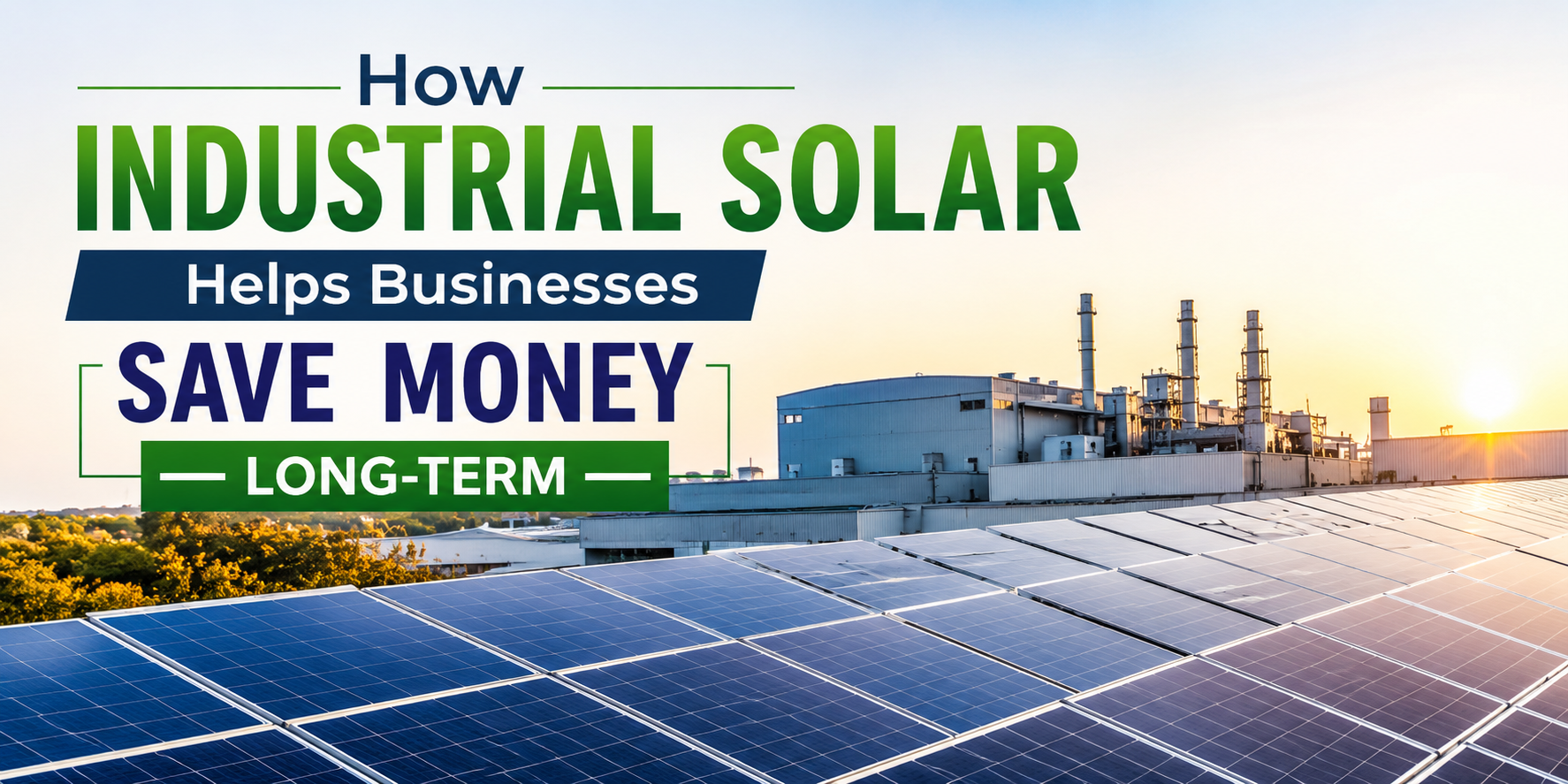
Electricity prices are one of the biggest expenses for any factory or warehouse. Every year, utility companies raise their rates, making it harder for owners to predict their monthly spending. This is why more companies are looking at Industrial Solar as a way to take control of their power needs. Instead of just paying a bill every month, businesses are now producing their own clean energy. This shift is not just about helping the planet; it is a smart financial move that builds a stronger future for the company.
Why Industrial Businesses Are Switching to Solar Energy
Many factory owners realize that the old way of buying power is no longer sustainable. Utility rates go up and down, and these changes can hurt your profits. By switching to solar energy, a business can lock in a low price for power for many years. This makes it much easier to plan a budget and manage cash flow.
Beyond the savings, switching to solar shows that a brand cares about the future. Customers and partners often prefer working with companies that use clean energy. This can lead to new business opportunities and a better reputation in the market. It is a win for both the environment and the bank account.
How Industrial Solar Helps Businesses Save Money Long-Term
1. Reduce Monthly Electricity Bills
The most immediate benefit of an Industrial Solar setup is the drop in your monthly utility bill. Large industrial buildings usually have massive, flat roofs. These roofs are perfect for catching sunlight and turning it into electricity. Instead of buying all your power from the grid, you can use the energy your panels create during the day.
For many businesses, this means the electricity bill drops by a huge percentage immediately. Even if you do not cover 100% of your energy needs, the amount you save each month adds up quickly. Those extra funds can be put back into the business to buy new equipment or hire more staff.
2. Lower Long-Term Operating Costs
Operating a large facility involves many hidden costs. Energy is often the most volatile one. By working with professional industrial solar companies, you can design a system that handles your specific energy loads. This lowers your overhead costs for decades.
Lowering these costs gives you a competitive edge. If your competitors are still paying high prices for grid power while you are using free sunlight, you can afford to offer better pricing to your customers. This long-term advantage helps your business stay strong even during tough economic times.
3. Protect Your Business From Rising Electricity Costs
Energy prices tend to go up by about 3% to 5% every year. Over twenty years, that increase can be devastating for a large-scale manufacturer. Industrial Solar acts as a hedge against these rising costs. When you produce your own power, you are no longer at the mercy of the utility company’s price hikes.
Think of it like buying your energy in bulk for the next 25 years at a fixed price. You know exactly what your power will cost for the life of the system. This stability is very valuable for long-term financial planning and protecting your profit margins from inflation.
4. Recover Your Solar Investment Through Energy Savings
The initial cost of solar can seem high, but the system pays for itself. Most businesses find that the energy savings cover the cost of the installation within a few years. When you partner with an expert like Raynex Power Solution, they help you calculate exactly when you will break even.
Once the system is paid off, the electricity it generates is essentially free. Since these systems are built to last for decades, you will have many years of pure profit from your energy savings. There are also tax incentives and grants that can make the payback period even shorter.
5. Improve Your Business ROI
Return on Investment (ROI) is a key metric for any business leader. Investing in solar often provides a better return than putting that same money into a savings account or other traditional investments. The value of your building also increases when it has its own power plant on the roof.
Solar panels are an asset that adds value to your property. If you ever decide to sell or lease your industrial space, having a low-cost energy source makes the property much more attractive to buyers. It turns a standard expense into a high-performing financial asset.
6. Reduce Dependence on Grid Electricity
Being tied to the local power grid means your business stops if the grid goes down. While solar is usually connected to the grid, adding battery storage can help you stay running during outages. This independence is a major safety net for industries that cannot afford any downtime.
Even without batteries, reducing your reliance on the grid means you are less affected by peak-hour pricing. Many utility companies charge more during the day when demand is high. Since that is exactly when your Industrial Solar panels are working hardest, you avoid those expensive peak rates entirely.
7. Solar Panels Can Provide Long-Term Energy Generation
Modern solar panels are built to be incredibly tough. They are designed to withstand wind, rain, and extreme heat. Most high-quality panels come with a 25-year warranty, but they often continue to produce power even longer than that.
This means you are setting your business up for success for a quarter of a century. Very few pieces of industrial equipment last that long while consistently saving you money every single day. It is a long-term solution for a long-term business.
8. Reduce Energy Costs Without Increasing Production Costs
Usually, to make more products, you have to spend more on power. Solar changes that equation. By generating your own power, you can increase your production hours during the day without seeing a massive spike in your electricity costs.
When you plan an industrial solar installation, you are sizing the system to meet your peak production needs. This allows you to scale your operations more freely. You don't have to worry as much about the cost of running that extra shift or adding a new production line.
9. Industrial Solar Requires Regular Maintenance, But Costs Can Be Managed
One worry business owners have is the cost of keeping the panels working. While the system does need care, it is much simpler than maintaining a fleet of vehicles or a production machine. Most maintenance involves simple cleaning and checking the electrical connections.
Managing these costs is easy with a good service plan. Because there are no moving parts in the panels themselves, there is very little that can break. Regular checks ensure the system is always performing at its best, which protects your long-term savings.
How Much Can an Industrial Business Save With Solar?
The amount of money saved depends on the size of the system and local electricity rates. However, many large facilities save tens of thousands of dollars every year. Over the life of the system, this can grow into millions of dollars in total savings.
For a medium-sized factory, the savings might cover 50% to 70% of their total energy needs. When you consider that Industrial Solar systems require very little overhead after they are installed, almost every dollar saved on the bill goes straight to your bottom line.
Final Thoughts
Investing in solar is one of the most effective ways for a business to cut costs and increase stability. It offers a clear path to lower monthly bills, protection from inflation, and a high return on investment. By choosing a sustainable energy path today, you are ensuring that your business remains profitable and competitive for many years to come.
Frequently Asked Questions
How does industrial solar reduce business costs?
Industrial solar reduces costs by generating electricity on-site from sunlight. This decreases the amount of power you need to buy from the utility company, lowering your monthly bills. It also locks in your energy costs, protecting you from future price increases.
How long does an industrial solar system take to pay back?
Most industrial systems pay for themselves within 5 to 8 years. This timeline depends on the size of the system, available tax credits, and your local electricity rates. After the payback period, the electricity generated is mostly free profit for the business.
How much can a factory save with solar panels?
A factory can save anywhere from 30% to 75% on its annual electricity costs. For large operations, this often translates to thousands of dollars saved every month. Over 25 years, the total savings can reach millions of dollars.
Is industrial solar a good investment for manufacturing businesses?
Yes, it is an excellent investment. Manufacturing usually requires heavy energy use during daylight hours, which perfectly matches when solar panels produce the most power. It improves ROI and lowers the cost of goods produced.
How long do industrial solar panels last?
Industrial solar panels are designed to last for 25 to 30 years. Most come with a 25-year performance warranty. Even after 30 years, they often continue to produce power, though at a slightly lower efficiency than when they were new.
Does industrial solar reduce electricity bills completely?
While it can significantly reduce bills, most industrial businesses stay connected to the grid for nighttime power or extra heavy loads. However, with the right system size, you can offset nearly all of your daytime energy costs.

 English
 Arabic
 French
 Spanish
 Portuguese
 Turkish
 Dutch
Dutch
 Italiano
 Russian
 Romaian
 Portuguese (Brazil)
 Greek
Greek
