


 About Urh Social
 Terms of Service
 Política de Privacidade
 Contact
SOC Managed Service Providers: Healthcare's Shield Against Ransomware
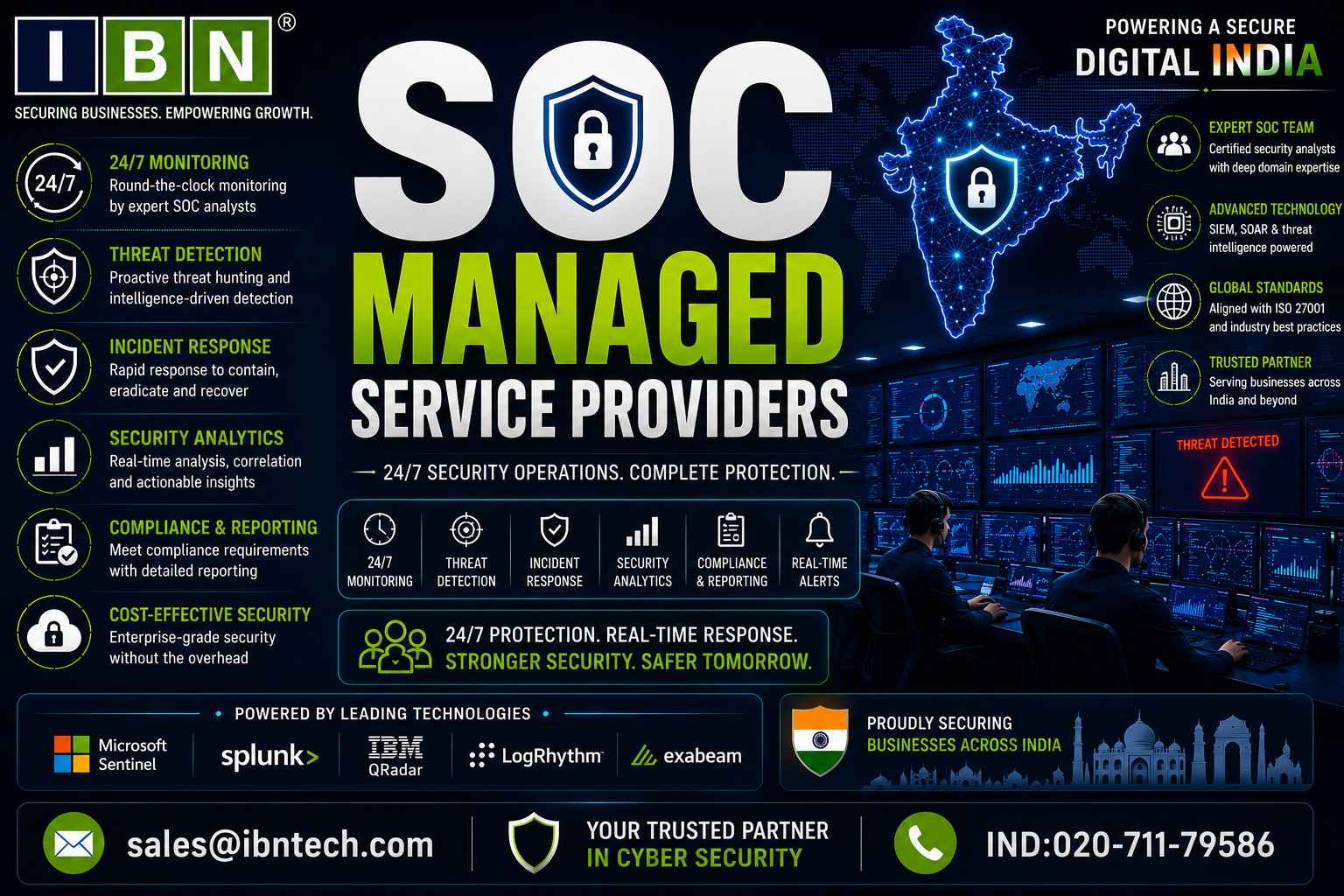
Ransomware Defense: What SOC Managed Service Providers Bring to Healthcare
When a hospital's systems get locked by ransomware, the consequences aren't limited to a technical outage. Scheduled surgeries get delayed, patient records become inaccessible, and staff revert to paper processes overnight. This direct link between a cyberattack and patient care is exactly why SOC managed service providers have become essential reading for healthcare leaders across India, not just IT departments.
Why Ransomware Targets Healthcare So Consistently
Hospitals cannot afford extended downtime the way many other businesses can. Patient care depends on system availability, which makes healthcare organizations more likely to face pressure to resolve an attack quickly, a dynamic that ransomware operators are well aware of. Combined with often-limited internal security resources, this makes healthcare a persistently attractive target.
The Operational Reality Driving Ransomware Risk
Hospital IT teams are typically focused on keeping clinical systems, patient portals, and connected medical devices running smoothly day to day. Security monitoring, particularly the kind needed to catch ransomware in its early stages before encryption spreads, often takes a back seat to these operational priorities, not out of negligence, but due to genuinely limited bandwidth.
Why Basic Antivirus Protection Isn't Enough
Many healthcare organizations rely primarily on antivirus software and periodic system updates as their main ransomware defense. This approach has clear limitations:
- Antivirus tools primarily catch known threats, while ransomware variants evolve constantly
- Early-stage ransomware activity, before encryption begins, often looks like normal network behavior to basic tools
- Without continuous monitoring, the window between initial compromise and full encryption goes unwatched
- Recovery after an attack is far more costly and disruptive than early detection would have been
Ransomware Protection Healthcare India: What Effective Defense Looks Like
Ransomware protection healthcare India requires more than static defenses, it requires continuous behavioral monitoring that can catch the early warning signs of an attack, such as unusual file access patterns or lateral movement across systems, before encryption actually begins.
How Early Detection Actually Interrupts an Attack
IBN Technologies' Managed SIEM & SOC service continuously monitors for exactly these kinds of early indicators, correlating unusual activity across systems so that suspicious behavior is investigated the moment it appears, rather than after files have already been encrypted and the damage is done.
Ransomware Readiness Checklist for Healthcare IT Leaders
- Continuous monitoring across patient systems, connected devices, and network infrastructure
- Behavioral detection capable of catching early-stage ransomware activity, not just known signatures
- A documented, tested incident response process specific to ransomware scenarios
- Clear escalation procedures that don't depend solely on business-hours staff availability
Basic Defense vs Continuous Ransomware Monitoring
|
Factor |
Antivirus-Only Defense |
Managed SOC Monitoring |
|
Detection scope |
Known threat signatures |
Behavioral and pattern-based detection |
|
Early-stage visibility |
Limited |
Monitors pre-encryption activity |
|
Coverage hours |
Passive, always-on but reactive |
Actively monitored 24/7 |
|
Response speed |
Manual, delayed |
Expert-led, immediate investigation |
Industry Use Case: Regional Hospital Networks
A regional hospital network operating across several facilities faces amplified ransomware risk, since an attack originating at one location can potentially spread across connected systems network-wide. Continuous, correlated monitoring across all facilities allows early indicators to be caught before lateral movement turns a single-point compromise into a network-wide crisis.
Benefits Beyond Preventing a Single Attack
Healthcare organizations that strengthen ransomware defense through continuous monitoring also reduce the operational anxiety of "hoping nothing happens," free clinical staff from the disruption of emergency paper-based fallback procedures, and build stronger confidence among patients and partners that critical systems are being actively protected.
Best Practices for Healthcare Ransomware Preparedness
- Move beyond antivirus-only defense toward continuous behavioral monitoring
- Ensure connected medical devices are included in ransomware monitoring scope
- Test incident response procedures specifically for ransomware scenarios, not generic breaches
- Prioritize providers with clear experience protecting healthcare-specific systems
Compliance Context for Healthcare Providers
Beyond the immediate operational risk, ransomware incidents involving patient data increasingly carry compliance and reporting obligations under India's evolving data protection expectations. Partnering with experienced SOC managed service providers gives healthcare organizations both stronger ransomware defense and clearer documentation to support compliance requirements if an incident does occur.
For hospitals and healthcare networks across India, ransomware preparedness isn't a one-time project, it's an ongoing responsibility that continuous, expert-led monitoring is built to support every single day.

 English
 Arabic
 French
 Spanish
 Deutsch
 Turkish
 Dutch
Dutch
 Italiano
 Russian
 Romaian
 Portuguese (Brazil)
 Greek
Greek
