


 About Urh Social
 Terms of Service
 Политика конфиденциальности
 Contact
Keeping Digital Evidence Intact With Docbyte’s Digital Preservation
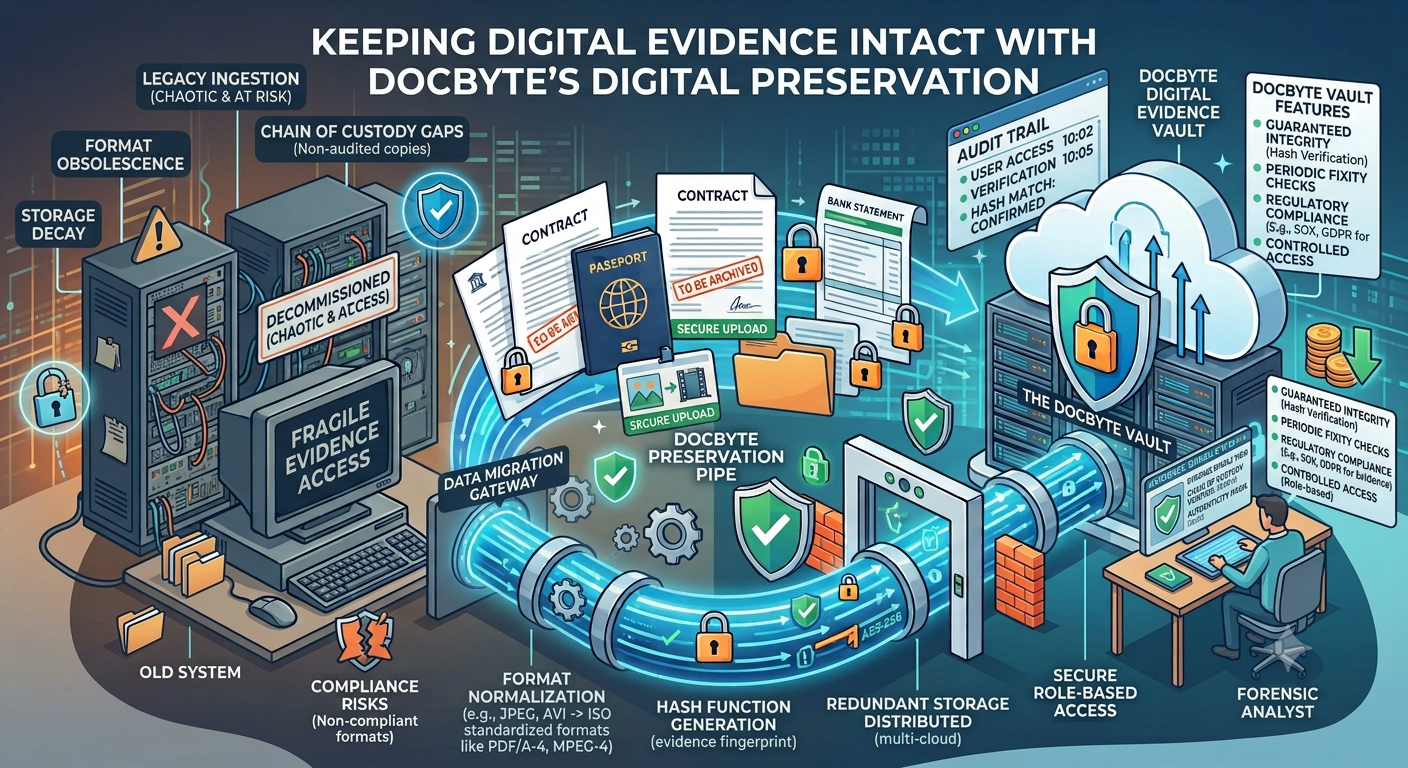
Digital evidence can remain stored for years while gradually becoming harder to verify, interpret, or trust. Files may be corrupted, metadata can disappear, formats may become obsolete, and records can lose their connection to the systems that created them. Docbyte’s Digital Preservation helps organizations protect important electronic evidence so it remains readable, complete, searchable, and defensible throughout its required retention period.
Keeping digital evidence intact requires more than placing files in storage. Organizations must preserve the content, metadata, technical context, integrity information, access history, and relationships that give each record its meaning.
Why Digital Evidence Is Vulnerable
Electronic records may appear permanent because they can be copied easily and stored in several locations. However, digital information depends on technology.
A document may rely on a particular application, operating system, file format, database, encryption method, or viewing tool. When those technologies are replaced or unsupported, the evidence may become difficult to access.
Files can also be damaged during migration, storage failure, transfer, or conversion. The problem may remain unnoticed until the record is required for an audit, investigation, legal dispute, or regulatory review.
A preservation strategy identifies these risks before evidence becomes unusable.
Integrity Means More Than File Availability
A file may be available without being reliable.
The organization must be able to show that the record is complete and has not been altered without authorization. This is especially important when the document supports a contract, approval, financial decision, regulated process, or legal claim.
Ordinary folders may allow users to overwrite files, replace versions, edit metadata, or delete records without clear control.
Digital preservation applies stronger safeguards. Access permissions can limit who may view, export, manage, or dispose of evidence. Audit histories can record significant actions, while integrity checks can detect unexpected changes.
These controls help demonstrate that the evidence remained under appropriate management throughout its lifecycle.
Using Integrity Checks to Detect Changes
One common way to protect digital evidence is to create a checksum or digital fingerprint.
This value is calculated from the file when it enters the preservation environment. If the file changes later, the calculated value will no longer match the original.
Regular checking can reveal corruption, accidental modification, or unexpected replacement.
The organization can then investigate the issue and recover a verified copy where possible.
Integrity checking should not be treated as a one-time task. Long-term evidence may remain stored for many years, so its condition should be reviewed periodically.
Docbyte’s Digital Preservation supports this ongoing approach by helping organizations maintain evidence beyond the initial transfer into storage.
Preserving Metadata and Context
Digital evidence rarely makes sense as an isolated file.
A document may need to remain connected to its author, creation date, customer, project, contract number, approval status, source system, retention category, or related correspondence.
Without this metadata, future users may struggle to understand what the record represents.
For example, a spreadsheet may still contain accurate figures, but its value is limited if the reporting period, currency, business unit, or approval history has been lost.
Preservation must therefore include the information that explains the record’s origin, purpose, and relationship to the wider business process.
This reduces dependence on unclear filenames, outdated folder structures, and the knowledge of employees who may no longer work for the organization.
Protecting Relationships Between Records
Important evidence often consists of several connected records.
A contract may be linked to amendments, approvals, invoices, emails, and signed documents. A customer case may include applications, identity records, correspondence, decisions, and supporting files.
If these items are exported separately, the relationships between them can disappear.
The individual documents may survive, but the full chain of evidence becomes harder to reconstruct.
A preservation environment should retain links between related records so future users can review the complete history of a transaction, case, or decision.
This is particularly important during investigations and disputes where one document may not provide enough context on its own.
Keeping Evidence Readable Over Time
A record cannot support legal or operational review if authorized users can no longer open it.
File formats change, software vendors disappear, and specialized viewing tools may no longer be available. Older documents may display incorrectly or lose features when opened in modern applications.
Digital preservation considers whether the original format will remain sustainable.
Organizations may choose to retain the original file, create a more accessible preservation copy, or keep both versions. The correct approach depends on the type of evidence and its legal or technical significance.
Any conversion must be controlled and validated. Important content, layout, metadata, signatures, and relationships should remain accurate.
The organization should also document which version is original and which was created for long-term access.
Supporting Signed Digital Evidence
Digitally signed records require additional protection.
A signature may be valid when created, but future verification can become difficult after certificates expire or validation services change.
Preserving only the visible signed document may not be enough.
Organizations may also need to retain certificate information, trusted timestamps, revocation data, validation results, and details about the original signing process.
These elements help demonstrate whether the signature was valid at the signing time and whether the document remained unchanged afterward.
Docbyte’s Digital Preservation can support the broader evidence package needed to keep signed records understandable and defensible.
Maintaining a Clear Chain of Custody
A clear chain of custody strengthens confidence in electronic evidence.
Legal, compliance, and audit teams may need to know when the record was received, who accessed it, whether it was exported, and which preservation actions were performed.
A structured audit history helps answer these questions.
The preservation environment can record events such as ingestion, validation, access, migration, retention changes, legal holds, and authorized disposal.
This reduces the need to reconstruct the record’s history from scattered emails, application logs, or employee memory.
It also provides a more consistent explanation of how the evidence was managed from creation to retrieval.
Preserving Evidence From Retired Applications
Legacy applications often contain important evidence even after they stop supporting active business processes.
Keeping the entire system running can create security risks, licensing costs, and dependence on outdated technical knowledge.
Digital preservation allows the organization to separate the evidence from the software that created it.
Documents, structured data, metadata, relationships, and relevant audit information can be extracted and transferred into a controlled environment.
A simple file export may not be enough because important context may remain in database fields, workflow histories, or linked tables.
Docbyte’s Digital Preservation helps organizations preserve this wider context so evidence remains useful after the original system is decommissioned.
Applying Retention and Legal Holds
Preserving evidence does not mean keeping every record forever.
Retention periods should reflect legal, regulatory, contractual, historical, or operational requirements.
A legal hold may prevent deletion when records are connected to litigation, an investigation, or an audit. Once the hold is released and the retention period has ended, authorized disposal can proceed.
The organization should document what was deleted, when it was deleted, and which policy supported the action.
This balances long-term evidence protection with privacy, security, and information governance responsibilities.
Conclusion
Digital evidence remains intact only when organizations preserve more than the visible file. Integrity controls, metadata, readable formats, record relationships, access histories, retention rules, and technical context all contribute to long-term trust.
Docbyte helps organizations maintain electronic evidence beyond the lifespan of the systems and technologies that created it. By protecting records against corruption, alteration, obsolescence, and loss of context, businesses can keep important information reliable, searchable, and defensible for as long as it is genuinely required.

 English
 Arabic
 French
 Spanish
 Portuguese
 Deutsch
 Turkish
 Dutch
Dutch
 Italiano
 Romaian
 Portuguese (Brazil)
 Greek
Greek
