Trying to conceive through IVF can feel like one of life's biggest journeys. Along the way, you may come across medical conditions that could affect your chances of success, and one of the most common is uterine fibroids.
If you've been diagnosed with fibroids, it's natural to ask:
Will fibroids reduce my IVF success?
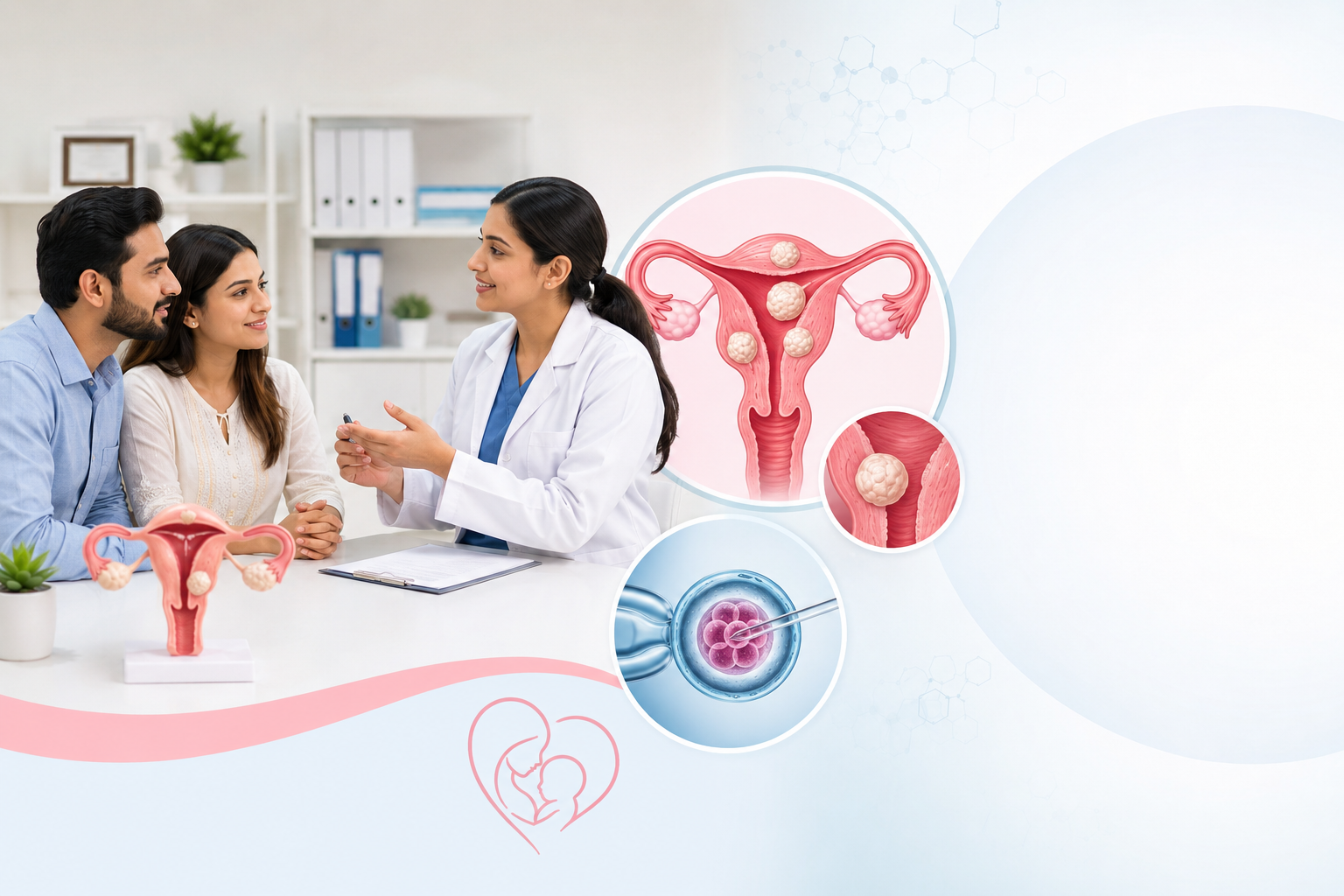
Should they be removed before starting IVF?
The good news is that not all fibroids affect fertility or IVF outcomes. Their impact depends on their size, location, and number. While many women with fibroids go on to have healthy pregnancies, others may benefit from treatment before beginning IVF.
Think of your uterus as a garden. Healthy soil gives a seed the best chance to grow. Fibroids are like rocks in that garden—some are small and harmless, while others may interfere with healthy growth.
In this guide, we'll explain everything you need to know in simple language so you can make informed decisions with your fertility specialist.
Learn how uterine fibroids affect IVF success, treatment options, and when to consult the best ivf specialist in new delhi for personalized fertility care.
1. What Are Uterine Fibroids?
Uterine fibroids are non-cancerous (benign) growths that develop in or around the uterus. They are made of muscle and connective tissue and are very common during a woman's reproductive years.
Many women don't even know they have fibroids because they often cause no symptoms.
Fibroids can vary in size. They may be:
As small as a seed
As large as a grapefruit
Single or multiple growths
Important: Having fibroids does not automatically mean you cannot get pregnant.
2. Why Do Fibroids Develop?
The exact cause of uterine fibroids is still unknown. However, several factors may increase the risk.
Hormonal Changes
The hormones estrogen and progesterone encourage fibroid growth.
Family History
If your mother or sister has fibroids, your chances of developing them are higher.
Age
Fibroids are most commonly diagnosed between 30 and 45 years of age.
Weight and Lifestyle
Being overweight and leading a sedentary lifestyle may increase the risk.
Genetics
Certain genetic changes in uterine cells can also contribute to fibroid formation.
3. Types of Uterine Fibroids
When it comes to IVF, the location of a fibroid is often more important than its size.
Submucosal Fibroids
These grow inside the uterine cavity and are most likely to affect fertility.
They may:
Distort the uterus
Reduce embryo implantation
Increase the risk of miscarriage
Intramural Fibroids
These develop within the muscular wall of the uterus.
Large intramural fibroids may:
Reduce blood supply
Change the shape of the uterus
Lower IVF success rates
Subserosal Fibroids
These grow on the outer surface of the uterus.
In most cases, they do not interfere with fertility or IVF.
Pedunculated Fibroids
These fibroids grow on a stalk.
Their effect on fertility depends on their size and location.
4. Can Fibroids Cause Infertility?
Yes—but not always.
Only certain types of fibroids interfere with fertility.
Fibroids may reduce the chances of pregnancy by:
Blocking sperm movement
Blocking the fallopian tubes
Distorting the uterine cavity
Preventing embryo implantation
Reducing blood flow to the uterus
Increasing the risk of miscarriage
The encouraging news is that many women with small fibroids conceive naturally or through IVF.
5. How Fibroids Affect IVF Success
One of the biggest concerns for couples is whether fibroids will reduce IVF success.
Here's how they can affect treatment.
They Can Change the Shape of the Uterus
Embryos need a healthy uterine lining to implant successfully.
If fibroids distort the uterine cavity, implantation becomes more difficult.
They May Reduce Blood Flow
Healthy blood circulation provides oxygen and nutrients to the developing embryo.
Large fibroids may interfere with this process.
They Can Cause Inflammation
Some fibroids create inflammation inside the uterus, making implantation less favorable.
They May Increase Miscarriage Risk
Even after successful implantation, certain fibroids can increase pregnancy complications.
They Can Lower Implantation Rates
Research suggests that submucosal fibroids are associated with lower implantation and live birth rates.
6. Which Fibroids Are Most Concerning?
Not every fibroid needs to be removed before IVF.
Doctors usually pay the most attention to:
Submucosal fibroids
Large intramural fibroids (larger than 4–5 cm)
Multiple fibroids
Fibroids that distort the uterine cavity
These are the fibroids most likely to affect IVF outcomes.
7. Symptoms of Uterine Fibroids
Many women experience no symptoms at all.
However, others may notice:
Heavy menstrual bleeding
Pelvic pain
Pressure in the lower abdomen
Frequent urination
Pain during intercourse
Constipation
Lower back pain
Longer menstrual periods
If you're planning IVF, it's important to discuss these symptoms with your fertility specialist.
8. How Doctors Diagnose Fibroids Before IVF
Before beginning IVF, your fertility specialist may recommend several imaging tests.
Ultrasound
Usually the first investigation.
It helps determine:
Number of fibroids
Size
Location
Transvaginal Ultrasound
Provides a more detailed view of the uterus.
MRI Scan
Recommended for women with large or multiple fibroids.
It helps doctors plan treatment if surgery is needed.
Hysteroscopy
A thin camera is inserted into the uterus to examine the uterine cavity.
This test is especially useful for identifying submucosal fibroids.
Saline Infusion Sonography (SIS)
A sterile saline solution expands the uterus during an ultrasound, allowing doctors to detect even small abnormalities.
9. Should Fibroids Be Removed Before IVF?
The answer depends on your individual situation.
Your fertility specialist will evaluate:
Fibroid size
Location
Number
Age
Symptoms
Previous IVF failures
Pregnancy history
Surgery May Be Recommended If:
Fibroids distort the uterine cavity
You have repeated miscarriages
Previous IVF cycles have failed without another cause
Large intramural fibroids are present
Surgery May Not Be Necessary If:
Fibroids are small
They are located outside the uterus
They cause no symptoms
They do not affect the uterine cavity
Every fertility journey is unique, so treatment should always be personalized.
10. IVF Success After Fibroid Treatment
Many women achieve successful pregnancies after appropriate treatment for fibroids.
Benefits may include:
Improved embryo implantation
Higher pregnancy rates
Lower miscarriage risk
A healthier uterine environment
Most fertility specialists recommend allowing the uterus to heal before proceeding with embryo transfer.
11. Lifestyle Tips to Support Fertility
Lifestyle changes won't remove fibroids, but they can improve your overall reproductive health.
Maintain a Healthy Weight
A healthy weight supports better hormone balance.
Eat a Nutritious Diet
Focus on:
Fresh fruits
Vegetables
Whole grains
Lean protein
Healthy fats
Limit processed foods and sugary drinks whenever possible.
Exercise Regularly
Moderate exercise improves blood circulation and overall health.
Manage Stress
Stress doesn't directly cause fibroids, but reducing stress can support your emotional well-being during IVF.
Helpful activities include:
Meditation
Yoga
Walking
Deep breathing exercises
Get Enough Sleep
Aim for 7–8 hours of quality sleep every night.
Avoid Smoking and Excess Alcohol
These habits can negatively affect fertility and pregnancy outcomes.
12. When Should You See an IVF Specialist?
Schedule a consultation if:
You've been diagnosed with fibroids.
You've been trying to conceive for over a year.
You've experienced repeated miscarriages.
Previous IVF treatments have failed.
You have heavy bleeding or severe pelvic pain.
Imaging shows fibroids affecting the uterus.
Consulting the best IVF specialist in New Delhi can help determine whether your fibroids require treatment before IVF. An experienced specialist can create a personalized treatment plan to maximize your chances of a successful pregnancy.
13. Final Thoughts
Uterine fibroids can affect IVF success, but their impact varies from woman to woman. The most important factors are their size, location, and whether they distort the uterine cavity.
The reassuring news is that not every fibroid requires surgery. Many women with fibroids successfully conceive through IVF after a thorough fertility evaluation and the right treatment plan.
Instead of worrying about the diagnosis alone, focus on getting the right medical advice. Working closely with the best IVF specialist in New Delhi ensures that your fertility treatment is tailored to your unique needs, giving you the best possible chance of achieving a healthy pregnancy.
Frequently Asked Questions (FAQs)
1. Can small fibroids reduce IVF success?
Small fibroids that do not distort the uterine cavity usually have little or no impact on IVF success. Your fertility specialist will evaluate their size and location before recommending treatment.
2. Do all women with fibroids need surgery before IVF?
No. Surgery is generally recommended only when fibroids affect the uterine cavity, are large, cause significant symptoms, or contribute to repeated IVF failure or miscarriage.
3. Which type of fibroid affects fertility the most?
Submucosal fibroids have the greatest impact because they grow into the uterine cavity and can interfere with embryo implantation.
4. Can I have a healthy pregnancy with fibroids?
Yes. Many women with fibroids have healthy pregnancies. The outcome depends on the size, number, and location of the fibroids, along with appropriate medical care.
5. How can the best IVF specialist in New Delhi help women with fibroids?
The best IVF specialist in New Delhi can accurately assess your fibroids using advanced imaging, determine whether treatment is necessary, recommend the most appropriate IVF approach, and develop a personalized fertility plan to improve your chances of a successful pregnancy.



 About Urh Social
 Terms of Service
 Privacy Policy
 Contact

 English
 Arabic
 French
 Spanish
 Portuguese
 Deutsch
 Turkish
 Dutch
Dutch
 Italiano
 Russian
 Portuguese (Brazil)
 Greek
Greek
