


 About Urh Social
 Terms of Service
 Политика конфиденциальности
 Contact
Which Motor Grader Brands Train Operators Best Through Their Machines?
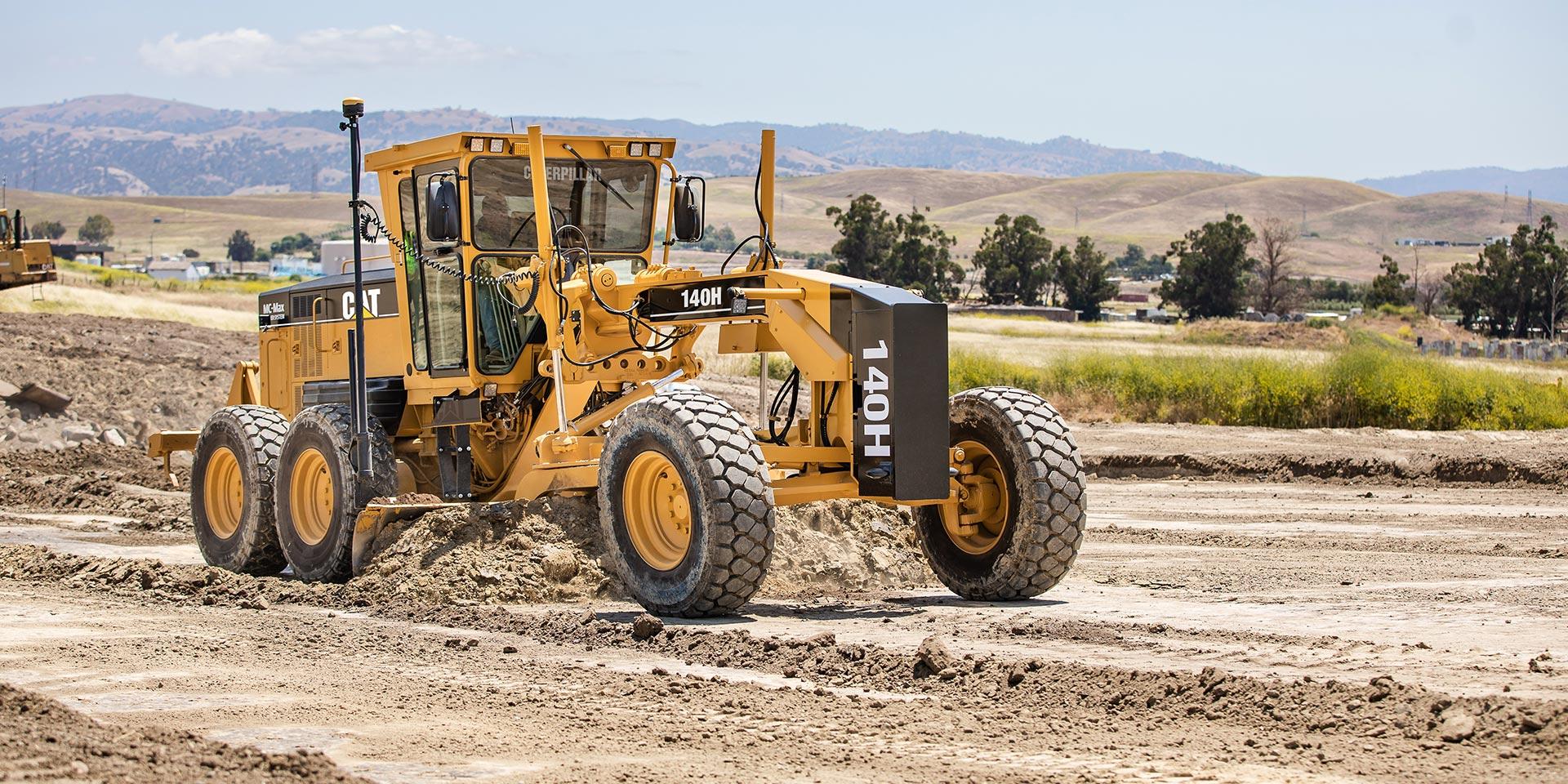
If you ask any experienced contractor what the most difficult machine to master on a jobsite is, you'll likely get the same answer: the motor grader. It's not that it's complicated from the outside; it's that the art of managing blade angle, articulation, cross slope, and steering all at once takes years to develop and seconds to mess up. As a shortage of qualified grader operators continues to grow each year, the issue of which brands truly aid operators in learning faster has become more important than ever.
Why Motor Graders Are So Hard to Learn
A motor grader's performance is measured in millimeters, as opposed to an excavator or wheel loader, which are measured in bucket loads. The end product of a grader is seen long after the job is finished, and operator errors are quite literally carved into the road surface. In the old days, the machines needed to be operated by a person who had to control up to 14 levers at once: blade pitch, side shift, circle rotation, articulation, and steering. Average results were acceptable. It was a different story when it came to getting final-grade results regularly.
This discrepancy costs contractors real dollars, pressuring manufacturers to create machines that reduce the time it takes from novice to productive operator.
How the CAT Motor Grader Is Closing the Gap
The CAT motor grader has long been the best-selling grader in North America, and Caterpillar has been working hard to completely redesign the operator experience from scratch. The next-generation models (120, 140, 150, and 160) feature a completely new cab design, with larger windows and better views to the moldboard and tires, as well as a 10-inch touchscreen interface. The result of Caterpillar's extensive hours of ergonomic research is a joystick control option that combines what used to be many separate lever movements into two three-axis joysticks.
The CAT motor grader joystick system features transmission and machine direction on the left stick, and drawbar, circle, and moldboard control on the right, which minimizes hand and arm motion and reduces operator fatigue during long shifts. Caterpillar also introduced a finish gear to the 140's transmission, providing an option for the operator to control the speed of the final passes, which are typically slow and precise. These are not merely comfort improvements, but strategic design choices to cut down on the number of things the new operator has to consider simultaneously.
The latest CAT motor grader models include several features designed to help operators get up and running faster:
-
Next-generation cab design: Provides wider forward and side views of the blade and front tires to improve visibility.
-
Dual control interfaces: Allow the use of joystick or lever controls as per operator preference and experience level.
-
Integrated grade technology: Offers Cat Grade technology as an option, which can be integrated via the onboard touchscreen.
-
Dedicated finish gear: Provides a new finish gear for smoother and more controlled finish passes.
-
Safety monitoring options: Includes optional 360-degree camera systems and People Detection systems, which help to minimize operator anxiety on busy sites.
John Deere Motor Graders and the Automation Advantage
John Deere motor graders have been the most radical in adopting automation-assisted operation of any major brand. The P-Tier lineup debuted at ConExpo 2026 and is equipped with features that were once considered premium options just a few years ago. They are all standard and are all aimed at the things that new operators struggle with. Blade Flip, Auto-Articulation, Machine Presets, and Machine Damage Avoidance are all standard.
The P-Tier strategy is centered on the fully integrated mastless 3D grade control system, SmartGrade. It enables John Deere motor graders to keep blades accurate no matter where the machine is positioned or what angle the blade is set at, eliminating one of the most stressful factors for novice operators. Deere's grade-control technology is marketed specifically as a way to reduce rework, no matter how much experience the operator has on the jobsite, and that's an honest admission that not every operator on a jobsite is a seasoned finish grader.
The primary advantage of John Deere motor graders for new operators is:
-
Standard Auto-Articulation and Blade Flip: Minimizes manual inputs for each grading pass.
-
One-touch Machine Presets: Enables the operator to set up start-up and transport positions in one step with a single button push.
-
Machine Damage Avoidance systems: Restrict blade motion to avoid contact with tires, steps, and structures.
-
Auto-Shift PLUS transmission management: Allows operators to run the machine without having to shift gears manually, using just the throttle and brake.
-
The 10.1-inch G5 touchscreen: Switches between 2D and 3D SmartGrade solutions without changing the system.
The Komatsu Motor Grader and Training Ecosystem
The Komatsu motor grader family has a different, but equally thoughtful approach. Combining machine-based automation with specific simulator training courses and operator academies supported by Komatsu dealers, Komatsu has created one of the most structured training environments in the heavy equipment industry. Developed in conjunction with certified master trainers, Komatsu simulators simulate the actual operating environment, provide comprehensive performance reports for every training scenario, and enable instructors to select the errors that are recorded.
Komatsu's commitment to structured training goes beyond software. To tackle operator shortages directly in the region, regional training academies have been set up throughout Southeast Asia, where simulation technology and hands-on machine time are combined. The Komatsu motor grader is enhanced by standard cross-slope control systems, which automate one of the most technically challenging aspects of finish grading, maintaining consistent slope targets without having to make constant manual adjustments to the blade.
The Komatsu motor grader training approach is unique in that it offers:
-
High-fidelity simulators: Built alongside certified master trainers with a focus on skills transfer to real machines.
-
Targeted scoring paths: Features individual operator scenario-based training paths and performance scoring.
-
Standard cross-slope control: Automates a common stumbling block for new operators on key models.
-
Smart Construction integration: Links machine data directly to fleet coaching tools.
-
Regional operator academies: Designed to fill the workforce gaps in markets where the dealership training infrastructure is not available.
The Bigger Picture: Training Efficiency Is a Business Decision
The skilled grader operator shortage is not a problem for the future; it is a problem now. The lack of qualified operators is a quantifiable productivity slowdown in the industry. Manufacturers know that automation that makes up for inexperience is not a quick fix; it's a business requirement.
The brands that are closing the gap most quickly, whether by designing ergonomic joysticks, such as the CAT motor grader, structured grade automation, such as the John Deere motor grader, or a simulator ecosystem, such as the Komatsu motor grader, have a similar philosophy. They are creating machines that allow productive grading to be available earlier, while not taking away the pathway to true operator mastery over time.
FAQs
1. Which motor grader brand is best for beginner operators?
A: Known for their standard automation capabilities, such as Auto-Articulation, Blade Flip, and Auto-Shift, which minimize the number of manual inputs needed, John Deere motor graders are especially easy to operate for new operators.
2. Does the CAT motor grader offer training support for new operators?
A: Yes. The next generation of the CAT motor grader features simplified joystick controls, grade technology integration, and enhanced cab visibility, all of which help to ease the cognitive load for novice operators and help to accelerate skill development.
3. Does the Komatsu motor grader have a simulator training program?
A: The Komatsu motor grader brand has one of the most advanced simulator training ecosystems in the industry, utilizing high-fidelity simulators developed in conjunction with certified trainers, individual performance tracking, and regional operator academies in key markets.
4. Will automation eventually replace the need for skilled grader operators?
A: Not in the immediate future. Automation on John Deere motor graders, the CAT motor grader, and the Komatsu motor grader is intended to help and speed up skill development, not replace it. Even in complex conditions, grading is not a process that can be fully automated at this time.

 English
 Arabic
 French
 Spanish
 Portuguese
 Deutsch
 Turkish
 Dutch
Dutch
 Italiano
 Romaian
 Portuguese (Brazil)
 Greek
Greek
