


 About Urh Social
 Terms of Service
 Privacy Policy
 Contact
Is Teletherapy as Effective as In-Person Counseling? What Research Says for Anxiety, Depression, and Stress Management
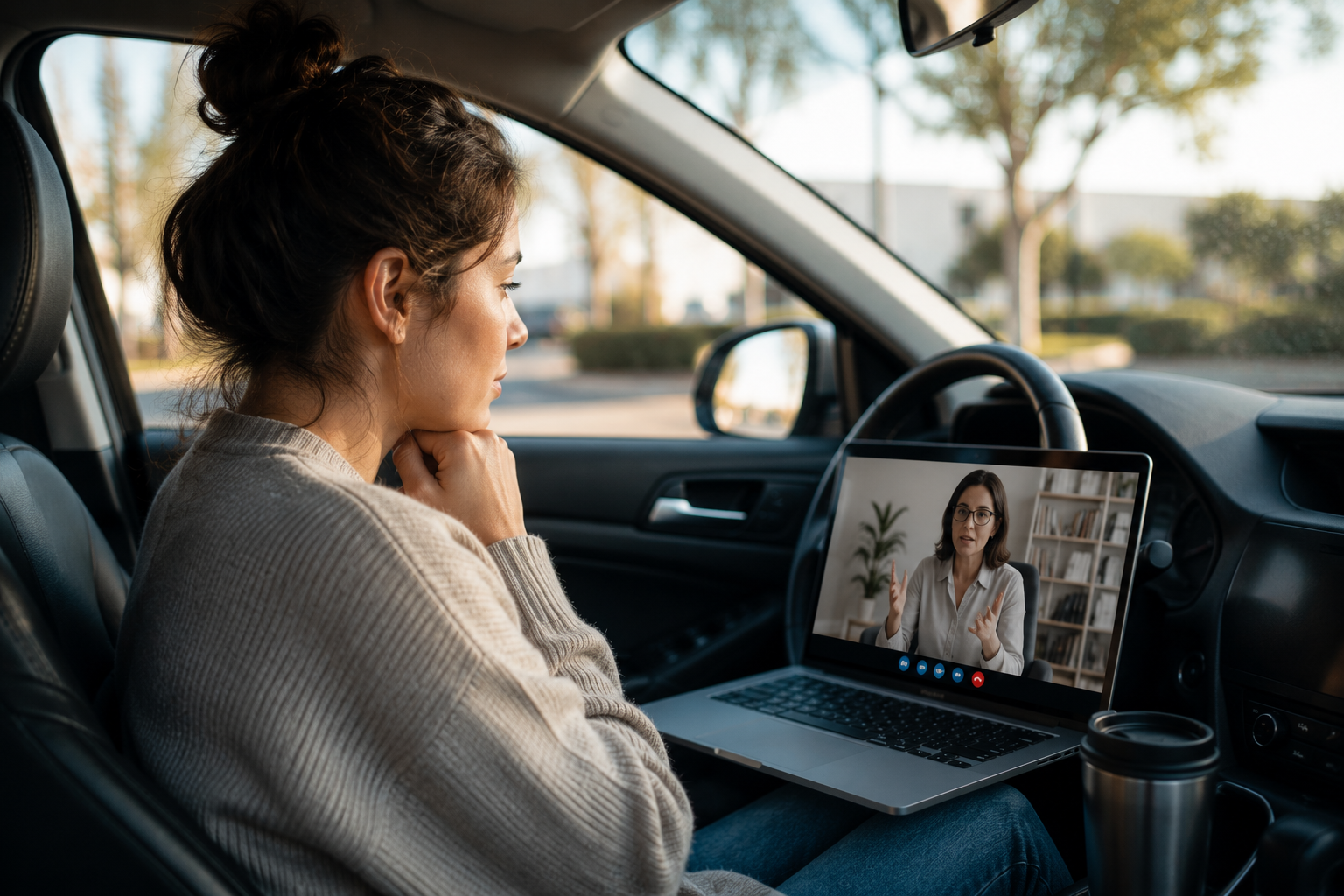
It's 5:45 on a Tuesday evening. Someone has just left work, picked up a child from soccer practice, and is now sitting in a car in the school parking lot, wondering whether there's enough time to drive across town for a 6:00 therapy appointment. A few years ago, that appointment simply wouldn't have happened. Today, they open their phone, log into a secure video session from the driver's seat, and begin talking with their therapist right on time. This small shift captures much of the ongoing conversation around teletherapy vs in-person therapy: not which one is universally "better," but which format actually fits into a person's real life.
As telehealth has become a standard offering rather than a temporary substitute, many people find themselves genuinely unsure which format might serve them best. Fortunately, there's a meaningful body of research to help answer that question.
In This Guide You'll Learn
-
What research actually says about the effectiveness of teletherapy compared to in-person counseling
-
Which situations tend to favor one format over the other
-
How different therapy approaches translate into a virtual setting
-
Practical guidance for choosing the right format for your circumstances
What the Research Actually Shows
Research suggests that for many common concerns, including anxiety, depression, and general stress management, teletherapy can produce outcomes comparable to in-person counseling when delivered by a licensed, trained provider. The therapeutic relationship, consistency of sessions, and the specific techniques used tend to matter more than the physical setting itself.
That said, effectiveness isn't identical across every situation. Some individuals report feeling more emotionally present in a physical office, free from household distractions, while others find that the comfort and privacy of their own space allows them to open up more easily than they would in a clinical setting. Many individuals may experience meaningful progress in either format, and the more important factor is often whether the format supports consistent attendance and genuine engagement in sessions.
Actionable Takeaway: Rather than assuming one format is inherently superior, consider which environment helps you feel most able to speak openly and stay consistent with appointments. That answer is often more predictive of progress than the format itself.
Teletherapy vs. In-Person Therapy: A Side-by-Side Look
|
Feature |
Teletherapy |
In-Person Therapy |
|
Accessibility |
Removes travel time and commute barriers |
Requires travel to a physical office |
|
Privacy |
Requires a private space at home or elsewhere |
Naturally separated from home environment |
|
Nonverbal cues |
Some nuance may be harder to observe on video |
Full range of body language visible in person |
|
Scheduling flexibility |
Often easier to fit around work or caregiving demands |
May require more rigid scheduling around commute times |
|
Comfort for some individuals |
Can reduce anxiety tied to unfamiliar environments |
Some individuals feel more focused away from home distractions |
|
Best suited for |
Many concerns, including anxiety, depression, and stress management, especially when access is a barrier |
Situations involving significant crisis risk, certain trauma work, or a strong preference for in-person connection |
A licensed mental health professional can help determine which format, or combination of both, best supports your specific needs and treatment goals.
When Teletherapy Tends to Work Especially Well
Teletherapy tends to be particularly well-suited for:
-
Adults balancing demanding work schedules who struggle to attend in-person appointments consistently
-
Parents and caregivers managing childcare or eldercare responsibilities that make travel difficult
-
Individuals living in rural areas of North Carolina with limited access to specialized providers
-
Teens who may feel more comfortable opening up in a familiar environment
-
People managing chronic health conditions or mobility limitations that make travel burdensome
Actionable Takeaway: If access, scheduling, or travel time has previously prevented you from starting or continuing therapy, teletherapy may remove a meaningful barrier worth exploring.
When In-Person Therapy May Be Preferred
Certain situations tend to benefit from in-person sessions, including:
-
Individuals experiencing significant crisis symptoms who may need more immediate, hands-on support
-
Certain trauma processing approaches that rely heavily on in-the-room techniques and close observation
-
People who find it difficult to concentrate or feel emotionally present in a virtual setting
-
Family or couples sessions where reading room dynamics and nonverbal cues plays an especially important role
Treatment often depends on individual needs, and many people benefit from switching between formats depending on circumstances, such as choosing in-person sessions during a particularly difficult period and returning to teletherapy once things stabilize.
How Common Therapy Approaches Translate to a Virtual Setting
Cognitive Behavioral Therapy (CBT)
CBT translates well to teletherapy, since much of the work involves structured conversation, worksheets, and homework assignments that can be shared digitally between sessions.
Dialectical Behavior Therapy (DBT)
DBT skills training, including mindfulness and distress tolerance techniques, can be taught effectively over video, though some group-based DBT components may be better suited to in-person formats depending on the provider.
Individual Therapy
Individual therapy, whether supportive, insight-oriented, or skills-based, generally adapts well to teletherapy, since the core of the work relies on consistent, private conversation between client and therapist.
Couples Therapy
Couples therapy can be conducted effectively over video, particularly when both partners are in the same physical location during the session, allowing the therapist to observe interaction patterns much as they would in person.
Family Therapy
Family therapy can also work well virtually, especially for families juggling multiple schedules, though larger family sessions may sometimes benefit from an in-person setting to fully capture group dynamics.
Actionable Takeaway: If you're unsure whether your specific concern translates well to teletherapy, ask a prospective therapist directly. Most providers can speak clearly to which approaches they've found effective in a virtual format.
A Real-Life Example: Michael's Experience
Michael, a 41-year-old father of two working a demanding retail management schedule, had wanted to start therapy for stress and low mood for over a year but consistently found reasons it wasn't the right time, largely because fitting an in-person appointment into his schedule felt nearly impossible. After a particularly difficult stretch at work, he decided to try teletherapy, initially skeptical that a video session could feel as meaningful as sitting across from someone in an office.
Within a few sessions, Michael found that the convenience of logging in from his car during a lunch break, rather than needing to request additional time off, meant he actually attended sessions consistently for the first time. Working with a licensed therapist using CBT techniques, he began identifying stress patterns tied to his work schedule and practicing specific coping strategies between sessions. Michael has said that consistency, simply being able to show up regularly, made a noticeable difference, even though he acknowledges that some weeks remain more difficult than others and stress management continues to be an ongoing practice rather than a finished project.
Warning Signs and When Immediate Support Matters More Than Format
Early signs that professional support may be helpful, regardless of format, include persistent low mood, ongoing anxiety that interferes with daily functioning, or chronic stress that isn't improving with typical coping strategies.
Red flags that may call for more immediate or in-person support include:
-
Active suicidal thoughts or intent
-
Symptoms of psychosis or significant dissociation
-
A mental health crisis requiring immediate safety planning
-
Situations involving domestic violence or immediate physical danger
If you or someone you know is experiencing thoughts of self-harm or suicide, please contact 988 (the Suicide & Crisis Lifeline) or emergency services immediately, regardless of whether you typically attend therapy in person or virtually. This article is intended for general education and does not replace an individualized evaluation by a licensed mental health professional.
Practical Tips for Getting the Most Out of Either Format
-
Create a consistent, private space for teletherapy sessions to minimize distractions and support open conversation.
-
Treat teletherapy appointments with the same commitment as in-person visits, including minimizing multitasking during sessions.
-
Prioritize a reliable internet connection to reduce disruptions that can interfere with session flow.
-
Build in a few minutes before and after sessions to mentally transition, similar to a commute, even when working from home.
-
Stay open to adjusting formats over time based on what's actually supporting your progress, rather than assuming your initial choice must be permanent.
Common Myths About Teletherapy
Myth: "Teletherapy is just a lesser substitute for real therapy." Reality: Research suggests that for many common concerns, teletherapy can be comparably effective to in-person counseling when delivered by a licensed provider.
Myth: "You can't build a real therapeutic relationship over video." Reality: Many individuals report developing strong, trusting relationships with therapists through consistent teletherapy sessions, similar to in-person work.
Telehealth and In-Person Options Across North Carolina
Adults, teens, families, and couples throughout Charlotte, Raleigh, Ballantyne, Pineville, and SouthPark, North Carolina, have access to licensed therapists offering both telehealth and in-person appointments, allowing individuals to choose, or combine, the format that best fits their needs and circumstances.
Frequently Asked Questions
Is teletherapy covered by insurance the same way as in-person therapy?
Many insurance plans now cover teletherapy similarly to in-person sessions, though coverage can vary, so it's worth confirming details with your specific plan.
Can teletherapy work for teens, or is in-person better for younger clients?
Teletherapy can work well for many teens, particularly those who feel more comfortable in a familiar environment, though individual preferences vary.
Is teletherapy secure and private?
Licensed providers use HIPAA-compliant platforms designed to protect client privacy and confidentiality during virtual sessions.
Can I switch between teletherapy and in-person sessions with the same therapist?
Many providers offer flexibility to switch formats based on your circumstances, though this depends on the specific practice and provider.
Is teletherapy appropriate for severe mental health conditions?
Treatment often depends on individual needs, and a licensed professional can help determine whether teletherapy, in-person care, or a combination is most appropriate for more complex or severe symptoms.

 English
 Arabic
 French
 Spanish
 Portuguese
 Deutsch
 Turkish
 Dutch
Dutch
 Russian
 Romaian
 Portuguese (Brazil)
 Greek
Greek
