


 About Urh Social
 Terms of Service
 Πολιτική Ιδιωτικότητας
 Contact
Seiko: The Watchmaker That Redefined What Timekeeping Could Be
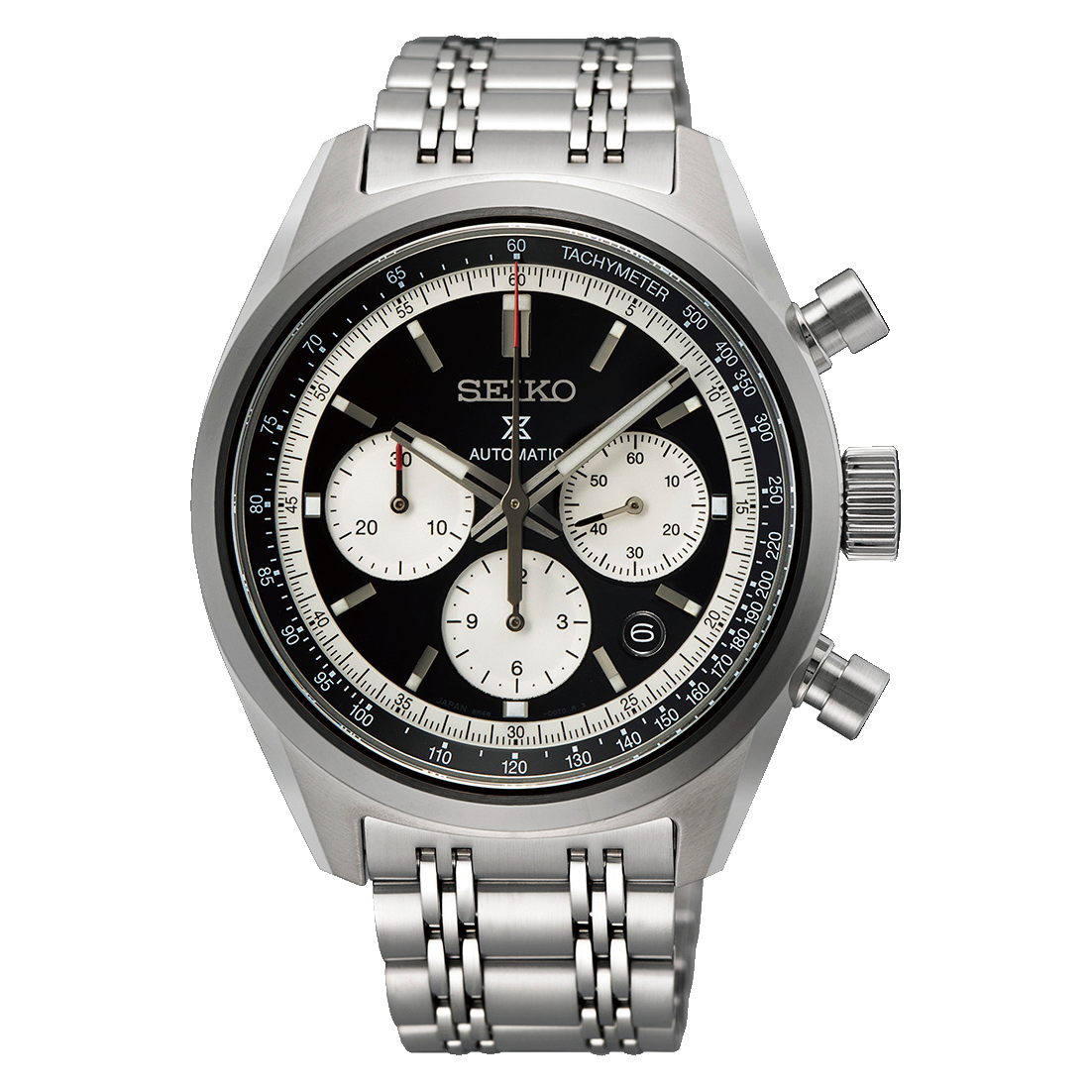
Seiko: The Watchmaker That Redefined What Timekeeping Could Be
Most watch brands build their reputation on tradition. Seiko built its reputation on the willingness to break with it. While much of the watchmaking world spent the twentieth century perfecting variations on a formula established generations earlier, Seiko kept asking a different question: what if the watch itself could evolve? That question has driven the company through more genuine industry-altering innovations than perhaps any other watchmaker in history, and it's the thread that connects a small Tokyo shop from the 1880s to the global manufacturing powerhouse Seiko is today.
From a Single Shop to a Global Name
Seiko's story begins in 1881, when a young entrepreneur named Kintaro Hattori opened a small shop in Tokyo selling and repairing watches and clocks. Within a decade, that shop had grown into a manufacturing operation producing its own clocks, and by 1895, the company had produced its first pocket watch. The brand's early decades were defined by steady, incremental growth — the kind of quiet craftsmanship-building that doesn't make headlines but lays the groundwork for everything that follows.
The real turning point came in the 1960s and 70s, a period during which Seiko transformed from a respected regional watchmaker into a company capable of reshaping the entire global industry. It's difficult to overstate how much of what people now consider "normal" in watchmaking traces directly back to decisions Seiko made during this era.
The Quartz Shock
No single Seiko achievement looms larger than the release of the Astron in 1969 — the world's first quartz wristwatch. Prior to the Astron, every wristwatch on the planet relied on mechanical movements, meaning their accuracy depended on tiny springs, gears, and escapements that, however finely tuned, were still subject to the physical limitations of mechanical engineering. The Astron changed the equation entirely by using a quartz crystal oscillator to regulate timekeeping electronically, delivering a level of accuracy mechanical watches simply couldn't match.
The ripple effects of this single product were massive enough that watch historians still refer to the resulting industry upheaval as the "quartz crisis." Swiss manufacturers, many of whom had built their entire identity around mechanical craftsmanship, watched their market share erode rapidly as quartz technology proved both more accurate and cheaper to produce at scale. Entire manufacturing regions in Switzerland underwent painful contractions before eventually finding a new equilibrium, one where mechanical watches repositioned themselves as objects of craftsmanship and heritage rather than pure timekeeping tools. Seiko, meanwhile, had permanently altered the trajectory of an industry that had gone largely unchanged for centuries.
An Appetite for Firsts
The Astron wasn't a one-off. Seiko has a habit of showing up first to moments that later define entire categories. In 1969, the same year as the Astron, Seiko also released the Caliber 6139, among the earliest automatic chronograph movements ever produced, entering a fierce three-way race against Swiss competitors to claim that milestone. In the 1980s, Seiko introduced the first watch with a built-in television screen, an ambitious if commercially eccentric experiment that showed the company's willingness to explore ideas well outside conventional watchmaking. The 1990s brought Spring Drive, a genuinely novel hybrid technology that uses mechanical energy generation paired with a quartz-regulated glide wheel, producing a seconds hand that sweeps in one continuous motion rather than ticking — a detail so distinctive that it remains one of the most recognizable features in Seiko's higher-end catalog today.
A Philosophy of Vertical Control
Much of Seiko's ability to consistently innovate comes down to a structural decision that sets it apart from most competitors: the company manufactures nearly everything itself. Movements, cases, crystals, dials, and even some of the specialized machine tools used in production are developed in-house rather than sourced from third-party suppliers. This vertical integration gives Seiko a level of control over quality and cost that few other manufacturers can match, and it's part of why the brand has managed to produce everything from ultra-affordable everyday watches to hand-finished pieces that rival the world's most prestigious names, all under one roof.
This philosophy extends to Seiko's manufacturing facilities themselves, some of which are treated less like factories and more like ateliers, particularly the workshops responsible for the brand's highest-tier Grand Seiko and Credor lines, where components are finished by hand using techniques passed down through generations of craftspeople.
A Brand for Every Wrist
Perhaps what makes Seiko genuinely unusual in the watch industry is the sheer range it operates across. Few brands can credibly claim to make both a rugged, sub-hundred-dollar field watch and a hand-finished, multi-thousand-dollar dress watch under variations of the same name, yet Seiko has managed exactly that for decades. Divers rely on Seiko's Prospex line for genuine depth-rated durability. Collectors chase down vintage chronographs from the 1960s and 70s for their historical significance. Everyday buyers turn to accessible automatic and quartz models for reliable, no-nonsense timekeeping. And connoisseurs seeking the pinnacle of Japanese craftsmanship look toward Grand Seiko, a line so refined it now operates as something close to a standalone luxury brand.
The Bottom Line
Seiko's influence on modern watchmaking is difficult to overstate, precisely because so much of it has become invisible through sheer normalization. Quartz movements, once revolutionary, are now everywhere. Automatic chronographs, once a technical marvel, are now a category unto themselves. Seiko didn't just participate in the evolution of the wristwatch — in several of its most important chapters, it wrote them. That combination of technical ambition and genuine accessibility remains, more than a century after Kintaro Hattori opened his first shop, the defining character of the brand.

 English
 Arabic
 French
 Spanish
 Portuguese
 Deutsch
 Turkish
 Dutch
Dutch
 Italiano
 Russian
 Romaian
 Portuguese (Brazil)
