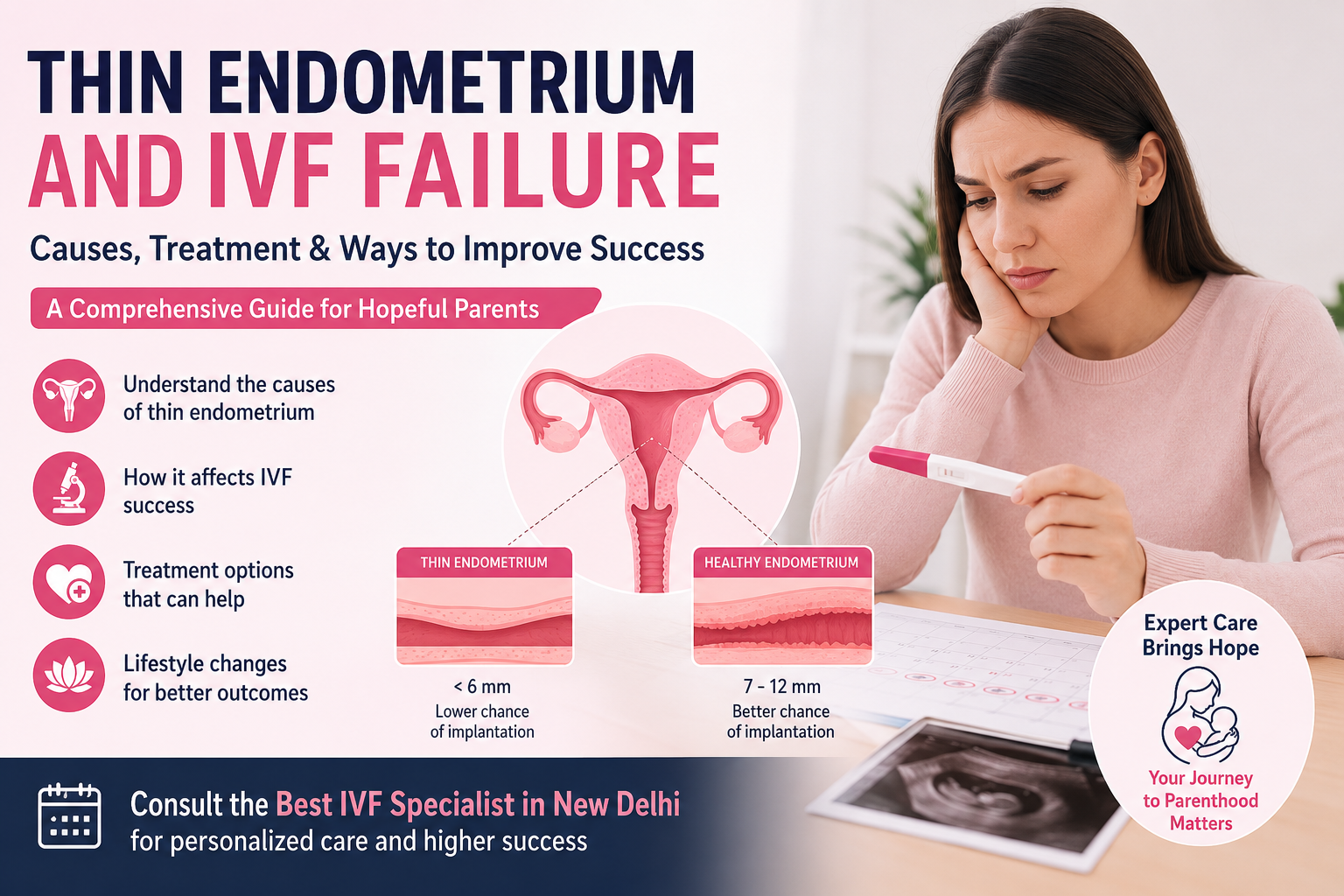
Thin Endometrium and IVF Failure
For many couples, IVF represents hope after months or even years of trying to conceive. Every stage of the IVF process matters—from healthy eggs and sperm to embryo quality. However, one factor that is often overlooked is the endometrium, the inner lining of the uterus.
Think of the uterus as a garden and the embryo as a tiny seed. Even if you have the healthiest seed, it needs fertile soil to grow. If the soil is too thin or unhealthy, the seed may struggle to take root. Similarly, a thin endometrium can make it difficult for an embryo to implant successfully, increasing the risk of IVF failure.
The good news? A thin endometrium doesn't always mean pregnancy is impossible. Modern fertility treatments, lifestyle improvements, and personalized care have helped many women overcome this challenge.
Learn how thin endometrium affects IVF success, causes, treatments, and when to consult the best ivf specialist in new delhi for expert care.
# 1. What Is the Endometrium?
The endometrium is the soft inner lining of the uterus. Every month, it grows thicker in response to hormones, preparing for pregnancy.
If pregnancy occurs, the embryo implants into this lining. If pregnancy doesn't happen, the lining sheds during menstruation.
A healthy endometrium provides:
- Nutrients for the embryo
- Blood supply for implantation
- Support during early pregnancy
Without a healthy lining, implantation becomes more difficult.
## 2. What Is a Thin Endometrium?
A thin endometrium refers to a uterine lining that does not grow thick enough to support embryo implantation.
Most fertility specialists consider an endometrial thickness of 7–12 mm around embryo transfer as favorable, although successful pregnancies can occur outside this range.
Generally:
- Below 6 mm: Lower implantation chances
- 7–12 mm: Better IVF outcomes
- Above 14 mm: May require further evaluation in some cases
Thickness alone is not everything. The quality and blood flow of the endometrium are equally important.
## 3. Why Is Endometrial Thickness Important in IVF?
During IVF, the embryo is carefully transferred into the uterus.
However, implantation depends on:
- Embryo quality
- Endometrial thickness
- Blood circulation
- Hormonal balance
- Timing of embryo transfer
A thin lining may:
- Reduce implantation rates
- Increase failed embryo transfers
- Raise miscarriage risk
- Delay successful pregnancy
This is why fertility clinics monitor the uterine lining before embryo transfer.
## 4. What Causes a Thin Endometrium?
Several medical and lifestyle factors can contribute.
Hormonal Imbalance
Low estrogen levels prevent the lining from growing properly.
Common causes include:
- Early ovarian insufficiency
- Poor ovarian reserve
- Hormonal disorders
Poor Blood Flow
Reduced blood circulation means fewer nutrients and oxygen reach the uterus.
Possible reasons include:
- Smoking
- High stress
- Vascular problems
Previous Uterine Surgery
Procedures such as:
- Dilation and Curettage (D&C)
- Fibroid surgery
- Removal of retained tissue
can sometimes damage the uterine lining.
Uterine Infections
Repeated infections may leave scar tissue inside the uterus, reducing endometrial growth.
Asherman's Syndrome
Scar tissue inside the uterus can partially or completely prevent the lining from developing normally.
Long-Term Medication Use
Certain medications, including prolonged use of anti-estrogen drugs, may affect endometrial growth.
Age
As women age, hormone production and blood flow may decline, affecting the uterine lining.
## 5. Symptoms of Thin Endometrium
Many women have no obvious symptoms.
Others may notice:
- Light menstrual periods
- Short menstrual cycles
- Difficulty conceiving
- Repeated IVF failure
- Recurrent implantation failure
- Recurrent miscarriage
Often, the condition is discovered during fertility evaluation.
## 6. How Doctors Diagnose Thin Endometrium
Diagnosis usually involves:
Transvaginal Ultrasound
The most common method to measure endometrial thickness.
Doppler Ultrasound
Evaluates blood flow to the uterus.
Hysteroscopy
A small camera is inserted into the uterus to detect:
- Scar tissue
- Polyps
- Adhesions
Hormone Tests
Doctors may assess:
- Estrogen
- Progesterone
- FSH
- LH
- AMH
These tests help identify hormonal causes of poor endometrial growth.
## 7. How Thin Endometrium Leads to IVF Failure
Even when high-quality embryos are available, implantation may not occur if the uterine lining is not ready.
Possible problems include:
Reduced Implantation
The embryo struggles to attach securely.
Poor Blood Supply
The embryo may not receive adequate oxygen and nutrients.
Hormonal Imbalance
The uterus may not become receptive during the implantation window.
Repeated Failed Transfers
Some women experience multiple failed IVF cycles despite good embryos because the uterine environment is not optimal.
## 8. Treatment Options for Thin Endometrium
Treatment depends on the underlying cause.
Estrogen Therapy
Often prescribed to stimulate endometrial growth before embryo transfer.
Improving Blood Flow
Doctors may recommend:
- Moderate exercise
- Hydration
- Managing blood pressure
- Selected medications when appropriate
Treating Scar Tissue
If adhesions are present, hysteroscopic surgery may help restore the uterine cavity.
Managing Hormonal Disorders
Correcting thyroid disease, PCOS, or other endocrine issues can improve the uterine environment.
Platelet-Rich Plasma (PRP)
Some fertility centers use PRP therapy to encourage endometrial growth. Research is ongoing, and results vary.
Growth Factor Therapies
Certain specialized treatments may be considered in selected cases under expert supervision.
Personalized IVF Protocols
Adjusting medication doses, embryo transfer timing, or opting for frozen embryo transfer (FET) may improve success.
## 9. Lifestyle Changes That May Improve Endometrial Health
Medical treatment works best when combined with healthy habits.
Eat a Balanced Diet
Include:
- Leafy vegetables
- Fruits
- Whole grains
- Lean proteins
- Healthy fats
Maintain a Healthy Weight
Being significantly underweight or overweight can affect hormone balance.
Exercise Regularly
Light physical activity improves circulation.
Avoid Smoking
Smoking reduces uterine blood flow and negatively impacts fertility.
Reduce Stress
Yoga, meditation, breathing exercises, and adequate sleep may support overall reproductive health.
Stay Hydrated
Good hydration supports healthy blood circulation throughout the body.
## 10. Can Pregnancy Happen with a Thin Endometrium?
Yes.
Although implantation rates may be lower, many women with thinner endometrial linings have achieved healthy pregnancies.
Success depends on:
- Individual health
- Embryo quality
- Hormonal support
- Blood flow
- Underlying cause
- Appropriate treatment
Every fertility journey is unique, and treatment plans should be personalized.
## 11. When Should You See an IVF Specialist?
You should consult a fertility expert if you experience:
- Repeated IVF failure
- Thin endometrium on ultrasound
- Multiple miscarriages
- Difficulty conceiving after one year (or six months if over 35)
- Irregular menstrual cycles
- Previous uterine surgeries
Consulting the best ivf specialist in new delhi can help identify the exact cause and create a personalized treatment plan that maximizes your chances of a successful pregnancy.
## 12. Tips to Improve IVF Success
While not every factor can be controlled, these steps may improve overall outcomes:
- Follow your treatment schedule carefully
- Take medications exactly as prescribed
- Maintain a healthy lifestyle
- Avoid smoking and alcohol
- Manage chronic medical conditions
- Attend all follow-up appointments
- Communicate openly with your fertility team
- Stay patient and positive throughout the process
Remember, IVF success depends on several factors—not just the thickness of the endometrium.
## 13. Myths About Thin Endometrium
Myth 1: Thin Endometrium Means Pregnancy Is Impossible
Fact: Many women conceive successfully after appropriate treatment.
Myth 2: A Thick Endometrium Always Guarantees Success
Fact: Thickness is only one aspect. Receptivity, blood flow, and embryo quality are equally important.
Myth 3: IVF Failure Is Always Due to the Uterine Lining
Fact: Egg quality, sperm quality, embryo genetics, and timing also influence success.
Myth 4: Lifestyle Doesn't Matter
Fact: Healthy habits can support fertility and complement medical treatment.
## Conclusion
A thin endometrium can be a significant factor in IVF failure, but it is not the end of your fertility journey. With proper diagnosis, individualized treatment, and healthy lifestyle choices, many women improve their uterine lining and achieve successful pregnancies.
Modern fertility medicine continues to evolve, offering more options than ever before for women facing implantation challenges. If you've experienced repeated IVF failure or have been diagnosed with a thin endometrium, don't lose hope. Seeking timely evaluation from an experienced fertility specialist can help uncover the cause and guide you toward the most suitable treatment plan.
Every successful pregnancy begins with preparation, and creating the right environment inside the uterus is one of the most important steps on the path to parenthood.
Frequently Asked Questions (FAQs)
1. What is considered a normal endometrial thickness for IVF?
Most fertility specialists consider an endometrial thickness of 7–12 mm before embryo transfer to be favorable, although successful pregnancies can occur outside this range.
2. Can a thin endometrium be treated before IVF?
Yes. Depending on the cause, treatments may include hormone therapy, management of uterine adhesions, improving blood flow, and personalized IVF protocols.
3. Does a thin endometrium always cause IVF failure?
No. While it can reduce implantation chances, IVF success also depends on embryo quality, hormonal balance, uterine receptivity, age, and overall reproductive health.
4. Can lifestyle changes improve endometrial thickness?
Healthy eating, regular exercise, avoiding smoking, staying hydrated, and reducing stress may support better endometrial health alongside medical treatment.
5. When should I consult the best IVF specialist in New Delhi?
You should seek expert evaluation if you have repeated IVF failures, recurrent miscarriages, a persistently thin endometrium, irregular menstrual cycles, or difficulty conceiving despite treatment. Early consultation allows for a personalized fertility plan and may improve your chances of a successful pregnancy.
- Art
- Causes
- Crafts
- Dance
- Drinks
- Film
- Fitness
- Food
- Games
- Gardening
- Health
- Home
- Literature
- Music
- Networking
- Other
- Party
- Religion
- Shopping
- Sports
- Theater
- Wellness