


 About Urh Social
 Terms of Service
 Privacy Policy
 Contact
Why Wabi-Sabi Is Quietly Taking Over Modern Home Design
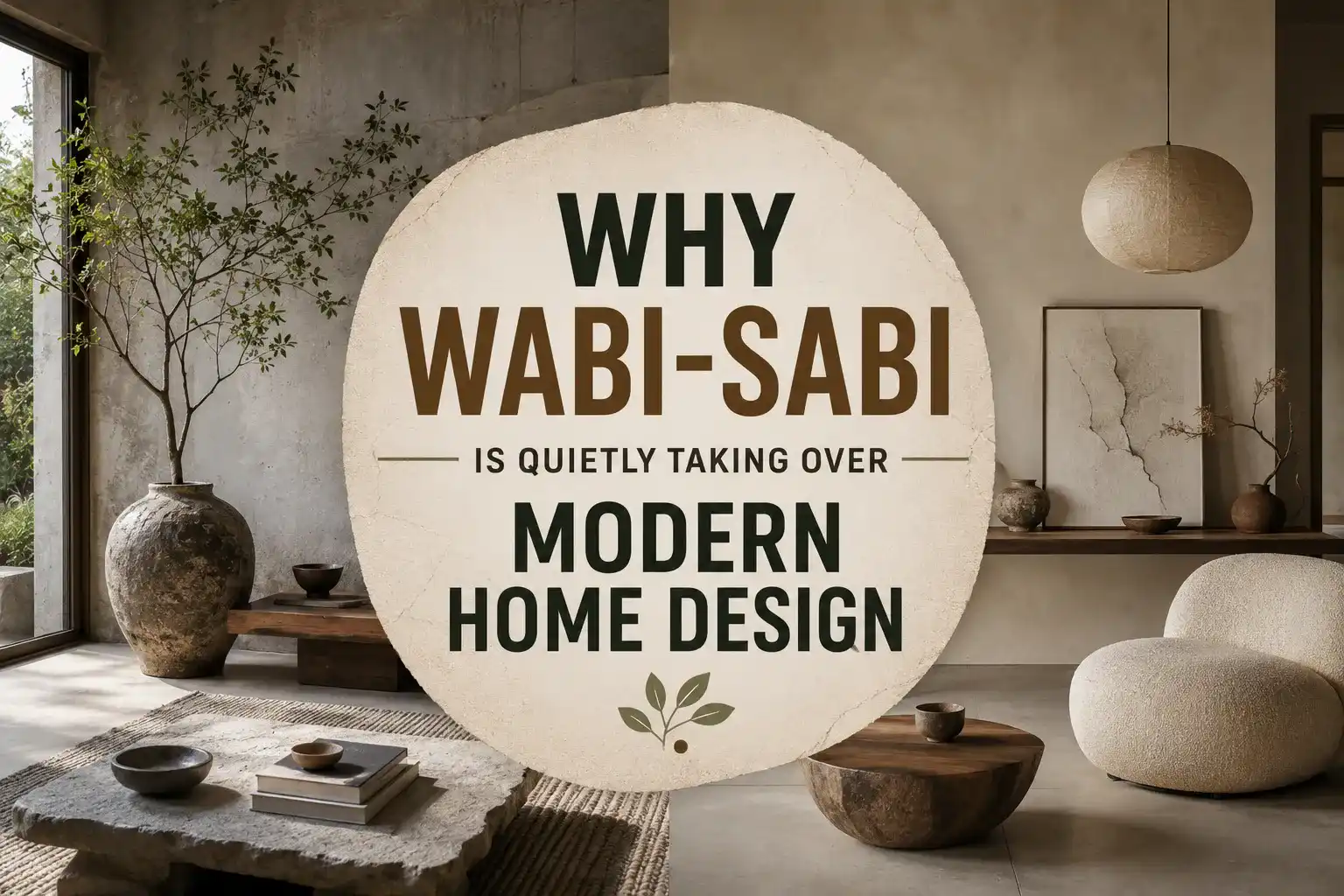
Walk into almost any new-build show home right now and you'll notice something odd: the "modern" look has started borrowing heavily from a design philosophy that's centuries old. Exposed timber, low horizontal lines, rooms that breathe instead of shout, materials that are allowed to age rather than hide their wear. That's not a coincidence. It's wabi-sabi, the Japanese aesthetic built around imperfection, impermanence, and simplicity, and it's reshaping how architects and homeowners think about space.
Most people hear "wabi-sabi" and picture a cracked ceramic bowl repaired with gold. That's part of it, but the philosophy runs much deeper when applied to buildings. It's less a style you copy and more a set of values you design around: nothing is permanent, nothing is perfect, and a space should feel honest about both.
It starts with materials, not furniture
The easiest mistake people make when trying to bring this look home is shopping for it. Wabi-sabi doesn't live in a catalog. It lives in the choice of material itself. Unfinished wood that darkens with sunlight. Plaster walls with visible trowel marks. Stone that hasn't been polished smooth. These aren't design flaws to a wabi-sabi eye, they're the whole point. A material that shows its age is doing exactly what it's supposed to do.
This is also why the aesthetic pairs so naturally with sustainable building practices. Materials chosen for how gracefully they weather tend to be the same materials that last longer and require less chemical treatment or replacement. Homeowners drawn to wabi-sabi for its look often end up with a lower-maintenance, longer-lived house almost by accident.
Empty space is a design decision
Western interiors tend to fill space. Japanese-influenced interiors treat empty space, known as "ma," as an active part of the composition, not the absence of one. A room with fewer objects isn't unfinished, it's edited. This is the part people struggle with most when trying to apply the look, because it asks you to resist the urge to add "one more thing" to a corner that feels bare.
In practice this shows up as:
-
Furniture placed with real breathing room around it, not pushed to the walls
-
A handful of intentional objects instead of a shelf full of them
-
Sightlines left open toward a window, garden, or hallway rather than blocked by storage
Light and shadow, not just light
Modern design tends to chase brightness. Wabi-sabi is more interested in the relationship between light and shadow, the way afternoon sun moves across a wooden floor or how a deep eave casts a soft line across a wall. Rooms are often designed with this movement in mind rather than for maximum illumination at every hour. It's one of the reasons Japanese-inspired homes often feel calmer than their brighter, harder-edged Western counterparts, even when they're objectively darker.
Where this connects back to something older
None of this appeared out of nowhere. Wabi-sabi as a home design trend is really a simplified, modern echo of ideas that were already fully formed in Japan's temples, shrines, and farmhouses centuries ago, long before "minimalism" was a word anyone used. If you want to see where these ideas actually come from, rather than the Pinterest version of them, this breakdown of Japanese traditional architecture is worth reading. It covers the structural logic behind features like deep eaves, raised floors, and sliding screens that modern design keeps borrowing without always explaining why they work.
Bringing it into a real house, not a showroom
A few practical starting points if this is a direction you're considering for a renovation or new build:
-
Pick one or two natural materials and commit to them. Don't mix five finishes trying to chase the aesthetic. A single wood species used consistently reads as intentional; five different ones read as indecisive.
-
Design storage before you design display. Clutter is the single fastest way to kill this look. If there's nowhere to put things away, the room will never feel edited.
-
Think about the edges of rooms, not just the middle. Deep window reveals, low thresholds, and transitional spaces between indoors and outdoors do more for this feel than any piece of furniture will.
-
Let asymmetry happen. Perfectly matched, mirrored layouts fight against the whole philosophy. Off-center arrangements tend to feel more natural, not less considered.
Wabi-sabi isn't a trend that's going to fade out the way a lot of interior fads do, mostly because it isn't actually new. It's a design language that's been tested over hundreds of years of Japanese building tradition, and it happens to be resurfacing at exactly the moment a lot of homeowners are getting tired of houses that feel disposable. Understanding where it came from architecturally makes it a lot easier to apply it honestly, rather than just decorating around the edges of it.

 English
 Arabic
 French
 Portuguese
 Deutsch
 Turkish
 Dutch
Dutch
 Italiano
 Russian
 Romaian
 Portuguese (Brazil)
 Greek
Greek
