


 About Urh Social
 Terms of Service
 Πολιτική Ιδιωτικότητας
 Contact
How Technology Can Improve Patient Progress Tracking in Rehab Facilities
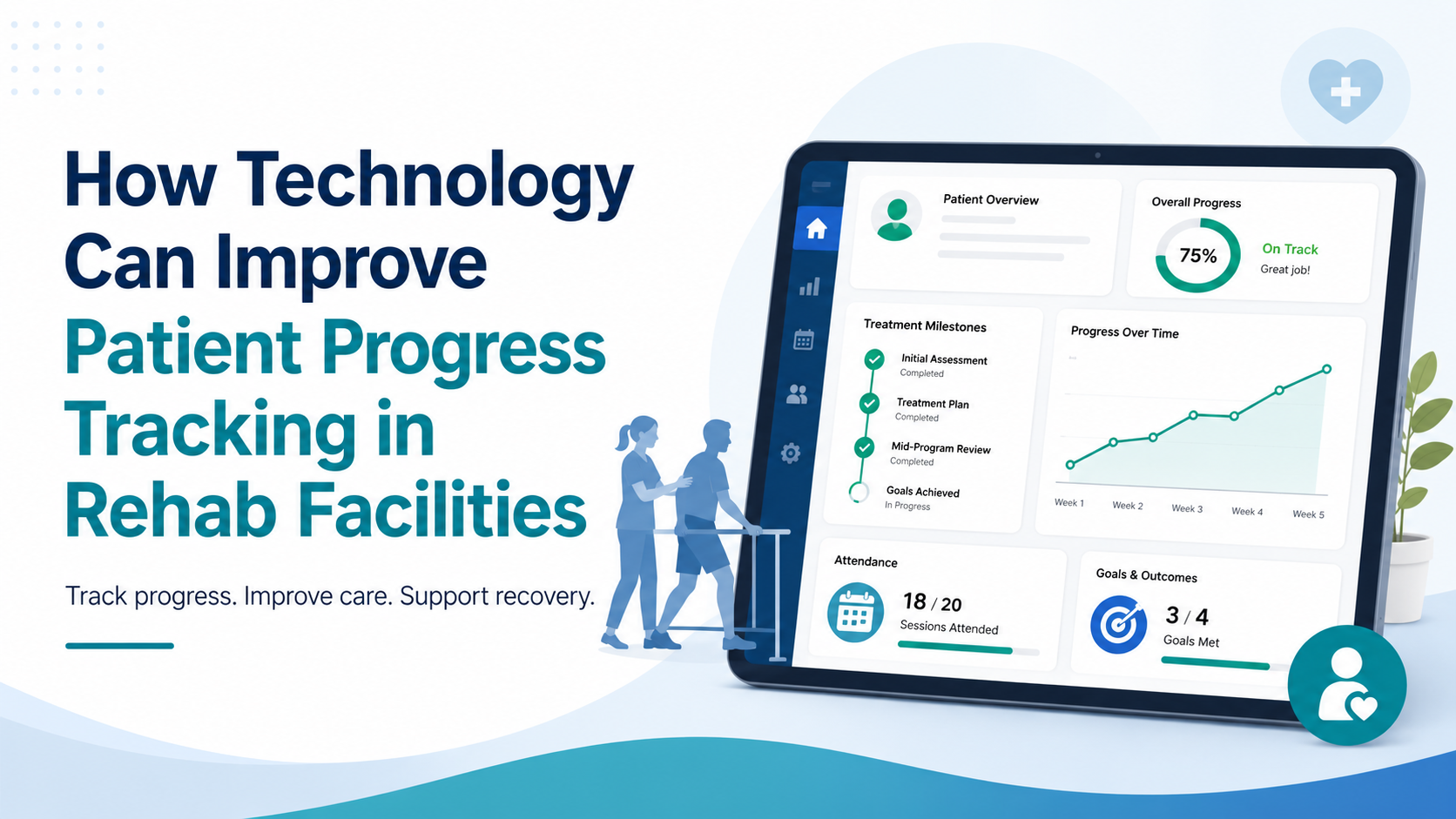
Tracking patient progress is one of the most important responsibilities in a rehab facility. Treatment teams need to understand whether patients are engaging with care, moving toward recovery goals, responding to interventions, and preparing for the next level of support.
However, progress tracking can become difficult when information is scattered across paper files, spreadsheets, therapy notes, medication records, attendance sheets, and disconnected systems.
This fragmentation makes it harder for counselors, physicians, nurses, case managers, and administrators to see the complete patient journey. Staff may rely on outdated information, repeat manual reviews, or miss important changes in behavior, attendance, treatment response, or risk.
Technology can improve progress tracking by bringing clinical, operational, and engagement data into a connected environment. It gives care teams a clearer view of what is happening and helps them respond more consistently throughout treatment.
Establish Clear and Measurable Recovery Goals
Progress tracking begins with clear treatment goals.
Broad goals such as “improve recovery” or “reduce substance use” can be difficult to measure. Treatment plans should include specific objectives that help providers evaluate change over time.
Examples may include:
- Attending scheduled therapy sessions
- Completing relapse-prevention activities
- Improving medication adherence
- Developing coping strategies
- Strengthening family communication
- Reducing high-risk behaviors
- Securing stable housing
- Preparing for outpatient care
- Participating in aftercare planning
Digital treatment plans can connect each goal with interventions, responsible providers, review dates, and progress indicators.
This gives the entire care team a shared framework for evaluating recovery.
Centralize Progress Information
Patient progress is reflected across many different records.
A counselor may document improvement in therapy participation. A nurse may record medication adherence. A case manager may update housing or employment goals, while an attendance record may show whether the patient is consistently engaging with treatment.
When these details are stored separately, no single provider has a complete view.
A centralized digital record can bring together:
- Assessment findings
- Treatment goals
- Progress notes
- Therapy attendance
- Medication updates
- Risk evaluations
- Care-team observations
- Patient-reported information
- Discharge readiness
- Aftercare activity
This creates a more complete and current picture of patient progress.
Connect Progress Notes With Treatment Objectives
Progress notes are more useful when they clearly relate to active treatment goals.
A note should show which objective was addressed, what intervention was provided, how the patient responded, and what action should happen next.
Technology can allow clinicians to connect each note directly with the relevant treatment-plan objective.
For example, a therapy session may address relapse prevention. The counselor can document the intervention used, the patient’s participation, demonstrated understanding, remaining barriers, and recommended follow-up.
This creates a clear link between the care being delivered and the progress being measured.
Track Individual and Group Therapy Participation
Therapy participation can provide valuable insight into engagement and recovery progress.
Individual therapy records may show changes in behavior, motivation, coping skills, and risk awareness. Group therapy records may reflect attendance, participation, peer interaction, and response to shared interventions.
Digital systems can help staff track:
- Session attendance
- Participation level
- Topics addressed
- Patient response
- Behavioral observations
- Goal alignment
- Follow-up requirements
For group therapy, shared session details can be recorded once, while individual observations remain connected to each patient’s record.
This reduces repetitive documentation and improves visibility into engagement.
Monitor Attendance and Missed Appointments
Attendance is often an important indicator of patient engagement.
Repeated absences, late arrivals, cancellations, or missed medication appointments may signal barriers that require attention.
A connected scheduling system can track attendance across:
- Individual therapy
- Group sessions
- Medical appointments
- Family counseling
- Case-management meetings
- Medication reviews
- Aftercare follow-ups
Automated alerts can notify the appropriate provider when attendance patterns become concerning.
This allows teams to intervene earlier rather than waiting until the patient disengages completely.
Use Structured Assessments Over Time
Assessments should not only occur at admission.
Repeated structured assessments can help providers understand how risks, symptoms, motivation, and recovery conditions change throughout treatment.
Treatment centers may reassess areas such as:
- Withdrawal risk
- Physical health
- Behavioral and emotional health
- Readiness for change
- Relapse potential
- Recovery environment
Technology makes it easier to compare assessment results over time.
Instead of reviewing multiple documents manually, clinicians can see whether a patient’s risk level is improving, remaining stable, or becoming more concerning.
Improve Medication Progress Tracking
Medication-assisted treatment and other medication workflows require consistent monitoring.
Providers may need to track:
- Current medications
- Dosage
- Adherence
- Side effects
- Refills
- Missed doses
- Appointment attendance
- Patient-reported response
- Clinical observations
Digital medication records can connect these details with therapy progress and treatment goals.
This helps medical and behavioral health teams understand whether medication is supporting the broader recovery plan.
Alerts can also highlight overdue reviews, missed appointments, or incomplete records.
Capture Patient-Reported Progress
Clinical observations are important, but patients should also have a voice in progress tracking.
Digital forms, portals, and secure check-ins can allow patients to report:
- Mood
- Cravings
- Confidence
- Stress levels
- Medication concerns
- Recovery barriers
- Goal progress
- Support needs
Patient-reported information can add context to clinical records.
For example, a patient may attend every session but report increasing cravings or difficulty managing stress. This may indicate a need to adjust the treatment plan.
Technology helps make these updates easier to collect and review.
Use Real-Time Dashboards
Dashboards can help care teams understand patient status without manually reviewing multiple records.
A patient-level dashboard may show:
- Active treatment goals
- Recent progress notes
- Attendance patterns
- Medication status
- Risk indicators
- Upcoming reviews
- Pending tasks
- Discharge readiness
Managers may also use program-level dashboards to monitor documentation completion, engagement, staff workload, and treatment outcomes.
Dashboards should highlight useful information rather than overwhelm users with unnecessary data.
The goal is to help providers identify what requires attention.
Automate Alerts for Important Changes
Technology can help care teams respond faster by generating alerts for predefined conditions.
Examples may include:
- Repeated missed appointments
- Overdue treatment-plan reviews
- Declining participation
- Increased risk scores
- Incomplete progress notes
- Medication follow-up delays
- Unresolved discharge tasks
- Missed aftercare check-ins
Alerts should be routed to the right person and linked with a clear action.
Too many notifications can reduce their value, so treatment centers should prioritize clinically and operationally meaningful events.
Support Multidisciplinary Reviews
Patient progress is best understood when multiple professionals contribute their perspective.
A counselor may see behavioral improvement, while a physician may identify unresolved medical concerns. A case manager may know that housing instability is affecting treatment participation.
Centralized digital records make multidisciplinary reviews more effective.
Before a care-team meeting, providers can review the same updated information. During the review, the team can adjust goals, assign tasks, and document decisions.
This creates stronger coordination and reduces conflicting recommendations.
Identify Patients Who Need Additional Support
Progress tracking should help teams identify when a patient is not responding as expected.
Technology can surface patterns such as:
- Repeated absences
- Limited participation
- Unchanged treatment goals
- Increased relapse risk
- Medication nonadherence
- Delayed documentation
- Failed referrals
- Missed aftercare appointments
These signals do not automatically explain why progress has slowed, but they help the care team know where to investigate.
Early identification can support timely changes to treatment, staffing, or external support.
Improve Care Transitions
Patient progress must remain visible when the individual moves between levels of care.
The receiving team should understand:
- Goals achieved
- Goals still active
- Recent risks
- Medication status
- Therapy participation
- Current barriers
- Recommended services
- Follow-up requirements
Digital progress summaries can make these transitions more consistent.
Instead of rebuilding the patient history, the receiving provider can continue from the latest treatment status.
This supports continuity across detoxification, residential care, outpatient treatment, and aftercare.
Strengthen Discharge Readiness
Discharge decisions should be based on more than the completion of a program timeline.
Care teams need to evaluate whether the patient has made sufficient progress, understands the next steps, and has appropriate support.
Technology can help teams assess:
- Goal completion
- Risk status
- Medication stability
- Appointment adherence
- Recovery skills
- Housing and support conditions
- Follow-up appointments
- Aftercare participation
A structured discharge-readiness workflow helps ensure that key areas are reviewed before transition.
Use Data to Improve Treatment Programs
Aggregated progress data can help leadership understand how well programs are performing.
Facilities may review:
- Goal completion rates
- Average treatment duration
- Attendance patterns
- Care-transition outcomes
- Readmission trends
- Aftercare engagement
- Documentation timeliness
- Common barriers
- Progress by program
- Discharge outcomes
These insights can reveal which services are working well and where improvements are needed.
For example, leadership may discover that certain follow-up activities are frequently missed or that patients struggle during a specific care transition.
Protect Privacy and Clinical Judgment
Progress-tracking technology must protect sensitive patient information.
Treatment centers should use role-based access, consent controls, encryption, audit trails, user authentication, and secure record exchange.
Technology should also support clinical judgment rather than replace it.
A dashboard or alert can identify a pattern, but qualified professionals must interpret the information and determine the appropriate response.
Progress tracking should enhance decision-making, not automate treatment decisions without human review.
Choose a Platform That Supports Real Recovery Workflows
The right platform should connect assessments, treatment plans, therapy notes, medications, attendance, care transitions, patient engagement, and reporting.
It should support customizable goals, structured reviews, role-based charting, real-time updates, alerts, dashboards, and secure integrations.
Organizations considering a tailored solution can review our portfolio on substance abuse practice management software to see how ASAM-aligned assessments, treatment-plan builders, live progress tracking, care transitions, coding, and payer integrations can be designed around the needs of addiction treatment providers.
Final Thoughts
Technology can improve patient progress tracking by turning fragmented records into a connected and usable view of recovery.
It helps care teams link treatment goals with clinical notes, monitor engagement, compare assessments, coordinate medications, and identify changes that require attention.
It also strengthens multidisciplinary reviews, discharge planning, care transitions, and program reporting.
The most effective approach combines structured technology with clinical expertise. When teams have timely information and clear workflows, they can make better decisions and provide more responsive, patient-centered treatment.

 English
 Arabic
 French
 Spanish
 Portuguese
 Deutsch
 Turkish
 Dutch
Dutch
 Italiano
 Russian
 Romaian
 Portuguese (Brazil)
